

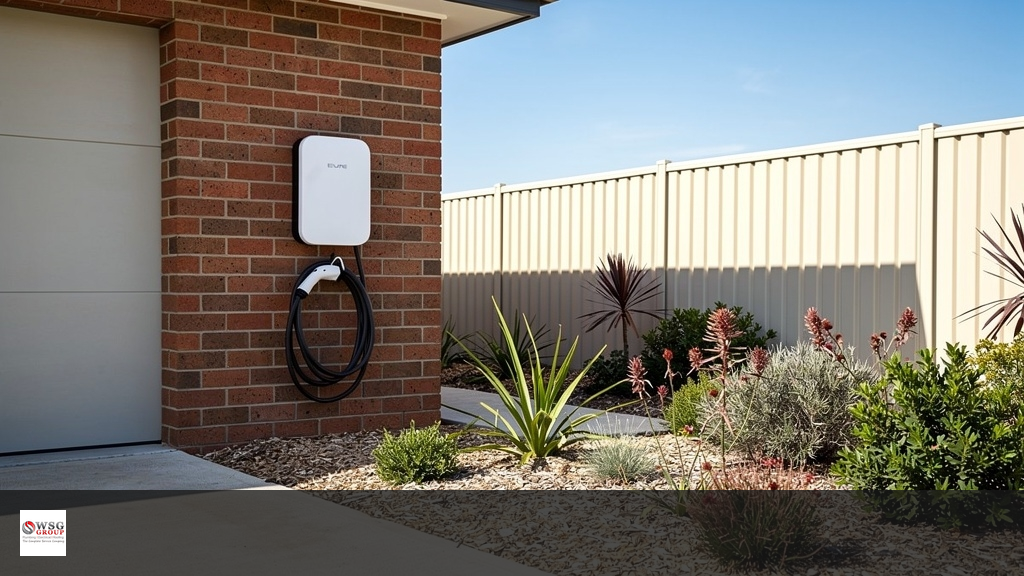
The EV charger installation cost in Sydney is one of the first questions homeowners ask after buying an electric vehicle, and for good reason. Getting a clear, honest answer before booking a sparky can save you hundreds of dollars and avoid nasty surprises on the day.
This guide covers everything Sydney EV owners need to know in 2026: charger types, real cost ranges, what drives the price up or down, current NSW incentives, and how to choose a licensed electrician who will do the job properly.
EV Charger Types: Level 1, Level 2, and DC Fast Charging
Not all EV chargers are the same, and the type you choose has a direct impact on both the installation cost and how quickly your car charges overnight. There are three categories to understand before you call an electrician.
Level 1: Standard Power Point Charging
Level 1 charging uses a standard 10-amp or 15-amp power point — the kind already in your garage. Most EVs come with a portable charge cord that plugs straight into the wall. There is no special hardware to install, but the charging speed is slow: typically 8 to 12 kilometres of range per hour.
For most Sydney households that drive fewer than 50 kilometres a day, a standard power point can technically keep up. However, continuous overnight loading on a 10-amp circuit is not ideal. If you plan to use a standard power point regularly, a licensed electrician should at minimum inspect the circuit for suitability and install a dedicated outlet.
Level 2: Dedicated Home EV Charger (the recommended option)
Level 2 uses a dedicated 240-volt circuit with a wall-mounted charging unit. Charging speed is typically 20 to 70 kilometres of range per hour depending on the charger and the vehicle’s on-board charger capacity. Most households can fully charge an EV overnight with a Level 2 system.
Level 2 chargers require a licensed electrician to install a dedicated circuit from the switchboard to the charging unit. The charger itself must comply with AS/NZS 3000:2018 wiring rules and be appropriate for the installation environment. This is the most common type for Sydney residential installations in 2026.
DC Fast Charging: Not Typically for Homes
DC fast chargers deliver power at 50 kW or more, capable of adding 200 kilometres of range in 20 to 40 minutes. These are commercial-grade units found at service stations, car parks, and public charging networks. The infrastructure requirements — including three-phase power at significant amperage — make home installation impractical and extremely costly for nearly all residential properties.
If you live in a large property with three-phase power and a specific use case, this is worth a conversation with an electrician, but most Sydney homeowners will be best served by a Level 2 system.
EV Charger Installation Cost Ranges for Sydney in 2026
Below are typical market price ranges based on what Sydney licensed electricians are currently charging for EV charger installations. These are indicative ranges only — your specific quote will depend on the factors covered in the next section.
| Installation Type | Typical Cost Range (Sydney 2026) | Notes |
|---|---|---|
| Level 1 dedicated outlet (15A) | $350 – $650 | New dedicated circuit, suitable outlet |
| Level 2 standard install (32A, single-phase) | $1,200 – $2,500 | Charger unit plus installation, up to 7 kW |
| Level 2 with cable run under 10m | $1,200 – $1,800 | Short run, direct path from switchboard |
| Level 2 with cable run 10–25m | $1,800 – $2,800 | Conduit, longer cable, additional labour |
| Level 2 with switchboard upgrade | $2,800 – $5,500 | Older homes needing board replacement |
| Three-phase Level 2 (11 kW or 22 kW) | $2,200 – $4,500 | Requires three-phase supply at the property |
| Outdoor weatherproof installation | Add $200 – $600 | IP-rated enclosure, outdoor cable management |
| Permit and inspection fees (council/network) | $100 – $350 | Varies by network distributor (Ausgrid, Endeavour) |
The most common scenario for a Sydney homeowner — a Level 2 charger in a garage with a reasonably modern switchboard and a cable run under 15 metres — sits in the $1,400 to $2,200 range for supply and installation. Homes with older fuse boards or difficult cable routes should budget higher.
For a detailed cost breakdown specific to your installation scenario, our guide on EV charger installation costs for 2026 covers individual line items in more depth.
What Affects the Price of EV Charger Installation
Two quotes from different electricians for the same job can vary significantly. Understanding what drives pricing helps you evaluate quotes fairly and avoid paying for work you do not need.
Switchboard Capacity and Condition
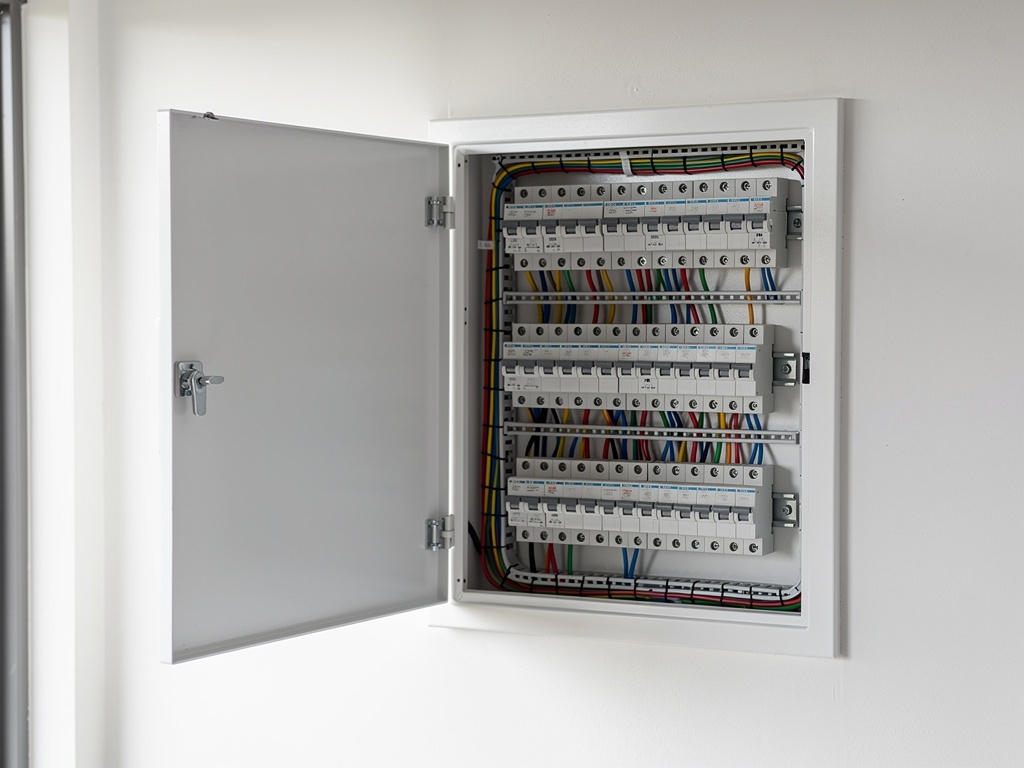
The switchboard is where everything starts. A modern switchboard with a main circuit breaker, safety switches (RCDs), and spare breaker slots can typically accommodate an EV charger circuit without modification. Older switchboards with ceramic fuses or undersized mains capacity may need upgrading before a Level 2 charger can be safely added.
A switchboard upgrade in Sydney typically costs $1,200 to $2,800 on top of the charger installation. It is a common requirement in homes built before the 1990s. Read our detailed guide on switchboard upgrades in Sydney if you suspect this applies to your home.
Cable Run Length and Routing
The distance from your switchboard to where you want the charger installed is a major cost driver. Each metre of conduit, trunking, or direct-buried cable adds labour and materials. A garage directly adjacent to the switchboard room is the ideal scenario. A carport on the opposite side of the house, or a detached garage at the back of the block, will significantly increase the cable run cost.
Trenching for underground conduit (common for detached garages or carports not adjacent to the home) typically adds $600 to $1,500 depending on distance and surface type.
Parking Location: Garage, Carport, or Street
An enclosed garage is the easiest and cheapest installation environment. A carport or outdoor parking area requires weatherproof (IP-rated) hardware and outdoor cable management, adding $200 to $600 to the base cost. Street parking is not a viable option for home charging without council involvement and is generally not feasible for residential installations.
The positioning of the charger on the wall also matters. A high mounting position may require longer cable to reach the vehicle inlet, while a location near a window or door requires careful routing to maintain building integrity.
Charger Unit Cost
The charger hardware itself varies widely in price: from around $400 for a basic 7 kW unit to $1,500 or more for a smart charger with load management, Wi-Fi monitoring, solar integration, and scheduled charging. Most Sydney homeowners do not need top-of-the-range hardware. A mid-range smart charger from a reputable brand in the $600 to $900 range provides good functionality without unnecessary features.
Always confirm whether your electrician’s quote includes the charger unit or whether it is supply-only for a unit you provide. Some electricians prefer to supply the unit themselves to ensure warranty and compliance.
Network Distributor Permits
In NSW, connecting a new dedicated circuit for an EV charger may require notification or approval from your network distributor — Ausgrid for most of metropolitan Sydney, Endeavour Energy for western Sydney and the Hills. For Level 2 chargers under 32 amps single-phase, notification is generally all that is required. Your licensed electrician should handle this as part of the job and issue a Certificate of Compliance for Electrical Work (CCEW) on completion.
For a broader look at electrical compliance obligations in NSW, our article on electrical compliance in NSW for 2026 is a useful reference for both homeowners and landlords.
NSW Government EV Rebates and Incentives in 2026
NSW has been one of the more active Australian states in supporting EV adoption, though the rebate landscape has shifted since 2022. Here is where things stand heading into 2026.
NSW Government EV Rebate (Vehicle Purchase)
The original $3,000 NSW EV rebate for vehicle purchases ended in mid-2024 after the allocated budget was exhausted. As of 2026, there is no active NSW state government rebate specifically for the purchase of a new EV. Check Service NSW for the most current status of any reinstated incentives.
Stamp Duty Exemption
NSW continues to offer stamp duty exemptions on eligible new and used EVs priced under the threshold set by the government. This represents a saving of $1,000 to $3,000 or more depending on the vehicle purchase price. Check the current threshold on the Service NSW website before purchasing.
Home Charger: No Direct Hardware Rebate
As of 2026, NSW does not have a specific rebate for home EV charger hardware or installation costs. However, there are indirect savings worth noting. Some electricity retailers offer EV-specific tariffs with very low off-peak rates (often 10 to 15 cents per kWh), which can reduce annual charging costs by $500 to $1,500 compared to standard tariffs. Smart chargers with scheduled charging allow you to take advantage of these tariffs automatically.
Energy Saver NSW and PDRS
The NSW Energy Saver program and Peaks Demand Reduction Scheme (PDRS) focus primarily on appliances such as heat pumps and pool pumps. EV chargers with demand response capability may qualify under future updates to the scheme. Check the Energy Saver NSW website for the latest eligible products list.
Federal Government Fringe Benefits Tax (FBT) Exemption
For small business owners and employees, the federal FBT exemption for eligible electric vehicles (first introduced in 2022 and still in effect as of 2026) is a significant incentive. If your employer provides an EV and home charger as part of a novated lease arrangement, the FBT exemption can reduce the effective cost substantially. Speak to a financial adviser to understand whether this applies to your situation.
How to Choose a Licensed Electrician for EV Charger Work
EV charger installation is not a job for a handyman or an unlicensed operator. All electrical work in NSW must be performed by a licensed electrician, and EV charger installations are no exception. Here is what to look for when booking the job.
Check the Licence
All electrical contractors in NSW must hold a valid licence issued by NSW Fair Trading. You can verify a licence at the Fair Trading licence check website. Look for a contractor licence (not just a tradesperson licence) if a business is quoting for the work. Our resource on finding a licensed electrician in Sydney covers this process in detail.
Ask About EV Charger Experience
Not every licensed electrician has done EV charger installations. Ask specifically whether they have installed EV chargers before, which brands they work with, and whether they are familiar with network distributor notification requirements. An experienced EV sparky will also know how to assess your switchboard load capacity accurately before quoting.
Confirm What is Included in the Quote
A detailed written quote should include: the charger unit (or confirmation it is customer-supplied), all cabling and conduit, the dedicated circuit breaker and safety switch, the Certificate of Compliance, and any network notification fees. Verbal quotes without written detail are a red flag. Be cautious of unusually low quotes that may exclude materials or compliance costs.
Check the Certificate of Compliance
On completion of any electrical work in NSW, your electrician must provide a Certificate of Compliance for Electrical Work (CCEW). This is your proof that the work was done by a licensed tradesperson and meets Australian Standards. Keep this document with your home records. It is required for insurance purposes and may be needed when you sell the property.
For a complete checklist of what to look for when hiring an electrician, see our licensed electrician checklist for Sydney homeowners.
If your home’s EV charger installation also requires attention to broader safety checks, our guide on EV charger safety for Sydney homes covers the key compliance and safety considerations in full.
What to Expect on Installation Day
Understanding the process helps you prepare your home and avoid unnecessary delays. Here is how a typical EV charger installation unfolds.
Pre-Installation Assessment
A reputable electrician will assess your switchboard before confirming the quote, either in person or via photos and information you provide. They will check available load capacity, existing circuit breakers, main fuse rating, and the best cable route. If a switchboard upgrade is needed, this is confirmed at this stage.
Installation Day: Standard Job
For a standard Level 2 installation in a garage with a modern switchboard and a cable run under 15 metres, allow a half-day to full day. The electrician will isolate the relevant circuits, run the cable, mount the charger, connect the dedicated circuit breaker, and test the system. Most of the work is relatively low-disruption to the rest of the house.
Complex Installations: Allow a Full Day or More
If switchboard work is required, the mains power may be off for 2 to 4 hours. Underground conduit trenching adds half a day or more. Installations in apartments or multi-dwelling buildings often require body corporate approval and can involve additional time for common property cable routes.
After Installation
The electrician will walk you through operating the charger, explain any scheduling features, and provide the Certificate of Compliance. They should also notify your network distributor if required. Keep your login details for any smart charger app and test the unit immediately to confirm it is operating correctly.
Ready to get your EV charger installed?
WSG Group’s licensed electricians serve homeowners across Sydney. We assess your switchboard, handle all compliance paperwork, and complete the job on time.
Frequently Asked Questions
How much does a home EV charger installation cost in Sydney?
Most Sydney homeowners pay between $1,200 and $2,500 for a Level 2 EV charger including supply and installation by a licensed electrician. Older homes requiring a switchboard upgrade should budget $2,800 to $5,500 or more. A dedicated 15-amp outlet for Level 1 charging starts from around $350 to $650.
Do I need a licensed electrician to install a home EV charger in NSW?
Yes. All EV charger installations in NSW must be performed by a licensed electrician. The work is classified under the Home Building Act 1989 and a Certificate of Compliance for Electrical Work must be issued on completion. Non-compliant installations are illegal and can void home insurance.
Will I need a switchboard upgrade to install an EV charger?
Not always. Modern switchboards with spare circuit breaker slots and adequate main fuse capacity typically do not require upgrading. Older homes — particularly those built before the 1990s with ceramic fuse boards — often need a switchboard upgrade before a Level 2 charger can be safely connected. Your electrician should assess this during the quoting stage.
Is there a NSW government rebate for home EV charger installation in 2026?
As of 2026, there is no direct NSW rebate specifically for home EV charger hardware or installation. The NSW stamp duty exemption for eligible EVs continues. Some electricity retailers offer EV-specific off-peak tariffs that can save hundreds of dollars per year on charging costs. Check Service NSW and your energy retailer for current offers.
How long does it take to charge an EV at home with a Level 2 charger?
A 7 kW Level 2 charger adds approximately 35 to 50 kilometres of range per hour depending on your vehicle. Most EVs with a 50 to 80 kWh battery can be fully charged overnight in 8 to 12 hours. A 10 kW or higher three-phase charger will charge faster if your vehicle supports that input rate.
Can I install an EV charger in an apartment in Sydney?
Yes, but it is more complex than a standalone house installation. You will likely need body corporate approval and a separate metering arrangement. Some newer apartment buildings have pre-installed EV charging infrastructure. Older buildings may require a feasibility assessment before installation can proceed.
How do I find a licensed electrician for EV charger installation near me?
Search for licensed electrical contractors via the NSW Fair Trading licence check tool, or look for electricians who specifically list EV charger installation as a service. Always ask for a written quote that includes the Certificate of Compliance and confirms all regulatory requirements are covered. Our guide on finding an electrician near you in Sydney walks through the process step by step.