

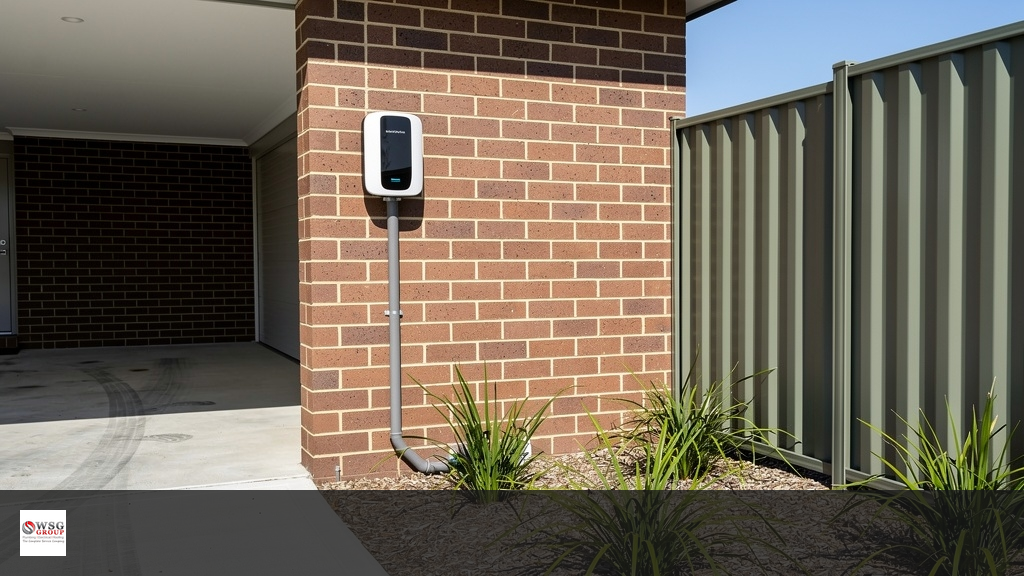
Is Your Home Ready for an EV Charger? Safety Essentials for Sydney Homeowners
Installing a home EV charger is one of the fastest-growing electrical projects across Sydney’s suburbs — and for good reason. But EV charger safety at home goes well beyond just buying a unit and plugging it in. The electrical requirements, switchboard implications, outdoor installation ratings, and AS/NZS compliance standards all need to be right. This guide covers everything Sydney homeowners need to understand before installation day.
Why EV Charger Safety Matters More Than You Think
EV chargers draw sustained high loads for several hours at a time. Unlike a kettle that draws a large current for 3 minutes, a Level 2 charger may pull 16–32 amps continuously for 4–10 hours overnight. This sustained demand places a very different stress on your home’s wiring than normal appliance use.
Electrical fires linked to EV charging have been documented in homes where chargers were connected to circuits that weren’t designed for sustained load, or where poor-quality or non-compliant equipment was used. In Australia, all EV charger installations must use equipment that meets the applicable AS/NZS standards, and the installation itself must be performed by a licensed electrician who issues a Certificate of Compliance.
The good news: when done correctly, a home EV charger installation is safe, straightforward, and significantly more convenient than relying on public charging infrastructure.
Level 1 vs Level 2 Home Chargers Explained
Understanding the two main home charger types helps clarify the electrical requirements.
Level 1 — standard power point (slow charging)
Level 1 charging uses a standard 10-amp general purpose outlet (GPO) — the same socket you use for any appliance. Using the supplied charging cable, most EVs will accept 2–2.4 kW of charge power, adding roughly 15–20 km of range per hour. Overnight charging from a standard outlet will top up most EVs with typical daily usage.
While this sounds convenient, long-term use of a standard power point for EV charging has safety implications. Standard GPOs and wiring are rated for occasional high-draw use — not sustained overnight loading. Charging on a standard socket that isn’t on a dedicated circuit can cause localised heating in wiring, outlets, and connections over time.
Level 2 — dedicated wall charger (EV Supply Equipment / EVSE)
Level 2 chargers connect to a dedicated 240V circuit and deliver 7.2–22 kW of charging power, depending on the unit and your car’s onboard charger. This adds 40–130 km of range per hour. The charging cable is permanently attached or tethered to the wall unit.
A Level 2 charger requires a dedicated circuit — one that is not shared with any other appliances — and must be installed by a licensed electrician. This is the recommended approach for any Sydney homeowner who charges their EV at home regularly.
Switchboard Capacity and Upgrade Requirements
Before your electrician can install an EV charger, they need to assess your home’s electrical panel capacity. A 7.2 kW Level 2 charger draws around 30 amps at 240V. If your main switchboard is already operating close to its rated capacity — particularly in older Sydney homes with 60-amp or 80-amp supply — adding a 30-amp load can push it over the limit.
Signs your switchboard may need upgrading
- Switchboard uses rewireable fuses (ceramic fuse holders) rather than circuit breakers
- No residual current devices (RCDs) protecting circuits
- Main service fuse is 60-amp or smaller
- Home is pre-1990s and hasn’t had electrical work done since
- You’re already running air conditioning, an electric hot water system, and a pool pump
What a switchboard upgrade for EV charging involves
A switchboard upgrade for EV charger preparation typically involves replacing ceramic fuses with modern circuit breakers and RCDs, upgrading the main service fuse to 100-amps, and adding a dedicated circuit breaker for the EV charger. In some cases, the meter box assembly must be reconfigured.
Switchboard upgrade costs for EV charger preparation in Sydney: $1,500–$3,500 depending on the current state of the board and whether the energy retailer’s supply side also needs work. Endeavour Energy or Ausgrid may need to be involved if the service head requires upgrading.
Why You Need a Dedicated Circuit
A dedicated circuit means the EV charger is the only device on that circuit — no power points, lights, or other appliances share the wiring. This is a requirement under AS/NZS 3000 for high-draw appliances including EV chargers rated above 10 amps.
What dedicated circuit installation involves
Your electrician runs a new cable from the switchboard to the charger location — typically the garage or carport. The cable gauge depends on the charger’s rated current. For a 32-amp charger, 6mm² cable is typically required. The circuit is protected by a dedicated circuit breaker and RCD at the switchboard.
Running a dedicated circuit from switchboard to garage: $600–$1,500 depending on cable run length and whether the route goes through ceilings, walls, or underground conduit.
Outdoor IP Ratings and Sydney’s Climate
Many Sydney homes have garages that open to the elements, or homeowners prefer to install the charger on an external wall near the carport. In these cases, the charger’s IP (Ingress Protection) rating matters.
What IP rating do you need?
| Location | Minimum IP rating | Notes |
|---|---|---|
| Enclosed garage (no rain exposure) | IP44 | Minimum standard for any EV charger |
| Carport or open garage | IP55 | Protection against water jets from any direction |
| Fully external wall (exposed to rain) | IP65+ | Dust-tight and protected against water jets |
| Coastal location (salt air exposure) | IP66 or marine-rated | Sydney suburbs within 1–2km of coast |
Sydney’s summer storms can be intense. Even under a carport, rain can be wind-driven horizontally. If you’re within 5km of the coast — Manly, Bondi, Cronulla, Newport, Balmoral — a marine-rated charger or IP66 enclosure is strongly advisable to prevent corrosion from salt-laden air.
Australian Standards and Compliance for EV Chargers
In Australia, EV charger installations must comply with:
- AS/NZS 3000:2018 (Wiring Rules) — the foundational standard for all fixed electrical installations in Australia
- AS/NZS 61851.1 — Australian standard for electric vehicle conductive charging systems
- AS/NZS 3112 — Australian standard for plugs and socket outlets (applicable for tethered cable connectors)
- State-specific electrical licensing requirements — only a licensed electrician can perform the installation and issue the Certificate of Compliance
Chargers must be registered on the Australian Energy Rating website (or approved via the Regulatory Compliance Mark scheme) before they can be legally installed in Australia. Not all chargers available online meet this requirement — always confirm with your electrician that the unit you’ve chosen is compliant before purchasing.
What does a Certificate of Compliance cover?
Your electrician must issue a Certificate of Compliance for Electrical Work (CCEW) after completing the installation. This document verifies that the work meets Australian Standards and state regulations. It is required by your home insurer, and should be kept on file for the life of the property.
EV Charger Installation Costs in Sydney
| Scope | Typical cost (Sydney) | Notes |
|---|---|---|
| Level 2 charger supply (7.2–11 kW) | $600–$1,500 | Equipment only; brand and features vary |
| Electrical installation (labour) | $400–$900 | Simple install, switchboard close to garage |
| Dedicated circuit run (cable + conduit) | $600–$1,500 | Depends on length and route complexity |
| Switchboard upgrade (if required) | $1,500–$3,500 | Older homes or boards at capacity |
| Total — simple install, modern home | $1,500–$3,000 | Modern board, short cable run |
| Total — older home, switchboard upgrade | $3,500–$6,000+ | Includes board upgrade and longer runs |
What a Compliant Installation Should Include
A properly completed EV charger installation by a licensed Sydney electrician should deliver:
- Assessment of existing switchboard capacity and condition
- Dedicated circuit from switchboard to charger location
- Circuit breaker and RCD protection at the switchboard
- Charger unit with appropriate IP rating for the installation location
- Tidy cable management — conduit where exposed, minimal visible surface wiring
- Test and commissioning of the charger — verified to charge the vehicle
- Certificate of Compliance for Electrical Work (CCEW) issued on the day
If your installer does not offer to provide a CCEW or seems unfamiliar with the AS/NZS 61851.1 standard, ask why. Compliance documentation is not optional — it’s what protects you and your insurer if anything goes wrong.
For more context on EV charger costs in detail, see our related guide on EV charger installation costs in Sydney. For broader electrical compliance, our home electrical safety checks guide covers the full picture. The SafeWork NSW licensing page explains what licence categories cover EV charger installation work.
EV Charger Installation by Licensed Sydney Electricians
WSG Group installs EV chargers across Sydney. All work is AS/NZS compliant and fully certified. We’ll assess your switchboard and give you an honest upfront quote.
Get a QuoteFrequently Asked Questions
Do I need a licensed electrician to install a home EV charger in Sydney?
Yes. All EV charger installations in NSW must be performed by a licensed electrician. The installation is classified as electrical work under the Home Building Act 1989, and a Certificate of Compliance must be issued on completion. Connecting a Level 2 charger to the mains without a licensed electrician is illegal and may void your home insurance.
Can I use a standard power point to charge my EV at home?
Technically yes, for Level 1 charging — but it’s not recommended as a permanent arrangement. Standard 10-amp power points are not rated for sustained overnight loading. Long-term use for EV charging can cause heating in older wiring and outlets. A dedicated circuit with a Level 2 charger is safer, faster, and the right solution for regular home charging.
Will my home insurance cover an EV charger fire?
This depends on your policy and whether the installation was compliant. Most insurers require that electrical appliances are installed by licensed tradespeople and that a Certificate of Compliance exists. If a fire is caused by a non-compliant installation or a charger not approved under Australian Standards, a claim may be denied. Always ask your insurer about their EV charger requirements before installation.
How long does an EV charger installation take?
A straightforward installation in a modern home with a capable switchboard and a garage close to the board typically takes 2–4 hours. If a switchboard upgrade is required, allow a full day. If underground conduit needs to be run or the cable route is complex, installation may extend to 2 days.
What type of EV charger is best for a Sydney home?
For most Sydney homeowners, a 7.2 kW single-phase Level 2 charger is sufficient. This will fully charge most EVs overnight (8–10 hours). Three-phase chargers (11 kW or 22 kW) charge faster but require a three-phase supply, which most Sydney residential properties don’t have without an upgrade. A smart charger with app control and scheduling capability is worth considering — it lets you charge during off-peak electricity rate periods.
Are there government rebates for EV chargers in NSW?
As of 2026, NSW does not have a direct state government rebate specifically for home EV charger hardware. However, the NSW Electric Vehicle Strategy includes incentives for EV purchase. Some electricity retailers offer off-peak EV charging tariffs that significantly reduce the cost of home charging. Check with your energy retailer about EV-specific rate plans — these can save $500–$1,500 per year in charging costs depending on your vehicle and usage.