

Solar hot water vs heat pump is one of the most common questions WSG Group gets from Central Coast homeowners planning a hot water upgrade in 2026. The short answer: a heat pump is the better choice for most Central Coast homes, but solar hot water remains competitive for properties with ideal roof orientation and no shading. This guide breaks down both systems on cost, efficiency, running costs, and NSW rebates so you can make the right call for your property.
Table of Contents
- How Each System Works
- Upfront Cost Comparison
- NSW Rebates and STCs
- Running Costs on the Central Coast
- Central Coast Climate Suitability
- Which Is Right for Your Home?
- Frequently Asked Questions
How Each System Works
Solar Hot Water
A solar hot water system uses roof-mounted collectors (flat plate or evacuated tube) to absorb solar radiation and transfer that heat to water stored in a tank. A gas or electric booster supplements heating when solar input is insufficient — overcast days, high-demand periods, or winter mornings. The system is passive: no compressor, no moving parts in the solar loop. The tank is usually roof-mounted on a thermosiphon system or ground-mounted with a pump on a split system.
Heat Pump Hot Water
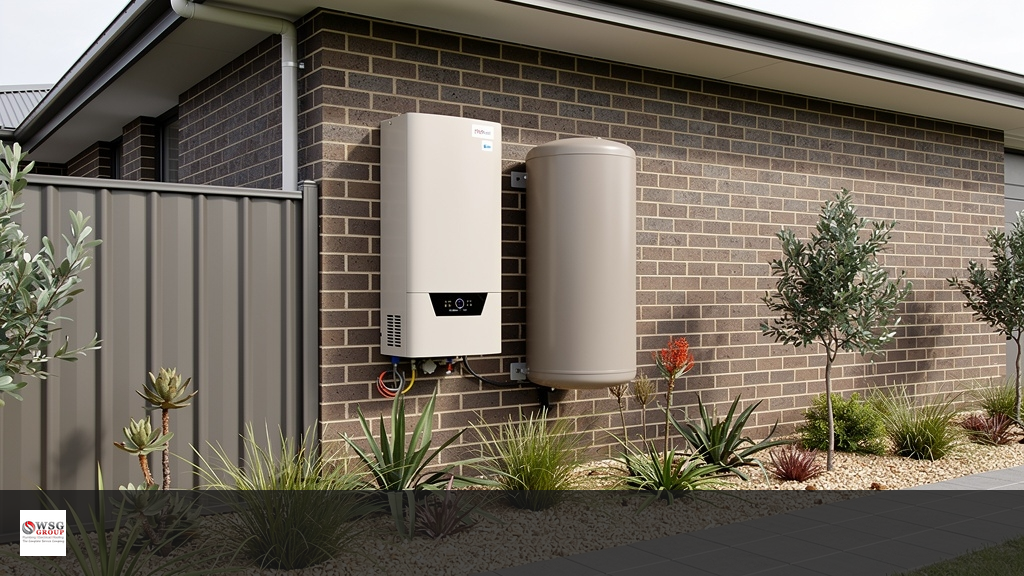
A heat pump hot water system works like a reverse air conditioner. It extracts heat from the surrounding air and uses it to heat water in an insulated storage tank. The standard Australian residential configuration is a combined unit — compressor and fan on top, storage cylinder below — installed outside on a concrete pad. Some systems are split, with the compressor separate from the tank. A heat pump uses roughly 60–75% less electricity than a conventional electric storage tank to produce the same volume of hot water.
Upfront Cost Comparison
| System Type | Supply + Install (AUD) | After Rebates | Effective Life |
|---|---|---|---|
| Solar hot water (flat plate, split system) | $3,500 – $5,500 | $2,000 – $4,000* | 15–25 years |
| Solar hot water (evacuated tube) | $4,500 – $7,000 | $3,000 – $5,500* | 15–25 years |
| Heat pump (250–315L, standard) | $3,200 – $5,000 | $2,200 – $4,000* | 10–15 years |
| Heat pump (315L+, premium brand) | $4,500 – $7,000 | $3,500 – $6,000* | 12–18 years |
NSW Rebates and STCs
Both solar hot water and heat pump systems qualify for federal Small-scale Technology Certificates (STCs) under the Renewable Energy Target. STCs are calculated based on the system’s rated output and the climate zone. The Central Coast falls in Zone 3 (high solar resource), making STC values particularly good. STCs are typically applied as a point-of-sale discount by your installer — you do not need to claim them separately.
Heat Pump Specific Rebates
Heat pump hot water systems upgrading from an electric resistance storage tank may also qualify for NSW Energy Savings Scheme (ESS) and Peak Demand Reduction Scheme (PDRS) incentives, which are separate from federal STCs. The combined value of STCs and NSW scheme incentives for a qualifying heat pump installation can reach $800–$1,500 for a standard 250–315L system on the Central Coast. Confirm eligibility and current certificate prices with your installer before committing to a system.
Solar Hot Water STCs
Solar hot water systems generate more STCs than heat pumps in most configurations, because they are rated on solar collector output over the system’s lifetime. A quality evacuated tube solar system on a north-facing Central Coast roof can attract $1,200–$2,000 in STC value. Flat plate collector systems attract slightly fewer STCs due to lower rated output. Your installer should provide a clear STC estimate in the quote.
Running Costs on the Central Coast
Running costs depend heavily on electricity tariffs and how well each system performs year-round. On the Central Coast, which has mild winters and strong solar resource, both systems perform well — but they have different failure modes.
- Solar hot water: Near-zero running cost on sunny days; booster kicks in during overcast periods and winter mornings. Average annual electricity cost for the booster element: $80–$180 depending on household size and weather. Gas booster versions cost even less to run.
- Heat pump: Uses electricity year-round but at 60–75% less than a standard electric tank. Typical annual running cost on the Central Coast: $150–$300 for a 250–315L system depending on tariff. Most efficient in ambient temperatures above 10°C — the Central Coast’s mild climate means heat pumps perform near-optimally almost all year.
Over a 10-year period, the running cost difference between a well-performing solar system with gas booster and a quality heat pump is typically $200–$600 in solar’s favour — significant but not decisive. The bigger differentiator is often reliability and maintenance cost rather than running cost.
Central Coast Climate Suitability
The Central Coast’s temperate coastal climate suits both systems well, but with some important caveats:
- Solar hot water needs roof orientation. A north or north-west facing roof with no significant shading is ideal. Many Central Coast homes — particularly in Gosford’s hilly suburbs, Woy Woy, and Umina — have east or west-facing rooflines that reduce solar collector output by 15–30%. If your roof orientation is not ideal, the solar system’s performance advantage shrinks considerably.
- Heat pumps need ambient air. Heat pumps require good airflow around the outdoor unit. In enclosed courtyards or very shaded positions, performance drops. On the Central Coast, where winter temperatures rarely fall below 7°C, heat pump efficiency holds up well year-round — this is a genuine advantage over colder inland NSW locations where heat pumps lose efficiency in winter.
- Salt air consideration. Properties within 1km of the ocean should specify a marine-rated heat pump or a solar system with marine-grade collector fittings. Standard units can corrode faster in direct salt air.
Which Is Right for Your Home?
Use this framework to decide:
- North-facing roof, no shading, gas connection available → solar hot water with gas booster is a strong choice. Maximum STC value, near-zero running cost, long lifespan.
- East or west-facing roof, or significant shading → heat pump is more reliable. Roof orientation reduces solar output; a heat pump performs consistently regardless of panel placement.
- No gas connection, all-electric home → heat pump is the clear choice. A solar system with electric booster will still save money over a conventional tank, but a heat pump delivers better year-round efficiency.
- Limited outdoor space or restrictive strata bylaws → solar hot water (roof-mounted thermosiphon) may be easier to accommodate than a ground-level heat pump unit. Check strata approval requirements first.
- Rental property → heat pump is generally the more practical choice for landlords due to simpler maintenance and no roof-mounted collector to manage between tenancies. See our guide on landlord hot water system obligations in NSW for more detail.
For more on hot water replacement costs generally, see our hot water system replacement cost guide for the Central Coast. For pool and plumbing compliance questions, see our NSW pool fencing compliance guide.
Not Sure Which System Is Right for Your Home?
WSG Group’s licensed plumbers cover the Central Coast and Sydney. We install and service both solar hot water and heat pump systems, and can advise on NSW rebate eligibility.
Get Your Free QuoteFrequently Asked Questions
Is solar hot water or heat pump better for the Central Coast?
Both work well on the Central Coast. Heat pumps are the better choice for homes with non-ideal roof orientation, all-electric properties, or rental properties. Solar hot water is better when you have a clear north-facing roof and a gas booster connection, giving near-zero running costs on sunny days.
What are the NSW rebates for solar hot water and heat pumps in 2026?
Both systems qualify for federal Small-scale Technology Certificates (STCs). Heat pumps also qualify for NSW ESS and PDRS rebates when replacing an electric resistance tank. Combined rebates on the Central Coast (Zone 3) typically reduce the installed cost by $800–$2,000 for heat pumps and $1,200–$2,500 for solar systems. Confirm current values with your installer.
How long does a solar hot water system last vs a heat pump?
Solar hot water systems typically last 15–25 years. Heat pumps have a shorter effective life of 10–15 years for standard models, or 12–18 years for premium brands. Solar wins on longevity, but heat pumps require less maintenance and are easier to replace at end of life.
Can I install a heat pump in a strata property on the Central Coast?
Heat pumps require strata approval in most multi-dwelling properties because of their outdoor footprint and noise level (similar to a split system air conditioner). A solar collector on the roof also needs strata approval. Check your strata bylaws and obtain written approval before committing to either system.
What happens to a solar hot water system on cloudy days?
On cloudy or overcast days, the gas or electric booster takes over. A well-sized solar system with a good booster will always deliver adequate hot water regardless of weather — the solar component simply reduces how often the booster runs. On the Central Coast, with its high annual solar resource, most households see the booster operating primarily in winter mornings and extended overcast periods.
Does WSG Group install solar hot water and heat pumps on the Central Coast?
Yes. WSG Group’s licensed plumbers install and service both solar hot water and heat pump systems across the Central Coast, including Gosford, Wyong, Erina, Terrigal, and surrounding areas. We advise on NSW rebate eligibility as part of every quote.