

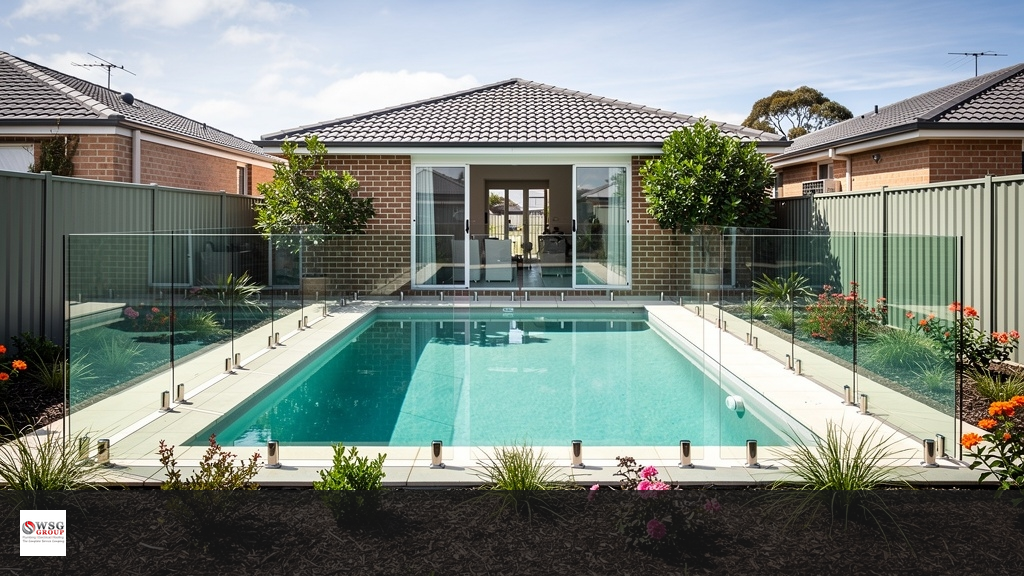
Pool Fencing Compliance NSW: Requirements, Costs and What Happens If You Don't Comply

Pool Fencing Compliance NSW: Requirements, Costs and What Happens If You Don’t Comply

Understanding pool fencing compliance NSW is not optional for any Sydney property with a swimming pool, spa, or portable pool — it’s a legal requirement with serious consequences for non-compliance. The NSW Swimming Pools Act 1992 and the subsequent 2012 amendments set out clear standards that every pool owner must meet, and councils across Greater Sydney are actively conducting compliance inspections.

This guide answers the key questions: what the NSW law actually requires, how much compliant pool fencing costs in 2025–2026, when inspections are mandatory, and what penalties apply for non-compliance. Whether you’re a homeowner, landlord, or property buyer, this is everything you need to know before your next pool inspection.

What Are the Pool Fencing Requirements in NSW?

Pool Fencing Compliance NSW: Requirements, Costs and What Happens If You Don't Comply

NSW pool fencing requirements are set by the Swimming Pools Act 1992 and Swimming Pools Regulation 2018, with technical standards set by Australian Standard AS 1926.1-2012 (Safety Barriers for Swimming Pools). Here are the core requirements:

Barrier type and height

All swimming pools and spas with a water depth exceeding 300mm must be enclosed by a child-resistant barrier. The barrier must:

  • Be at least 1200mm high (measured from the ground on the outside of the fence)
  • Have a non-climbable zone (NCZ) — no horizontal rails, attachments, or protrusions between 150mm and 900mm above the ground on the outside of the fence that could be used as footholds
  • Have a gap-free bottom — gaps at the bottom must not exceed 100mm
  • Have vertical picket/rail spacings of no more than 100mm

Gates and latches

All gates in pool barriers must:

  • Open away from the pool (outward swinging)
  • Be self-closing from any open position
  • Have a self-latching mechanism that is either located on the pool side of the gate or, if on the outside, must be positioned at least 1500mm above ground and not accessible through the gate
  • The latch mechanism must require two separate deliberate actions to open

Pool fencing standards by property type

Pool Type Applicable Standard Key Requirement
Outdoor pools built after 1 Aug 1990 NSW Swimming Pools Act 1992 + AS 1926.1-2012 Four-sided isolation barrier; house wall cannot be part of barrier
Outdoor pools built before 1 Aug 1990 As amended — must meet 2012 AS standards Upgraded barrier required; non-compliant fences must be brought to current standard
Indoor pools AS 1926.1-2012 Must be enclosed within a barrier or use approved door-to-pool safety system
Portable/inflatable pools (water depth >300mm) Swimming Pools Act 1992 Must be enclosed by compliant barrier whenever unattended
Spas (water depth >300mm) As above; or approved lockable lid Barrier or approved rigid lid; lid must require tool to open

Important: the “tourist and visitor accommodation” pool rule. From 29 April 2016, all pools at tourist accommodation, holiday parks, and multi-occupancy dwellings must be registered on the NSW Swimming Pool Register. Councils can inspect these at any time.

For authoritative guidance, refer to the NSW Swimming Pool Register and your local council’s pool safety inspection requirements.

How Much Does Pool Fence Installation Cost in Sydney?

Pool fence installation costs in Sydney vary significantly depending on the fence material, perimeter length, site conditions, and whether the project involves a new installation or upgrading an existing fence. Here are current 2025–2026 price ranges.

Fence Type Price per Metre (supply & install) Typical Total (10m pool perimeter)
Aluminium pool fence (powder-coated) $180 – $280/m $3,000 – $5,500
Glass panel (semi-frameless) $350 – $500/m $5,500 – $9,000
Glass panel (frameless) $500 – $800/m $8,000 – $14,000
Tubular steel (galvanised & powder-coated) $200 – $350/m $3,500 – $6,500
Colorbond steel pool fence $150 – $250/m $2,500 – $5,000
Council compliance inspection fee $150 – $250 (council-dependent)

Additional cost factors for Sydney properties:

  • Sloped blocks: Common in the Hills District, Northern Beaches, and North Shore — stepped panels or angled installations add 15–30% to material and labour costs
  • Rock drilling: Post installation in Sydney sandstone or shale substrate requires specialised equipment — add $80–$200 per post
  • Gate upgrades: Non-compliant gates must be replaced with compliant self-closing, self-latching versions — typically $300–$800 per gate installed
  • Certification: A certifier must issue a certificate of compliance after installation — typically included in the contractor’s fee or $200–$400 separately

For related property maintenance, WSG Group also handles tile roof repairs and replacement and bathroom renovation plumbing in Sydney — many clients schedule these works together when preparing a property for sale or rental compliance.

When Is a Pool Safety Inspection Required in NSW?

NSW law requires a pool safety inspection certificate in these specific situations:

On sale or lease of property

Since 29 April 2014, any property with a pool that is being sold or leased must have a valid Certificate of Compliance or Occupation Certificate attached to the contract of sale or tenancy agreement. The certificate must be issued by:

Certificates are valid for three years. If your pool certificate has expired and you are selling or leasing your property, you must obtain a new one before proceeding.

Council inspection programs

NSW councils are required to inspect all registered pools within their area at least once every three years. Councils including City of Sydney, Blacktown, Camden, Campbelltown, Northern Beaches, Ku-ring-gai, and Sutherland Shire have active inspection programs. If your pool has not been inspected and is not registered, contact your local council immediately — operating an unregistered pool carries its own penalties.

Complaint-triggered inspections

Any person can lodge a complaint with council about a suspected non-compliant pool barrier. This triggers an inspection regardless of the scheduled cycle.

What Happens If Your Pool Fence Doesn’t Comply?

The consequences of pool fence non-compliance in NSW are serious — both legally and in human terms. Pool drowning is the leading cause of accidental death for children under 5 in Australia, which is why NSW penalties for non-compliance are among the strictest in the country.

Legal penalties:

  • Non-compliance notice: Council issues a notice requiring rectification within a specified timeframe (typically 30 days)
  • Penalty infringement notice: Fines up to $5,500 for individuals and $11,000 for corporations for failing to have a compliant pool barrier
  • Penalty for failing to register: Up to $2,200 for unregistered pools
  • Court prosecution: In serious cases, including where non-compliance results in injury or death, criminal prosecution is possible

Property transaction implications:

  • A property cannot legally be sold or leased without a valid certificate of compliance (or an exception certificate with a warning notice attached)
  • Purchasers or tenants may refuse to proceed or seek price reductions where pool compliance is unresolved
  • Some lenders require pool compliance before finalising a mortgage on properties with pools

Insurance implications:

  • Home and liability insurers may deny claims arising from accidents at non-compliant pools
  • Public liability exposure is significantly higher for pool owners who fail to maintain compliant barriers

The most practical approach is to address any compliance issues proactively rather than waiting for an inspection notice. WSG Group can assess your pool barrier against current AS 1926.1-2012 requirements and provide a written compliance report before you engage a certifier.

Can I Install Pool Fencing Myself in NSW?

In NSW, homeowners may carry out their own pool fencing installation under the owner-builder provisions, but there are important limitations and risks that make professional installation the strongly recommended approach.

What you can do yourself:

  • Install pool fencing as an owner-builder if the total cost of works is under $20,000 (including labour) — you do not need an owner-builder permit below this threshold
  • Supply and install pool fence panels and posts where no structural footings or concrete work is required

What requires a licensed contractor:

  • Any concrete footing or structural work — requires a licensed builder or contractor
  • Any work over $20,000 total — requires owner-builder permit and Council approval
  • Pool fencing associated with a new pool that requires development approval — a licensed contractor must certify the work
  • Installation at a strata or community title property — strata by-laws typically require licensed contractors

The compliance risk of DIY: Even technically sound DIY pool fencing installations can fail a compliance inspection if the installation doesn’t precisely meet AS 1926.1-2012 requirements for post embedment depth, gate operation, NCZ compliance, or gap measurements. A failed inspection means rectification costs plus a reinspection fee. Most Sydney homeowners find that professional installation with a compliance guarantee is more economical than a DIY attempt that requires subsequent rectification.

For more on WSG Group’s plumbing and compliance services, visit our contact page for a no-obligation assessment, or read our guide on hot water system rebates in NSW if you’re planning broader property upgrades alongside pool fence compliance.

Pool Fence Compliance Assessment — Sydney

WSG Group assesses pool barrier compliance against AS 1926.1-2012 and provides remediation solutions across Greater Sydney. Licenced tradespeople, written compliance reports, fast turnaround.

Get Your Free Quote

Frequently Asked Questions

What are the pool fencing requirements in NSW?

NSW requires all pools with water depth exceeding 300mm to have a child-resistant barrier at least 1200mm high, with self-closing and self-latching gates that open away from the pool. The barrier must comply with Australian Standard AS 1926.1-2012 and the Swimming Pools Act 1992. Gaps at the bottom must not exceed 100mm, and a non-climbable zone must exist between 150mm and 900mm from the outside ground level.

How much does pool fencing cost in NSW?

Pool fencing in Sydney costs $150–$800 per linear metre depending on material — aluminium is the most affordable at $180–$280/m, frameless glass is the premium option at $500–$800/m. For a typical 10-metre pool perimeter, expect to pay $3,000–$14,000 for supply and installation, plus $150–$250 for the council compliance inspection fee.

Do I need to register my pool in NSW?

Yes. All pools and spas with a water depth exceeding 300mm must be registered on the NSW Swimming Pool Register at swimmingpoolregister.nsw.gov.au. The registration fee is typically $10 and must be renewed every three years. Failure to register can result in fines of up to $2,200.

When does a property need a pool compliance certificate in NSW?

A Certificate of Compliance is required when selling or leasing a property with a pool. The certificate must be attached to the contract of sale or tenancy agreement and is valid for three years. It must be issued by a council officer or an accredited certifier.

What happens if my pool fence fails an inspection?

If your pool barrier fails a compliance inspection, council will issue a notice requiring rectification within a set timeframe (usually 30 days). Fines of up to $5,500 apply for ongoing non-compliance. Rectification must be completed and re-inspected before a Certificate of Compliance can be issued.

Can I use my house wall as part of the pool barrier in NSW?

Only in limited circumstances. For pools constructed after 1 August 1990, a four-sided isolation barrier is required — the house wall cannot form part of the barrier. For pools built before this date and not yet brought to current standards, some transitional arrangements may apply. Your certifier will advise on your specific property.

How long does a pool compliance inspection take?

A standard pool compliance inspection takes 30–60 minutes for a residential property. The inspector checks all barrier components against AS 1926.1-2012 requirements, including fence height, gate operation, non-climbable zone, gap measurements, and latch mechanisms. Results are usually available within 1–3 business days.

scroll to top