

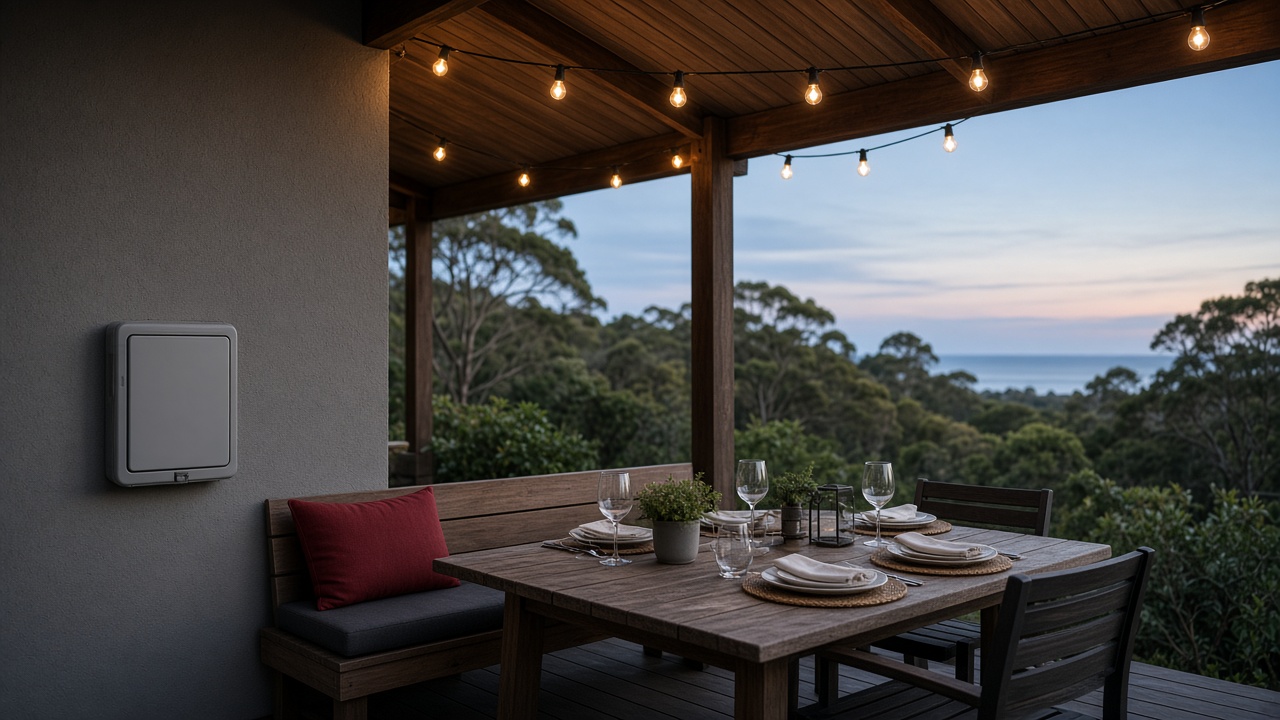
The table is set on the back deck in Green Point, the fairy lights are up and someone has just asked where to plug in the portable speaker. The answer, as in a lot of Central Coast homes, is an orange extension lead running from the laundry, across the doorway and under a pot plant. It works, mostly, until the door closes on it or the sprinkler comes on. That is usually when people start looking at outdoor power point installation Central Coast electricians can fit before summer.
Our homes are built for living outside from November to March. Decks catch the afternoon sea breeze at Wamberal, alfresco areas in Hamlyn Terrace host weekend barbecues, and carports in Woy Woy double as workshops. Yet many houses were built with one outdoor outlet, or none at all.
This guide explains what makes a power point suitable for outdoor use, how IP ratings work, why safety switches matter, where outlets are most useful, how salt air affects fittings, and what to expect from a licensed electrician. Any scenario used to explain a point is labelled as an illustrative example.
Why indoor power points do not belong outside
A standard indoor power point is designed for a dry room. Outside, it faces rain driven sideways by a southerly, morning dew, garden sprinklers, hose spray, dust, insects and, near the water, salt.
Moisture inside a power point can cause tracking across the terminals, corrosion and nuisance tripping. In the worst case it creates a shock or fire risk. That is why outdoor locations need outlets built for the job, installed so the enclosure keeps water out.
Extension leads are the other half of the problem. The NSW Government’s advice on preventing electrical accidents reminds people to fully unwind extension cords before use because they may overheat, and not to stack plugs because that can overload a power point. Leads also get pinched in doors, chewed by pets and left out in the rain.
A properly placed outdoor outlet removes most of those risks. It also tidies up the deck.
Understanding IP ratings for outdoor outlets
Weatherproof power points are sold with an IP rating, short for Ingress Protection. The testing body Intertek explains the code in its guide to IP ratings under IEC 60529. The first number shows protection against solids such as dust, on a scale from 0 to 6. The second number shows protection against water.
A few common examples:
- IP53: dust protected, and protected against sprayed water. Often seen on outlets under a covered area.
- IP56: dust protected, and protected against powerful water jets. A popular choice for exposed walls.
- IP66: dust tight, and protected against powerful water jets. Suited to harsh spots such as exposed coastal walls or areas that are hosed down.
The rating applies when the outlet is installed correctly and, for most models, when the cover is closed. Many outdoor outlets have a hinged lid with a channel for the plug lead so the cover can stay shut while something is plugged in.
Your electrician will suggest a rating to suit the location. A sheltered alfresco wall under a deep roof needs less protection than a bare fence post facing the weather.
Safety switches: the protection that matters most outdoors
Outdoor circuits are where a safety switch, also called an RCD, earns its keep. A safety switch watches for current leaking to earth, such as through a person, and cuts power fast.
The NSW Government page on electrical safety in the home says homes built during or after 2000 usually have safety switches, and recommends that owners of older homes ask a licensed electrician to check. It also recommends testing safety switches twice a year, for example when the clocks change for daylight saving.
There has been a recent change to the type of RCD allowed. Building Commission NSW explains in its RCD compliance advisory note that installing Type AC RCDs has not been permitted in Australia since 1 May 2023, and that Type A or Type B devices must be used instead. When new outdoor circuits are added, your electrician will use a compliant device.
If your switchboard is older, an outdoor power point job can be a good time to look at it. Our safety switch installation and upgrade page explains the options, and our checklist on whether your switchboard is a fire risk covers the warning signs. For homes that already have RCDs, regular RCD safety switch testing confirms they trip when they should.
Where outdoor power points are most useful
Before calling an electrician, walk around the outside of the house and think about how you use each space in summer. Common spots include:
- The deck or alfresco area for speakers, a slow cooker, a drinks fridge or a fan on still nights.
- Near the barbecue for a rotisserie motor, lighting or a small appliance, kept a safe distance from heat.
- The front of the house for seasonal lighting and garden tools, so leads do not run through the front door.
- The garage, carport or shed for power tools, a second fridge or charging garden equipment.
- The garden for pond pumps, irrigation controllers or water features.
- Side passages for a pressure cleaner or hedge trimmer without dragging a lead around the house.
Height and position matter. Outlets should sit where they are protected from direct hose spray and lawn mowers, where leads will not cross walkways, and where children cannot easily reach them. Double outlets are usually worth the small extra cost, because summer gatherings rarely need just one plug.
Illustrative example: a family in Kincumber adds two weatherproof doubles, one on the alfresco wall and one by the garden shed. The extension lead that used to run from the kitchen now stays in the cupboard, and the sliding door finally closes properly during barbecues.
Coastal conditions: salt air, sun and storms
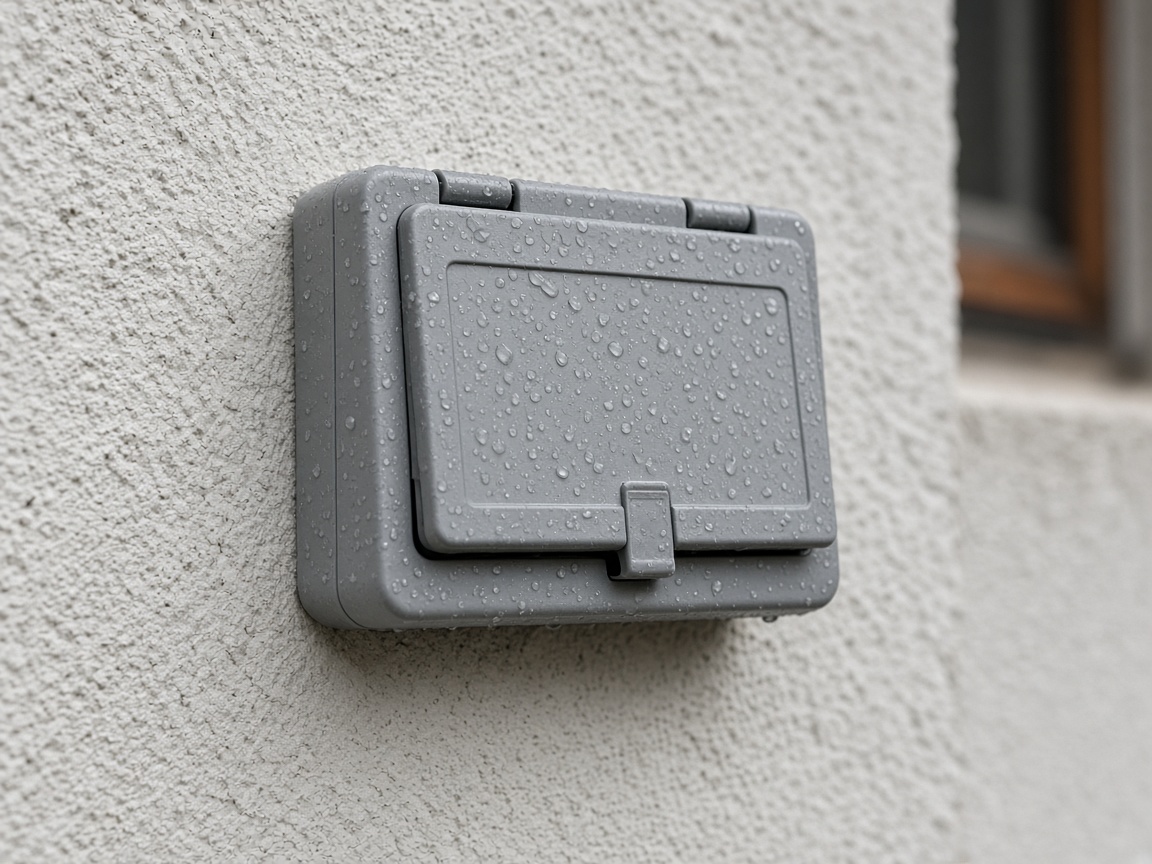
The Central Coast is a beautiful place to live and a tough place for outdoor fittings. Homes near the beach at Terrigal, Avoca Beach and Copacabana, and around the lakes at The Entrance and Budgewoi, face salt-laden air that corrodes metal screws, terminals and hinges.
Sun is the other enemy. Cheap plastic covers can go brittle and chalky after a few summers facing west. A cracked lid lets water in, even if the outlet carries a good IP rating on the box.
Ways to give outdoor outlets a longer life:
- Choose a quality outlet with a UV-stabilised cover and a rating suited to the exposure.
- Mount it under an eave, verandah or awning where possible.
- Ask about stainless or corrosion-resistant screws in beachside suburbs.
- Keep the cover closed when not in use, and wipe away salt and grime occasionally with a damp cloth.
- Replace any outlet with a cracked cover, a loose face or signs of burning straight away.
Summer storms bring a further risk. A lightning-related surge can damage anything plugged in outside, from pond pumps to drinks fridges. A surge protector installation at the switchboard adds a layer of protection for the whole home.
Planning outdoor power with lighting and other upgrades
Outdoor power points are often part of a bigger summer upgrade. If you are planning new lights, ceiling fans on the deck or a new outdoor kitchen, it makes sense to do the electrical work in one visit.
Lighting is the most common companion job. Low-level path lights, wall lights by the steps and sensor lights at the side gate make an outdoor area safer and more usable after dark. Our lighting electrician service can plan the lights and power together so the switches and outlets end up in sensible places.
If you are also thinking about outdoor plumbing, such as a sink or tap for an outdoor kitchen, our earlier guide to outdoor entertaining plumbing covers that side of the project. Coordinating trades before the deck boards or paving go down avoids cutting into finished surfaces later.
Building work is the easiest time. Cables can run under a deck or through a wall frame before it is lined, which is quicker and neater than retrofitting.
Signs an existing outdoor power point needs attention
Many Central Coast homes already have an outdoor outlet or two, often fitted decades ago. Before adding more, it is worth checking the ones you have. Look out for:
- A cracked, faded or missing cover. Once the lid fails, water can reach the terminals.
- Rust or green corrosion on screws, the faceplate or the plug pins of leads used there.
- Scorch marks, melting or a burning smell around the outlet or plug.
- A safety switch that trips when it rains, when the sprinkler runs or when something is plugged in outside.
- Loose fittings where the outlet moves in the wall when you plug in.
- An indoor-style outlet fitted outside with no weatherproof enclosure.
Any of these is a reason to stop using the outlet and book a licensed electrician. A safety switch that trips in wet weather is doing its job, but it is also telling you that moisture is getting somewhere it should not.
Illustrative example: a homeowner in Ettalong Beach notices the safety switch trips every time a heavy shower blows in from the west. The electrician finds water inside an old outdoor outlet with a cracked lid, replaces it with an IP-rated unit under the eave, and the tripping stops.
Using outdoor power safely at summer gatherings
Even the best outlet needs sensible use. A few habits keep a long afternoon on the deck relaxed:
- Keep plugs, leads and power boards off the ground and away from pools of water, eskies and drink buckets.
- Use only appliances and leads in good condition, and do not run leads under rugs or through closed doors.
- Keep the outlet cover closed as far as the lead allows, especially if rain is forecast.
- Unplug outdoor appliances when a storm is approaching.
- Do not overload a single outlet with stacked adaptors. If you regularly need more plugs outside, add another outlet.
- Switch off and unplug anything that gives a tingle, smells hot or trips the safety switch, and have it checked.
Who can install an outdoor power point in NSW
Adding or moving a power point is electrical wiring work. The NSW Government’s electrical safety requirements page states that by law any electrical wiring work must be done by a licensed electrician, and that electricians must submit a Certificate of Compliance for Electrical Work through the Building Commission NSW eCert portal. Customers can ask for a copy of the certificate.
Before work starts, you can confirm your electrician’s licence on the Verify NSW licence register. A good electrician will also check that the circuit has capacity for the new outlets and that it is protected by a working safety switch.
Things you can do yourself are limited to choosing locations, keeping covers closed, cleaning around outlets and testing your safety switches. Do not replace an indoor outlet with an outdoor one yourself, extend wiring, or run cables from the switchboard. Those are jobs for a licensed electrician.
What affects the cost of an outdoor power point
Every home is different, so be cautious about any price quoted without a site visit. The main factors are:
- Distance from the switchboard or the nearest suitable circuit.
- Wall and roof construction. Brick veneer, double brick, cladding and roof access all change the labour time.
- Whether a new circuit is needed or the outlet can be added to an existing one with spare capacity.
- Safety switch upgrades if the existing switchboard does not have compliant RCD protection.
- The outlet itself. Higher IP ratings and corrosion-resistant fittings cost more but last longer near the coast.
- Trenching for outlets in the garden or on a post away from the house.
Ask for a written quote that lists each outlet location, its IP rating, any new circuits or safety switches, and the certificate you will receive.
Getting the deck ready for summer
Outdoor power points are a small job with a big effect on how you use your home in summer. Choose outlets with a rating that suits each spot, make sure the circuit has a working, compliant safety switch, plan positions around how you actually entertain, and use a licensed electrician who provides a compliance certificate. Booking in November means the work is done before the Christmas rush.
WSG Group electricians work across the Central Coast, including Erina and Terrigal. To plan weatherproof outlets for your deck, garden or carport, see our power point installation service or contact us for a quote.
Frequently Asked Questions
What IP rating should an outdoor power point have?
It depends on the exposure. IP53 outlets are often used under covered areas, while IP56 and IP66 outlets suit exposed walls, coastal homes and areas that are hosed down. Your electrician will recommend a rating for each location.
Can I use an indoor power point under a covered patio?
Indoor outlets are designed for dry rooms. Covered patios still get wind-driven rain, dew and hose spray, so a weatherproof outlet with a suitable IP rating is the safer choice. A licensed electrician can advise on the right fitting.
Do outdoor power points need a safety switch?
Safety switches protect people from electric shock and are especially important outdoors. New work must use a compliant RCD, and Type AC RCDs have not been permitted for installation in Australia since 1 May 2023. Older homes should have their switchboards checked.
How often should I test my safety switches?
The NSW Government recommends testing safety switches twice a year, for example when the clocks change for daylight saving. If a switch does not trip or reset, contact a licensed electrician.
Can I install an outdoor power point myself in NSW?
No. Adding or moving a power point is electrical wiring work, which must be done by a licensed electrician in NSW. The electrician must lodge a Certificate of Compliance for Electrical Work, and you can ask for a copy.
How do I stop salt air damaging outdoor outlets?
Choose a quality outlet with a UV-stabilised cover, mount it under shelter where possible, ask about corrosion-resistant screws, keep the cover closed and wipe away salt occasionally. Replace any outlet with a cracked cover straight away.
Is it safe to leave an extension lead outside over summer?
Extension leads are not designed to live outdoors. They can be damaged by sun, rain, doors and pets, and they can overheat if left coiled. A permanent weatherproof outlet is the safer long-term option for regular outdoor use.