

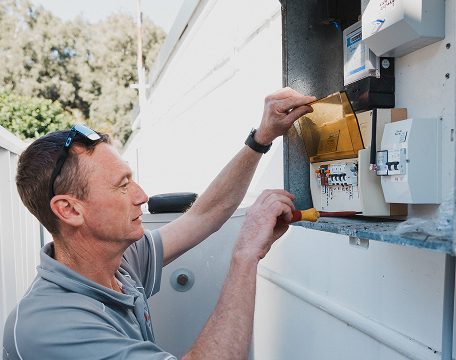
If you live in an older home, your switchboard may be handling more than it was designed to. These days, we run air conditioners, multiple TVs, gaming consoles, coffee machines, chargers, and more, often all at once. When a switchboard is outdated or damaged, it can pose a serious safety risk, including an increased risk of electrical fire.
This simple 2026 checklist will help you spot common warning signs, understand what they mean, and know when it’s time to call a licensed electrician. Quick note: never open a switchboard or try repairs yourself.
Why Older Switchboards Can Become A Fire Risk
Switchboards usually do their job quietly for years, so it’s easy to assume everything is fine. The problem is that many older switchboards were designed for lower power loads and older safety standards. Over time, heat, dust, moisture, and loose connections can build up.
Add modern power demand, and you can get issues like overheated wiring, failing breakers, and unsafe circuits. Even small issues, such as a loose connection, can cause arcing, a common cause of electrical fires. The goal is not to scare you; it’s to help you catch issues early, before they turn into a bigger problem.
A Quick Safety Note Before You Start
You can do this checklist without touching anything dangerous. Think of it as a home safety scan:
- Look, listen, and smell from a safe distance
- Note changes in behaviour around lights and appliances
- Check the switchboard area for signs of heat or damage
If you notice active burning, smoke, sparking, or a loud buzzing sound, step away and call an electrician immediately. If there’s an immediate danger, call emergency services.
The 2026 Switchboard Fire Risk Checklist For Older Homes
1) Burning Smell Or Heat Near The Switchboard
- A warm switchboard can happen, but it should not feel hot.
- A burning, melted-plastic, or heat-mark smell is a red flag.
What it may mean: overheating connections, damaged breakers, or wiring stress.
2) Flickering Lights Or Power That Cuts In And Out
- Flickering can be a simple globe issue, but frequent flicker across rooms is different.
- Power dropping out when you run the kettle, toaster, or heater is also a sign.
What it may mean: overloaded circuits, loose wiring, or failing breakers.
3) Frequent Tripping
A breaker that trips now and then can be doing its job. But if it keeps happening, especially with normal everyday use, don’t ignore it.
What it may mean: a fault in an appliance, an overloaded circuit, damaged wiring, or an older switchboard struggling to cope with demand.
4) Old-Style Fuses Or A Very Outdated Layout
If your home still has ceramic fuses, old rewirable fuses, or a mix of mismatched parts, it’s worth getting checked. Older systems can be less reliable and harder to keep safe as parts age.
What it may mean: older protection that does not match modern safety expectations.
5) No Modern Safety Protection
Many older homes lack modern protection on every circuit. This is important in wet areas like bathrooms, laundries, and kitchens, as well as for outdoor power points.
If you are planning Safety switch installation in Sydney, a licensed electrician can check which circuits are protected and what’s missing.
What it may mean: higher risk of shock and less protection if something goes wrong.
6) Buzzing, Crackling, Or Humming Sounds
A healthy switchboard should be quiet. Any ongoing buzzing or crackling is not normal.
What it may mean: arcing, loose connections, or failing components. These can be serious fire risks.
7) Rust, Moisture, Or Water Stains Near The Switchboard
Moisture and electricity are a dangerous mix. If the switchboard is near a damp area, an external wall with leaks, or you notice water staining, get it checked.
What it may mean: corrosion, damaged parts, and increased risk of faults.
8) Scorch Marks, Discolouration, Or Melted Plastic
Visible scorch marks, dark staining, or melted parts are strong warning signs.
What it may mean: overheating, arcing, or a previous fault that needs urgent attention.
9) Too Many Power Boards And Double Adaptors
This one is not inside the switchboard, but it often shows the home’s circuits are under pressure. If multiple rooms rely on power boards, your wiring may not be set up for today’s needs.
What it may mean: overloaded circuits and higher heat build-up over time.
10) Renovations, New Appliances, Or Bigger Power Demand
Have you added air con, an induction cooktop, EV charger, pool equipment, or a home office setup? Even if your switchboard looks fine, the system may need updating to match the new load.
What it may mean: the home has changed, but the electrical protection has not kept up.
What To Do If You Tick Any Of These Boxes
If you’ve noticed one or more warning signs, the safest next step is a professional inspection. A licensed electrician can test circuits, check load, inspect connections, and confirm whether the current setup is safe.
If the home is in the Central Coast area and you’re considering switchboard upgrades, an electrician can also explain what changes are needed, what benefits you’ll get, and what a sensible plan looks like.
If your needs are more specific, such as safety switch installation on the Central Coast, it’s still best to start with an inspection so the electrician can confirm compatibility and circuit coverage.
Why Acting Early Saves Stress And Money
Electrical issues rarely fix themselves. They usually get worse slowly, until the day something trips constantly, a circuit fails, or you smell heat and plastic. Getting ahead of it helps you:
- reduce fire risk
- protect appliances from faults and power issues
- support modern power needs safely
- improve peace of mind, especially in older homes
And while you might be focused on electrical safety today, many homeowners also handle other urgent home issues at the same time, like leaks or water damage, which is where a related service link, such as plumbing Services Sydney, can be useful for planning.
Conclusion
Older homes have a lot of character, but their electrical systems often need a closer look in 2026. If your switchboard is showing signs like heat, frequent tripping, buzzing, or visible damage, don’t wait for it to become an emergency. A quick inspection can tell you what’s safe, what needs attention, and what upgrades make sense for your home and lifestyle.
Book a licensed switchboard safety check today to confirm your home is protected and compliant and to fix any risks before they become a serious problem.