

How Much Does an Emergency Electrician Actually Cost in Sydney? 2026 Rates Explained
Table of Contents
- How Much Does an Emergency Electrician Cost in Sydney?
- Emergency Electrician Pricing Structure Explained
- Common Emergency Electrical Jobs and Their Costs
- When You Actually Need an Emergency Electrician
- What to Expect When You Call an Emergency Electrician
- How to Avoid Overpaying for Emergency Electrical Work
- Frequently Asked Questions
Emergency electrician cost in Sydney ranges from $150 to $450 per hour in 2026, depending on the time of day, complexity of the fault, and materials required. A standard after-hours callout for a tripped safety switch or power loss typically costs $250-$400 total, while complex faults involving switchboard repairs can reach $600-$1,200. This guide breaks down exactly what you should expect to pay and how to tell whether a quote is fair.
How Much Does an Emergency Electrician Cost in Sydney?
Emergency electrical work attracts premium rates because it requires immediate availability, after-hours response, and the diagnostic skills to identify faults under pressure. Here are the current rates across Greater Sydney:
| Time Period | Callout Fee | Hourly Rate | Typical Total (1-hour job) |
|---|---|---|---|
| Business hours (7am-5pm weekdays) | $80 – $150 | $90 – $150/hr | $170 – $300 |
| After hours (5pm-10pm weekdays) | $150 – $250 | $150 – $220/hr | $300 – $470 |
| Night (10pm-7am) | $200 – $350 | $180 – $280/hr | $380 – $630 |
| Weekend (Saturday) | $150 – $250 | $150 – $250/hr | $300 – $500 |
| Sunday/Public Holiday | $200 – $350 | $200 – $300/hr | $400 – $650 |
These rates reflect the reality that emergency electricians must maintain on-call availability, carry fully stocked vehicles, and respond within 30-60 minutes regardless of conditions. The callout fee covers travel time, vehicle costs, and the initial diagnostic assessment. Hourly rates apply to actual work performed after diagnosis.
Emergency Electrician Pricing Structure Explained
Understanding how electricians structure their pricing helps you evaluate whether a quote is reasonable. Most Sydney emergency electricians use one of two models:
Model 1: Callout Fee + Hourly Rate
The most common structure charges a fixed callout fee (covering travel and initial assessment) plus an hourly rate for work performed. The first hour is typically charged in full even if the job takes 30 minutes. Subsequent time is charged in 15 or 30-minute increments.
Example: After-hours callout for a tripped RCD
- Callout fee: $180
- Diagnosis and reset (25 minutes, charged as 1 hour): $180
- Total: $360
Model 2: Fixed Price Per Job
Some electricians offer fixed pricing for common emergency tasks. This removes uncertainty but may cost slightly more for simple faults. Fixed pricing is particularly common for:
- Safety switch reset/replacement: $180-$350
- Power restoration (no parts): $250-$400
- Switchboard fault diagnosis: $300-$500
- Exposed wiring made safe: $200-$450
Materials Are Extra
Both pricing models charge materials separately. Common emergency parts include:
| Part | Supply + Install Cost |
|---|---|
| RCD safety switch | $120 – $250 |
| Circuit breaker (MCB) | $80 – $180 |
| Power point replacement | $100 – $200 |
| Light switch/fitting | $80 – $180 |
| Surge protector | $150 – $350 |
| Isolator switch | $120 – $280 |
Common Emergency Electrical Jobs and Their Costs
Knowing what typical emergency jobs cost helps you assess whether your situation is straightforward or complex. Here are the most common calls and realistic price expectations:
Total Power Loss
When your entire home loses power, the most likely causes are a tripped main switch, failed RCD, or an issue with the network supply (Ausgrid or Endeavour Energy). An electrician will first confirm the fault is on your side of the meter, then systematically isolate circuits to identify the problem.
Typical cost: $250-$500 (after hours). If a component needs replacement, add $80-$250 for parts.
Repeated Safety Switch Tripping
An RCD (residual current device) that trips repeatedly indicates a current leakage fault somewhere on the protected circuit. The electrician uses an insulation resistance tester to identify which circuit and which appliance or section of wiring is causing the trip.
Typical cost: $250-$450 (after hours). If the RCD itself has failed, replacement adds $120-$250.
Burning Smell or Sparking from Power Points
This is a genuine emergency requiring immediate attention. Loose connections, damaged wiring, or overloaded circuits can cause arcing which presents a fire risk. The electrician will isolate the affected circuit, identify the fault source, and make it safe. Permanent repair may be scheduled separately if extensive rewiring is needed.
Typical cost: $300-$600 (make safe + initial repair). Complex rewiring quoted separately.
Storm Damage to Electrical Systems
Lightning strikes and power surges can damage safety switches, switchboards, and connected appliances. After a severe storm, an electrician will assess switchboard integrity, test all circuits, replace any damaged protection devices, and install surge protection if not already present.
Typical cost: $400-$900 (assessment + essential repairs). Surge protector installation adds $150-$350.
Hot or Discoloured Switchboard
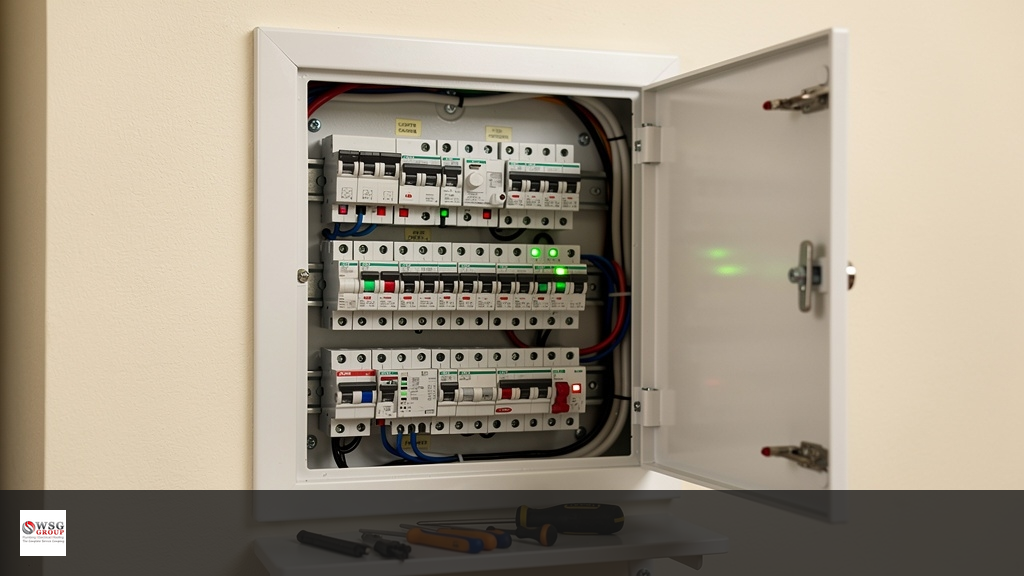
A warm switchboard panel or visible discolouration/melting on circuit breakers indicates dangerous overloading or loose connections. This requires immediate professional attention. The electrician will de-energise the board, identify failed components, and either repair or recommend a full switchboard upgrade if the board is obsolete.
Typical cost: $350-$700 (emergency repair). Full switchboard upgrade: $1,500-$4,500 (scheduled separately).
Partial Power Loss (Some Circuits Dead)
When only some rooms or circuits lose power, the fault is typically a tripped individual breaker, a failed neutral connection, or a wiring fault on a specific circuit. Diagnosis is usually faster than total power loss because the fault is already partially isolated.
Typical cost: $200-$400 (after hours). Simple breaker reset may be at the lower end; neutral faults cost more to trace and repair.
When You Actually Need an Emergency Electrician
Not every electrical issue requires an emergency callout at premium rates. Some situations can safely wait until business hours. Here is how to tell the difference:
Call Immediately (True Emergencies)
- Burning smell coming from switchboard, power points, or light fittings
- Sparking or arcing visible at any electrical point
- Complete power loss with no response from main switch reset
- Water near electrical installations (flood, burst pipe near switchboard)
- Electric shock received from any fitting or appliance
- Exposed live wiring (storm damage, renovation accident)
- Switchboard panel hot to touch or visibly discoloured
Can Wait Until Business Hours
- Single power point not working (other circuits fine)
- Flickering lights in one room only
- Outdoor lighting failed
- Ceiling fan stopped working
- RCD tripped once but stayed on after reset
- Non-essential circuit lost (e.g., garage or shed power)
Waiting for business hours can save you $100-$250 on the same job. However, never ignore the symptoms in the “call immediately” list, as they represent genuine fire or electrocution risks that worsen with delay.
What to Expect When You Call an Emergency Electrician
Understanding the process helps you stay calm during a stressful situation and ensures you are dealing with a legitimate professional.
The Phone Call
A professional emergency electrician will ask you specific questions to assess urgency and prepare appropriately:
- What symptoms are you experiencing? (no power, sparking, burning smell)
- When did it start? (sudden vs gradual)
- Have you checked your switchboard? (is the main switch on?)
- Is anyone at immediate risk? (water near electrics, exposed wiring)
- What is your address? (for response time estimate)
They should provide a clear indication of their callout fee and hourly rate before dispatching. If an electrician cannot tell you their rates over the phone, consider calling someone else.
Response Time
Most Sydney emergency electricians guarantee 30-60 minute response times within their service area. Electricians with thermal imaging capability may take slightly longer if they need to collect specialist equipment, but the diagnostic process will be faster once on site.
On-Site Process
- Safety assessment: The electrician confirms the area is safe to work and identifies any immediate hazards
- Diagnosis: Systematic testing to identify the fault location and cause
- Quote: Before proceeding with repairs, you receive a verbal or written quote for the work required
- Repair: If you approve the quote, repairs are completed on the spot where possible
- Testing: All circuits are tested for correct operation before the job is signed off
- Certificate: A Certificate of Compliance (CCEW) is issued for all electrical work performed
Your Rights as a Consumer
Under NSW Fair Trading regulations, you are entitled to:
- A clear quote before work commences (verbal is acceptable for emergencies under $1,000)
- An itemised invoice showing labour, materials, and callout fee separately
- A CCEW (Certificate of Compliance for Electrical Work) for all work performed
- The right to decline work after receiving the quote (callout fee still applies)
How to Avoid Overpaying for Emergency Electrical Work
While emergency rates are legitimately higher than standard rates, there are ways to ensure you pay a fair price and do not get caught by inflated quotes.
Before You Call
- Check your switchboard first. Many “emergencies” are simply a tripped RCD or main switch. If you can safely reset it and power returns, the issue may not need immediate professional attention
- Check Ausgrid outages. Visit the Ausgrid outage map to confirm the issue is not a network problem (which they fix for free)
- Ask for rates before they arrive. A reputable electrician will quote their callout fee and hourly rate over the phone
When They Arrive
- Ask for the diagnosis before the repair quote. Some electricians bundle diagnosis into the callout fee; others charge it separately. Clarify upfront
- Get the total quoted before work starts. You have the right to understand the full cost before authorising repairs
- Check their licence. Ask for their NSW electrical licence number. You can verify it instantly via the NSW Fair Trading website
Red Flags
- Refusing to provide rates over the phone (“we need to see it first” for basic callout fee questions)
- Dramatically inflating the scope (“your whole switchboard needs replacing” for a single tripped breaker)
- No CCEW issued after work is completed
- Cash-only payment with no receipt
- Arriving without visible ID or refusing to show their licence
Legitimate emergency electricians are transparent about their pricing because they want repeat customers and referrals. If something feels wrong, it is acceptable to pay the callout fee, decline repairs, and get a second opinion during business hours (unless the situation is a genuine immediate hazard).
Frequently Asked Questions
How much does an emergency electrician charge for a callout in Sydney?
Emergency callout fees in Sydney range from $80-$150 during business hours, $150-$250 after hours, and $200-$350 for nights, Sundays, and public holidays. This fee covers travel and initial assessment. Repair work is charged separately on top.
Is it cheaper to wait until business hours?
Yes, waiting for business hours typically saves $100-$250 on the same job. However, genuine emergencies involving burning smells, sparking, water near electrics, or complete power loss should never be delayed as they present fire or electrocution risks.
What should I do if my safety switch keeps tripping?
First, unplug all appliances on the affected circuit. Reset the RCD. If it holds, plug appliances back in one at a time to identify the faulty appliance. If it trips with nothing connected, the fault is in the wiring itself and requires a licensed electrician to trace and repair.
Do emergency electricians charge by the hour or by the job?
Most Sydney emergency electricians charge a callout fee plus hourly rate, with the first hour charged in full. Some offer fixed pricing for common jobs like safety switch replacement or power restoration. Always confirm the pricing model before work begins.
Can I claim emergency electrical work on insurance?
If the fault was caused by a covered event (storm, lightning, flood), the repair cost may be claimable under your home and contents insurance. General wear and tear, ageing wiring, and overloaded circuits are not covered. Document the damage with photos before repairs begin and keep all invoices.
How do I know if an electrician is licensed?
Ask for their NSW electrical licence number and verify it via the NSW Fair Trading licence check. All electrical work in NSW must be performed by a licensed electrician, and a Certificate of Compliance for Electrical Work (CCEW) must be issued for every job. If they cannot produce either, do not allow them to proceed.
What qualifies as an electrical emergency?
True electrical emergencies include: burning smells from switchboards or outlets, visible sparking or arcing, complete power loss that does not respond to switch resets, water contact with electrical installations, electric shock received from any fitting, exposed live wiring, and switchboard panels that are hot or discoloured. These situations require immediate professional response.
Need an Emergency Electrician in Sydney Right Now?
WSG Group’s licensed electricians respond 24/7 across Sydney. Transparent pricing, no hidden fees, CCEW issued on every job. Call 1800 186 597 or request a callback.
Pricing accurate as of May 2026. Emergency rates vary by provider. For transparent, upfront pricing from WSG Group’s licensed electrical team, contact us day or night.