

What Does Backflow Prevention Testing Cost on the Central Coast?
Backflow prevention testing on the Central Coast typically costs between $120 and $350 per device, depending on the type of backflow prevention device, its location, and whether any repairs are needed. If your property has a testable backflow device, annual testing is a legal requirement under the Sydney Water backflow prevention program, and failing to comply can result in fines and potential disconnection.
Many Central Coast homeowners are unaware they even have a backflow prevention device on their property. These devices protect the public water supply from contamination by preventing water from flowing backwards through your pipes into the mains. Properties with swimming pools, garden irrigation systems, fire hose reels, or commercial-grade appliances are most likely to have one installed.
In This Guide
- How Much Does Backflow Prevention Testing Cost?
- What Is Backflow and Why Does It Matter?
- Who Needs Backflow Prevention Testing on the Central Coast?
- What Are the Different Types of Backflow Prevention Devices?
- What Happens During a Backflow Prevention Test?
- NSW Backflow Prevention Regulations
- Frequently Asked Questions
How Much Does Backflow Prevention Testing Cost?
Most licensed plumbers on the Central Coast charge between $120 and $350 to test a single backflow prevention device. The price varies based on the device type, accessibility, and whether the test reveals a fault that requires repair. Here is a breakdown of typical costs.
| Service | Typical Cost (AUD) | What Is Included |
|---|---|---|
| Single device test (hose connection or dual check valve) | $120 – $180 | Visual inspection, pressure differential test, compliance report |
| Single device test (RPZ or testable double check) | $180 – $350 | Full test with calibrated gauge set, compliance report to Sydney Water |
| Multiple devices (2–4 on same property) | $250 – $600 | Bulk rate per device, single callout, all compliance reports |
| Device repair (minor, e.g. O-ring or spring replacement) | $150 – $400 | Parts and labour, retest after repair |
| Device replacement (complete unit) | $400 – $1,200 | New device, installation, initial test, compliance report |
Service fees vary between providers. Most Central Coast plumbers include the callout fee in the testing price, but some charge a separate attendance fee of $60 to $120. Always confirm the total cost before booking, including the compliance report lodgement fee if applicable.
What Is Backflow and Why Does It Matter?
Backflow occurs when water flows in the wrong direction through your plumbing system, potentially pushing contaminated water from your property back into the public water supply. This can happen due to a sudden drop in mains water pressure (back-siphonage) or when pressure on your property exceeds the mains pressure (back-pressure).
On the Central Coast, backflow is a genuine public health concern. The region’s water supply infrastructure serves over 340,000 people through the Central Coast Council water network. A single backflow incident from a property with a swimming pool, chemical storage, or irrigation system could contaminate water reaching neighbouring homes.
The most common backflow scenarios on Central Coast properties include pool water with chlorine and algaecides flowing back into drinking water lines, fertiliser from garden irrigation systems contaminating the mains, and heated water from solar hot water systems creating back-pressure conditions.
Who Needs Backflow Prevention Testing on the Central Coast?
Under NSW Plumbing and Drainage Regulation 2017, any property with a medium or high hazard cross-connection must have a testable backflow prevention device that is inspected annually. Here are the most common property types on the Central Coast that require testing.
- Homes with swimming pools or spas that have automatic fill valves connected to the mains
- Properties with garden irrigation systems connected to the mains supply, particularly those using fertiliser injectors
- Commercial properties including restaurants, cafes, hairdressers, medical practices, and car washes
- Properties with fire hose reels or hydrant systems
- Buildings with boilers, cooling towers, or heating systems connected to the mains
- Strata properties where common plumbing serves multiple units
- Properties on rainwater tank top-up systems where mains water supplements the tank
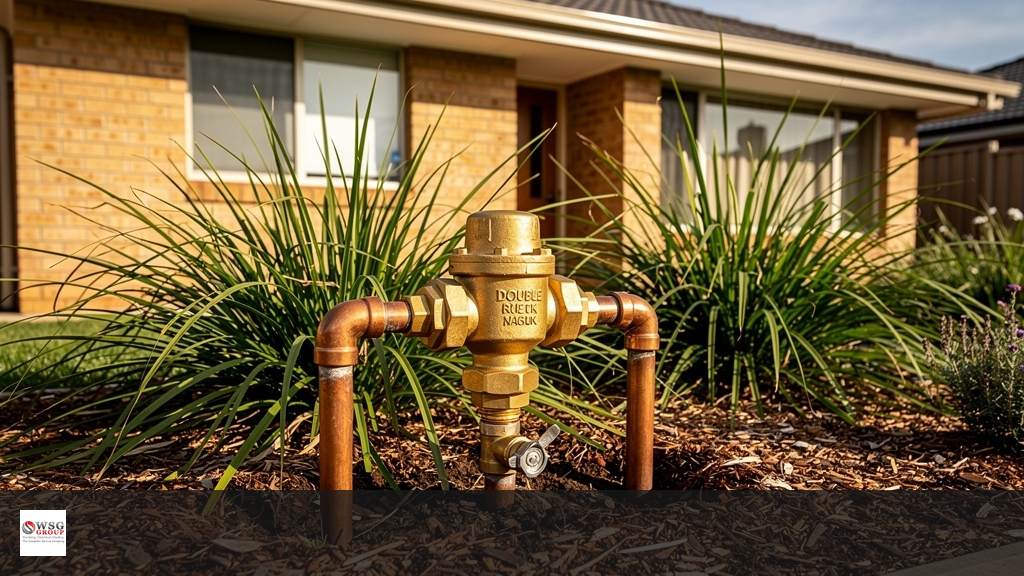
If you are not sure whether your property has a backflow device, check near your water meter or at the point where the mains supply enters your property. The device is usually a brass or stainless steel assembly with test ports. Your plumber can identify it during a routine visit.
What Are the Different Types of Backflow Prevention Devices?
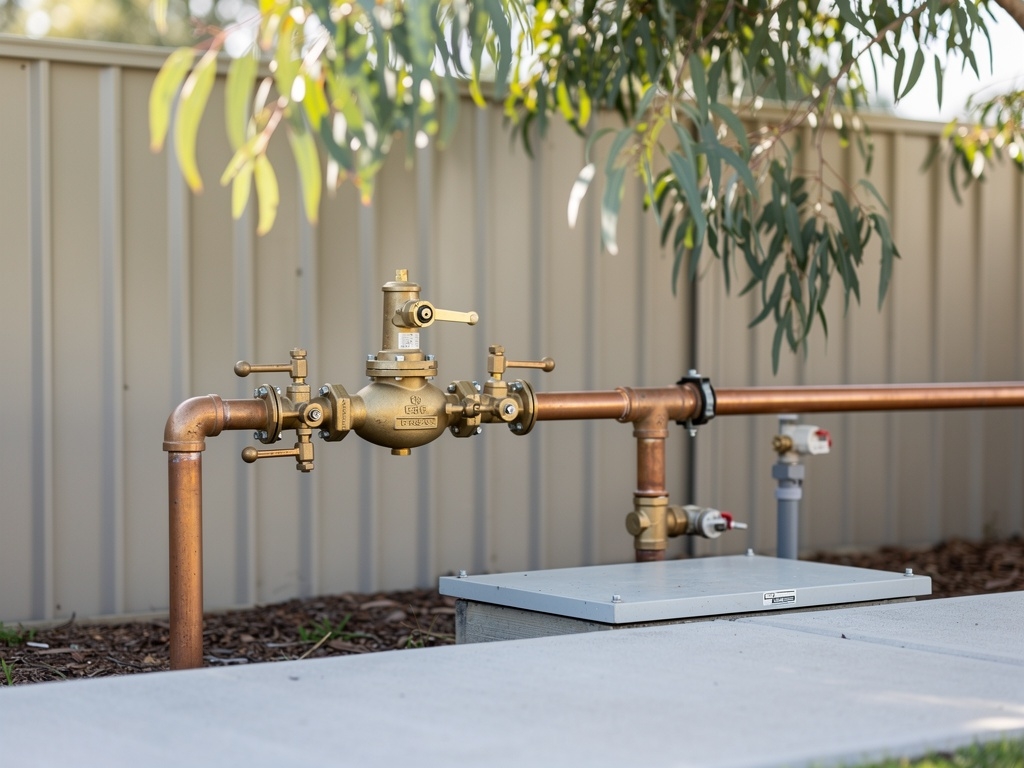
There are several types of backflow prevention devices used on Central Coast properties. The type installed on your property determines the testing requirements and cost.
| Device Type | Hazard Level | Typical Application | Annual Test Required? |
|---|---|---|---|
| Dual check valve (non-testable) | Low | Standard residential water meter | No (visual inspection only) |
| Testable double check valve (DCVA) | Medium | Pools, irrigation, fire hose reels | Yes |
| Reduced pressure zone device (RPZ) | High | Commercial kitchens, chemical processes, medical facilities | Yes |
| Registered air gap | High | Industrial, large commercial | No (physical gap provides permanent protection) |
RPZ devices are the most expensive to test and maintain because they have more internal components and a relief valve that must be verified. They are also the most effective, providing protection even if both check valves fail simultaneously.
What Happens During a Backflow Prevention Test?
A backflow test takes 20 to 45 minutes per device. Here is what the plumber does during a standard annual test.
- Visual inspection. The plumber checks the device for visible damage, corrosion, leaks, and proper installation. They verify the device is accessible and not obstructed.
- Pressure differential test. Using a calibrated test gauge kit, the plumber measures the pressure differential across each check valve and the relief valve (for RPZ devices). Each component must hold a minimum pressure differential to pass.
- Relief valve test (RPZ only). The relief valve must open at the correct pressure point and discharge water when the check valves cannot maintain the required differential. This is a critical safety function.
- Pass or fail determination. If all components meet the minimum requirements, the device passes. If any component fails, the plumber can often repair it on the spot (O-rings, springs, or seats) and retest.
- Compliance report. The plumber completes a test report and lodges it with the water authority. On the Central Coast, this report goes to either Central Coast Council water services or Sydney Water, depending on your supply area.
For more information about maintaining your property’s plumbing systems, see our guides on stormwater drain cleaning costs and plumbing services in Gosford.
NSW Backflow Prevention Regulations
Backflow prevention is regulated at both state and local levels in NSW. Here are the key regulations that apply to Central Coast properties.
| Regulation | Authority | Key Requirement |
|---|---|---|
| Plumbing and Drainage Act 2011 | NSW Government | Properties must protect public water supply from contamination |
| AS/NZS 3500.1 Water Services | Standards Australia | Specifies backflow prevention device types for each hazard rating |
| Sydney Water backflow program | Sydney Water / Central Coast Council | Annual testing of all testable devices, compliance reports lodged with water authority |
| Plumbing Code of Australia | ABCB | Mandatory backflow protection for all cross-connections |
Failure to test your backflow device annually can result in a compliance notice from the water authority, followed by fines of up to $2,200 for individuals and $11,000 for corporations under the Plumbing and Drainage Act 2011. In extreme cases, the water authority can disconnect your water supply until the device is tested and certified.
Properties in strata schemes have additional obligations. The owners corporation is responsible for backflow devices on common property, while individual lot owners are responsible for devices within their lots. For more on strata maintenance requirements, our guide on NSW pool fencing compliance covers related property compliance topics.
Need Backflow Testing on the Central Coast?
Licensed plumbers with calibrated test equipment. Annual testing, repairs, and compliance reports for residential and commercial properties across the Central Coast.
Book a Backflow TestFrequently Asked Questions
How often do I need to get my backflow device tested?
Testable backflow prevention devices must be tested annually by a licensed plumber with a current backflow test licence. The test report must be lodged with your water authority within the required timeframe, usually 10 business days.
What happens if my backflow device fails the annual test?
If a device fails, the plumber will usually attempt to repair it on the spot by replacing worn O-rings, springs, or check valve seats. After repair, the device is retested. If it still fails, the entire device needs to be replaced before a passing report can be lodged.
Can any plumber test a backflow prevention device?
No, backflow testing must be carried out by a plumber who holds a current backflow prevention test licence issued under NSW regulations. This requires specific training and access to calibrated differential pressure test gauge equipment. Not all general plumbers hold this qualification.
How do I find out if my property has a backflow prevention device?
Check near your water meter at the front of your property. Backflow devices are usually brass or stainless steel assemblies with small test ports. You can also contact Central Coast Council water services or Sydney Water, who maintain a register of properties with known testable devices.
Will I lose water pressure after a backflow device is installed?
A correctly sized and installed backflow device should cause minimal pressure loss, typically 20 to 50 kPa depending on the device type. RPZ devices cause slightly more pressure drop than double check valves. If you notice a significant pressure reduction after installation, the device may be undersized for your property’s flow requirements.
Is backflow testing tax deductible for investment properties?
Yes, annual backflow testing is a deductible maintenance expense for investment properties. The testing fee, any repair costs, and the compliance report lodgement fee are all claimable in the financial year they are incurred. Keep the plumber’s invoice and test report as documentation.
What is the penalty for not testing my backflow device in NSW?
Under the Plumbing and Drainage Act 2011, failure to maintain a testable backflow device can result in fines of up to $2,200 for individuals and $11,000 for corporations. The water authority may also issue a compliance notice requiring testing within a specified timeframe, and in serious cases, can restrict or disconnect water supply until compliance is achieved.