

How to Find a Reliable Electrician Near You in Sydney — Without Getting Burned
When you search “electrician near me” in Sydney, you get hundreds of results — but not all electricians are equal. Electrical work in NSW carries real safety and legal stakes, and choosing the wrong operator can result in failed inspections, insurance headaches, or genuine safety hazards. This guide gives you a complete checklist for finding a licenced, reliable electrician in Sydney for any job, from a simple power point installation to a full switchboard upgrade.
Table of Contents
- How to Verify an Electrician’s Licence in NSW
- What to Pay for Common Electrical Work in Sydney
- Questions to Ask Before Hiring
- Common Electrical Jobs and What They Involve
- Compliance, Permits and Certificates of Work
- Red Flags When Hiring an Electrician
- Frequently Asked Questions
How to Verify an Electrician’s Licence in NSW
In NSW, all electrical work must be performed by a licenced electrician — this is enforced under the Electricity (Consumer Safety) Act 2004. Unlicenced electrical work is illegal regardless of how simple the job appears and can void your home insurance.
Check the Service NSW Licence Register
Every licensed electrician in NSW is registered with Service NSW. You can verify any electrician’s licence at the Service NSW public licence register. Enter the licence number or the business name and confirm:
- The licence is current (not expired or suspended)
- The licence type includes electrical contracting (not just electrical work licence alone)
- The name on the licence matches the person or business contacting you
Licence Types to Know
There are two main licence categories relevant to residential electrical work in NSW:
- Electrical Work Licence (EWL): Authorises an individual to perform electrical installation work. Required for every sparky on site.
- Electrical Contractor Licence (ECL): Required to run a business that contracts for electrical work. The business you’re hiring should hold this — not just the individual.
Ask for both — the individual’s EWL and the company’s ECL. A sole trader electrician should hold both in their own name.
What to Pay for Common Electrical Work in Sydney (2026)
Sydney electrical labour rates have increased in recent years, reflecting demand and cost-of-living pressures across the trades. Here are realistic cost ranges for common residential electrical jobs:
| Job Type | Typical Cost Range | Notes |
|---|---|---|
| Standard callout fee (business hours) | $80–$150 | Usually includes first 30 min labour |
| After-hours callout | $150–$350 | Varies significantly by operator |
| Power point installation (per point) | $150–$300 | New vs relocated circuit affects cost |
| Ceiling fan installation | $200–$400 | Fan supply extra; new wiring costs more |
| LED downlight installation (per light) | $80–$150 | Volume discounts common |
| Safety switch (RCD) installation | $200–$400 | Per circuit; required for new circuits |
| Switchboard upgrade (basic) | $1,200–$2,500 | Depends on circuits and meter type |
| Switchboard upgrade (full rewire) | $3,000–$8,000+ | Older homes with rewiring required |
| EV charger installation | $800–$2,000 | Charger hardware extra |
| Solar inverter fault/repair | $300–$800 | Inverter replacement is higher |
These are market ranges — not quotes. Your specific job may cost more or less depending on the complexity, accessibility, and materials involved. Always get a written quote before work begins for any job over $1,000.
Questions to Ask Before Hiring an Electrician in Sydney
The right questions, asked upfront, tell you a great deal about whether an electrician is worth hiring. Here are the most important ones:
1. Can You Provide Your Licence Number?
Any licenced electrician will give you their EWL and ECL number without hesitation. If they refuse or deflect, end the conversation.
2. Will You Issue a Certificate of Compliance for Electrical Work (CCEW)?
In NSW, any electrical work that involves installing, altering, or adding to fixed wiring must be accompanied by a Certificate of Compliance for Electrical Work (CCEW). This is lodged with Ausgrid or Endeavour Energy (depending on your area) and your energy retailer. A reputable electrician will always issue this — if yours won’t, that’s a serious legal and safety red flag. Our guide to switchboard upgrades in Sydney explains what paperwork you should receive after a major electrical job.
3. Do You Carry Public Liability Insurance?
Public liability insurance protects you if the electrician causes property damage or injury during the job. Licensed electrical contractors are required to hold this. Ask for confirmation of their insurer and policy number if you want to verify.
4. What’s Your Payment Structure?
For jobs under $20,000, NSW law limits progress payments. A reputable electrician won’t demand payment for work not yet completed. Large upfront deposits for small jobs should raise questions. Confirm whether the quoted price includes GST and materials.
5. Can You Give Me a Written Quote?
For jobs over $1,000, a written quote is legally required before work starts. For smaller jobs, request an itemised verbal or written estimate that separates the callout fee, labour rate, and materials. This protects you from bill shock and gives you grounds for dispute if the final invoice is significantly different.
Common Electrical Jobs — What They Involve
Switchboard Upgrades
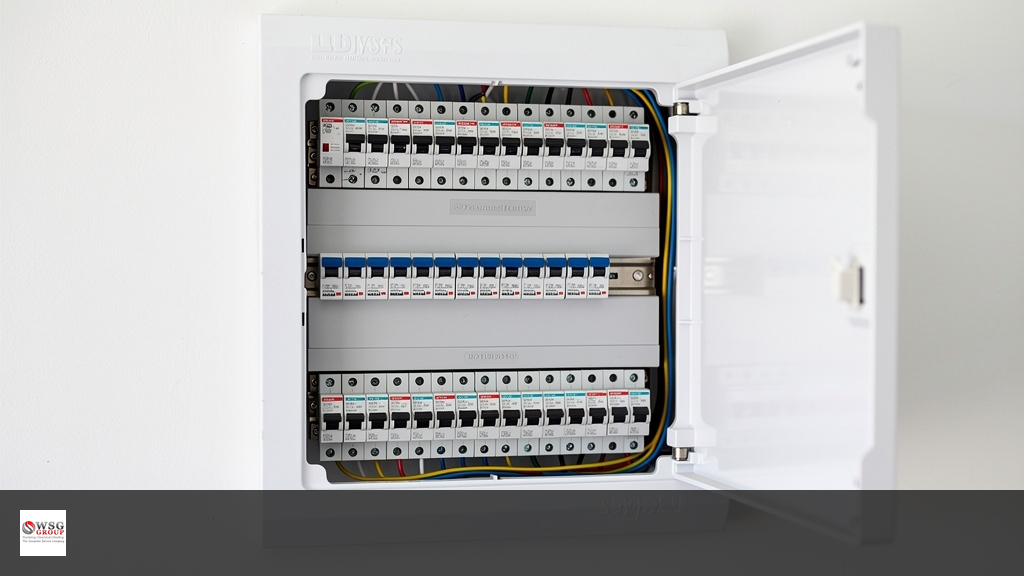
Sydney homes built before the 1980s often have outdated switchboards with ceramic fuses instead of modern circuit breakers and safety switches (RCDs). An upgrade is often triggered by a safety inspection, a real estate sale, or an electrical fault. Our complete guide to switchboard upgrades in Sydney covers costs, what’s involved, and how to prepare. WSG Group’s licenced electricians service the Central Coast including The Entrance and surrounding suburbs.
Fault Finding and Tripping Circuits
Tripping safety switches or circuit breakers indicate a fault somewhere in the circuit. This requires systematic diagnosis — an electrician will test the circuit to isolate the fault, which may be in a specific appliance, a wiring joint, or the switchboard itself. Don’t repeatedly reset a tripping switch without having the circuit inspected.
EV Charger Installation
EV charger installation in Sydney requires an electrical contractor to assess your switchboard capacity, install a dedicated circuit, and connect the charging unit. Our EV charger installation cost guide for Sydney covers the full process and what to budget. A certificate of compliance is required for all EV charger installations.
Smoke Alarm Compliance
NSW has specific requirements for smoke alarm placement, interconnection, and type in rental properties and homes sold after 2022. Landlords who fail to meet these requirements face penalties under the Environmental Planning and Assessment Regulation 2021. Our NSW smoke alarm compliance guide for 2026 covers the current requirements in detail.
Hot Water System Electrical Connections
Electric hot water systems require a dedicated circuit and isolating switch. When a tank is replaced, the electrical connections must be inspected and updated if necessary by a licenced electrician — not just the plumber. WSG Group’s team handles both the plumbing and electrical components for hot water replacements, meaning one call covers everything.
Compliance, Permits and Certificates of Work
NSW electrical compliance is administered by NSW Fair Trading and your network distributor (Ausgrid for most of Sydney, Endeavour Energy for the western suburbs and south-west). Here’s what you need to know:
Certificate of Compliance for Electrical Work (CCEW)
Required for any work involving fixed wiring. Your electrician must lodge this with the network distributor within 7 days of completing the work. You should receive a copy. Keep it with your property documents — you’ll need it when you sell.
When Development Consent Is Required
Most residential electrical work doesn’t need development consent, but significant alterations to a heritage-listed property or work that changes the building’s structure may require a DA. Your electrician should flag this if relevant — if you’re unsure, ask your local council.
Energy Network Approvals
Work involving the service fuse, metering equipment, or connection to the network requires Ausgrid or Endeavour Energy approval and is often performed by their authorised contractors. Your electrician will coordinate this where necessary.
Red Flags When Hiring an Electrician
- Won’t provide a licence number: Non-negotiable — walk away
- Cash only, no receipt: No paper trail means no compliance certificate and no warranty on the work
- No written quote for work over $1,000: Required by law; a refusal suggests they plan to charge differently
- Guarantees a price before inspecting: Complex electrical work can’t be accurately priced without a site inspection; ultra-low guaranteed quotes often become “the fault was worse than expected” upcharges
- Reluctant to discuss safety switches: All new circuits require RCDs; an electrician who skips this conversation may be cutting corners
- Doesn’t mention a compliance certificate: If they don’t mention it, ask — and if they say it’s not needed, verify that yourself before agreeing
Frequently Asked Questions
How do I find a licenced electrician near me in Sydney?
Search Google Maps for “electrician [your suburb]” and cross-check any shortlisted operators against the Service NSW public licence register. Confirm the business holds both an Electrical Work Licence (EWL) for their staff and an Electrical Contractor Licence (ECL) to operate as a business. WSG Group’s licenced electrical team covers Greater Sydney and the Central Coast.
How much do electricians charge per hour in Sydney?
Sydney electricians typically charge $80–$150 per hour for standard work, with most jobs quoted as a fixed price rather than hourly. Callout fees of $80–$150 during business hours are common and usually include the first 30 minutes of labour. After-hours rates are typically 1.5–2x the standard rate.
Do I need a permit for electrical work in my home?
Most residential electrical work requires a Certificate of Compliance for Electrical Work (CCEW) but not a permit in the traditional sense. Your licensed electrician lodges the CCEW with the network distributor after completion. You don’t need to apply for anything separately — but you should receive a copy of the CCEW once lodged.
What electrical work can I do myself in NSW?
In NSW, you can change lightbulbs, replace like-for-like plug-in appliances, and reset a circuit breaker. You cannot replace switches, install or relocate power points, add circuits, replace safety switches, or perform any work involving fixed wiring. Attempting unlicensed electrical work is illegal and can void your home insurance.
How long does an electrician typically take to do common jobs?
A power point installation typically takes 1–2 hours. Ceiling fan installation with wiring is 2–3 hours. LED downlight installation averages 30–45 minutes per light. A switchboard upgrade can take 4–8 hours for a standard residential panel. Your electrician can give you a time estimate during the quoting stage.
Is WSG Group available for emergency electrical work in Sydney?
Yes — WSG Group’s licenced electricians provide emergency electrical services across Greater Sydney and the Central Coast. For a genuine electrical emergency (loss of power, exposed wiring, sparking outlets), call us directly. For non-emergency work, book a time that suits you and we’ll provide a written quote before any work begins.
What areas does WSG Group cover for electrical work?
WSG Group services Greater Sydney including the Inner West, North Shore, Eastern Suburbs, Western Sydney, South Sydney, and the Central Coast. Our mobile electrical teams cover most Sydney postcodes, with same-day availability in many areas. Contact us to confirm availability in your suburb.
Need a Licenced Sydney Electrician?
WSG Group’s fully licenced electrical team covers Greater Sydney and the Central Coast. We provide written quotes, issue compliance certificates, and carry full public liability insurance.
Get Your Free Quote