

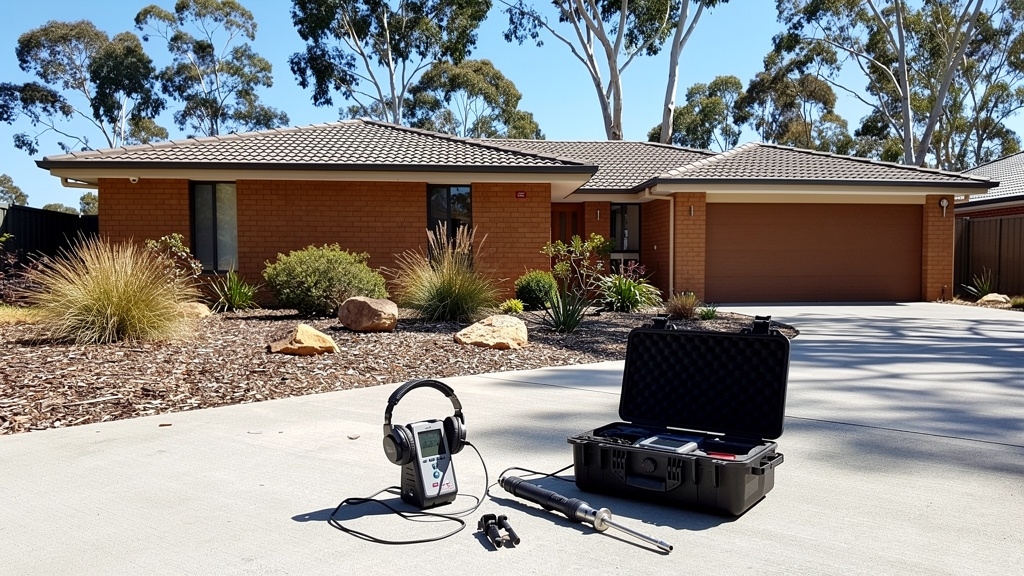
Professional water leak detection on the Central Coast typically costs $150–$600 for a standard residential inspection, with more complex acoustic or thermal imaging investigations running $400–$1,200. Catching a hidden leak early can save thousands in structural repair — and significantly reduce your water bill in the meantime.
This guide covers what professional leak detection involves, what it costs across different methods, when it’s worth calling a specialist, and what to expect from the process on the Central Coast.
What’s in This Guide
- What Is Professional Water Leak Detection?
- How Much Does Water Leak Detection Cost on the Central Coast?
- What Methods Do Plumbers Use to Find Hidden Leaks?
- When Should You Call a Leak Detection Specialist?
- Frequently Asked Questions
What Is Professional Water Leak Detection?
Professional water leak detection is a diagnostic service carried out by a licensed plumber using specialised equipment to locate water leaks that are not visible to the naked eye. Rather than opening walls or digging up pipe runs on a hunch, leak detection minimises invasive access — finding the leak precisely before any repair work begins.
On the Central Coast, hidden leaks commonly occur in underground supply lines, in-slab pipes (particularly in homes built 1960–1990 with copper or galvanised steel below the slab), behind wall tiles, and in concealed irrigation systems. With Sydney Water and Central Coast Council both running water efficiency programs, unexplained increases on quarterly bills are one of the most reliable early indicators of a hidden leak.
How Much Does Water Leak Detection Cost on the Central Coast?
Leak detection costs vary depending on the complexity of the investigation, the technology used, and how accessible the pipes are. Here are typical ranges for the Central Coast in 2026:
| Leak Detection Type | Typical Cost (AUD) | Best For |
|---|---|---|
| Visual inspection + pressure test | $150–$300 | Accessible pipes, exposed supply lines |
| Acoustic leak detection | $300–$600 | Underground mains, in-slab pipes, buried supply |
| Thermal imaging (infrared) | $350–$700 | In-wall leaks, hydronic heating, concealed wet areas |
| Tracer gas detection | $400–$900 | Very small leaks, complex underground pipe networks |
| CCTV pipe inspection (combined) | $300–$600 | Drainage leaks, finding root intrusion or joint failures |
| Callout / mobilisation fee | $80–$180 | Applies to most specialist callouts; often deducted if you proceed |
For most standard Central Coast residential properties — single-storey brick veneer or fibro homes with copper supply lines — acoustic detection typically locates the leak within a 2–3 hour visit. The cost is offset almost immediately against water bills if the leak has been running for more than a few weeks.
Does Leak Detection Cost Include Repairs?
No — leak detection is a diagnostic service only. Once the leak is located and marked, you will receive a report or verbal briefing on the location and likely cause, and then be quoted separately for the repair. For in-slab leaks, repair options typically include pipe relining (non-invasive) or excavation and pipe replacement, depending on pipe material and condition.
What Methods Do Plumbers Use to Find Hidden Leaks?
Modern leak detection uses non-invasive technology that dramatically reduces the amount of wall or ground disturbance required compared to old-fashioned trial-and-error access cutting. Here’s how the main methods work:
Acoustic Leak Detection
The most widely used method on the Central Coast. Acoustic equipment amplifies the sound made by water escaping under pressure from a pipe. The plumber uses ground microphones and listening rods at regular intervals along the pipe route, then triangulates the leak point from the signal. Accuracy is typically within 300mm for a skilled operator — often within 100mm.
Pressure Testing
The water system is isolated and pressure-tested in sections. A section that loses pressure confirms a leak is present in that run. This method confirms the leak exists and narrows it to a section, but acoustic or thermal imaging is usually needed to pinpoint the exact location.
Thermal Imaging
An infrared camera detects temperature variations on walls and floors caused by water movement. Cold water from a leaking pipe creates a cool zone on a surface; hot water leaks create warm patches. This method is particularly effective for in-wall leaks behind bathroom tiles and for hydronic heating system leaks.
Tracer Gas
A harmless inert gas mixture (typically hydrogen and nitrogen) is pumped into the pipe system. The gas escapes at the leak point and rises to the surface. A sensitive sensor detects the gas, pinpointing very small leaks that acoustic equipment struggles to register — useful for tiny pinhole leaks in copper or polyethylene pipe.
For drain and stormwater leaks — a common issue on Central Coast properties after storm events — CCTV inspection is typically the right tool. See our guide on stormwater drain cleaning costs and backflow prevention testing for related services.
When Should You Call a Leak Detection Specialist?
Not every plumbing problem requires specialist leak detection equipment — a dripping tap or an obviously broken flexi hose is straightforward. But there are clear situations where specialist detection is the right first call:
- Unexplained increase in water bills — particularly if the meter is running when no water is in use (turn off all taps and check the meter for movement)
- Damp patches on internal walls, ceilings, or floors with no obvious cause
- Cracking or displacement in garden paths, driveways, or the lawn that wasn’t there before — ground saturation from underground leaks causes this
- Mould growing in wall cavities, particularly in areas without an obvious water source
- Low pressure throughout the house when nothing has visibly failed — supply pipe leaks below the slab reduce pressure measurably
- A hot water system that is constantly refilling — a supply leak in the system can cause the tempering valve to run continuously
If you check the water meter when all taps are off and the meter’s low-flow indicator (a small dial or triangle) is still moving, you almost certainly have a leak somewhere. A Water NSW smart meter, where installed, may flag this automatically through the portal.
WSG Group’s licensed plumbers operate across the Central Coast and Gosford area, including West Gosford and surrounding suburbs. We carry acoustic and pressure testing equipment for most residential leak detection jobs and can typically attend and report same day.
Think You Have a Hidden Leak?
WSG Group’s licensed plumbers carry acoustic detection equipment and serve the Central Coast and Gosford area. Fast response, accurate diagnosis.
Book a Leak Detection SpecialistFrequently Asked Questions
How much does water leak detection cost on the Central Coast?
Standard acoustic leak detection on the Central Coast costs $300–$600 for most residential properties. A simple pressure test and visual inspection starts from $150. More complex thermal imaging or tracer gas investigations range from $400–$900. Callout fees of $80–$180 typically apply.
Can a plumber find a water leak without digging?
Yes — in most cases. Acoustic leak detection, thermal imaging, and tracer gas methods locate leaks non-invasively. Only after the leak is pinpointed accurately is any excavation or access cutting done — and only at the precise location, not speculatively.
How do I know if I have a hidden water leak?
Turn off all taps and water-using appliances, then check if your water meter is still ticking. If it is, you have a leak somewhere. Other signs: unexplained bill increases, damp patches on walls or ceilings, the sound of running water when nothing is on, and low pressure throughout the house.
Does leak detection include fixing the leak?
No — leak detection is a diagnostic service. It locates and reports the leak. Repair is quoted and invoiced separately. Some plumbers will combine detection and repair into one visit if the fix is straightforward.
Who is responsible for fixing a water leak — me or the council?
In NSW, the property owner is responsible for all plumbing from the water meter (at the boundary) inward. Central Coast Council and Sydney Water are responsible for the water main up to the meter. If the leak is on the street-side of the meter, contact your water authority. If it’s on your side, it’s your responsibility to fix.