

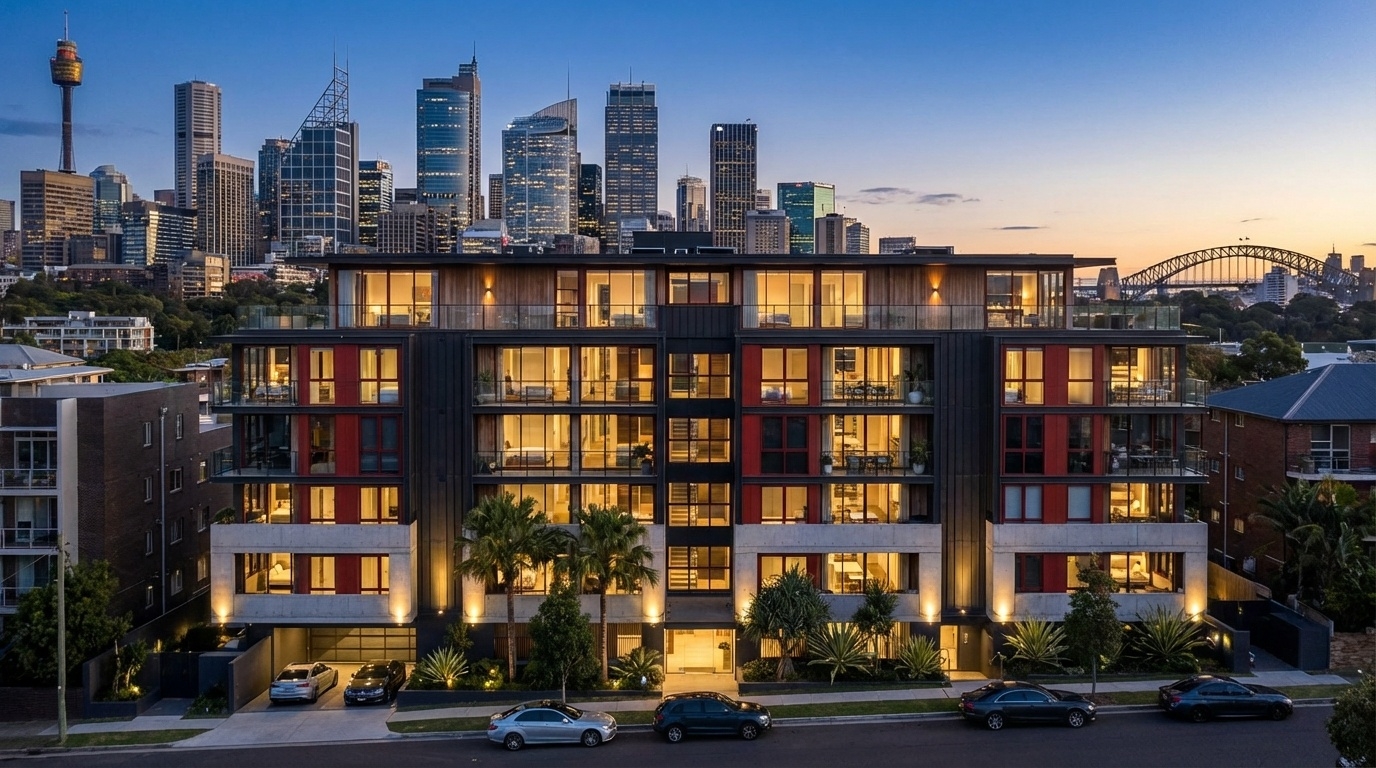
As 2026 AGM season approaches, strata committees, body corporate managers, and owners corporations across Sydney and the Central Coast face mounting pressure to demonstrate compliance with NSW maintenance obligations. With new fire safety regulations taking effect February 13, 2026, and NSW Fair Trading’s expanded enforcement powers now active since October 2025, the stakes have never been higher for apartment buildings to maintain proper plumbing, electrical, and roofing systems.
According to the Strata Schemes Management Act 2015 (NSW) Section 106, owners corporations must “properly maintain and keep in a state of good and serviceable repair the common property.” But what does this actually mean for your strata building? And more importantly, how can you demonstrate compliance at your upcoming AGM while avoiding costly emergency repairs, insurance claim denials, and potential legal liabilities?
This comprehensive strata maintenance guide is designed specifically for strata managers, building managers, strata committee members, and body corporate administrators in Sydney and the Central Coast who need to prepare maintenance reports, budget for capital works, and ensure their apartment complexes meet 2026 compliance standards. Whether you’re managing a 10-unit townhouse complex or a 200-unit high-rise, understanding your maintenance obligations isn’t just about compliance—it’s about protecting property values, preventing expensive emergencies, and maintaining resident satisfaction.
With WSG Group‘s 79 years of experience servicing strata properties across Sydney since 1947, we’ve compiled this essential checklist to help you navigate plumbing, electrical, and roofing maintenance requirements before your 2026 AGM. Let’s ensure your building is not only compliant but optimally maintained for the year ahead.
Understanding Your Strata Maintenance Obligations Under NSW Law
Before diving into specific plumbing, electrical, and roofing requirements, it’s crucial to understand the legal framework governing strata maintenance in New South Wales. The foundation of your obligations lies in the Strata Schemes Management Act 2015 (SSMA 2015), which clearly defines what owners corporations must maintain and the consequences of non-compliance.
Section 106 of the SSMA 2015 establishes that owners corporations must “properly maintain and keep in a state of good and serviceable repair the common property and any personal property vested in the owners corporation.” This isn’t just a recommendation—it’s a legal duty that can result in significant penalties if breached.
As of October 27, 2025, NSW Fair Trading gained expanded enforcement powers under new compliance reforms. These powers include the authority to issue orders for immediate repairs, investigate maintenance complaints, and impose penalties on owners corporations that fail to meet their maintenance obligations. This represents a fundamental shift in how strata compliance is monitored and enforced across Sydney and the Central Coast.
For body corporate managers and strata committees preparing for 2026 AGMs, this means your maintenance reports must demonstrate not just reactive repairs, but proactive preventative maintenance strategies. The days of “fix it when it breaks” are over—NSW regulators now expect documented maintenance schedules, regular inspections, and evidence of systematic care for building systems.
Understanding what constitutes “common property” versus “lot property” is equally critical. Common property typically includes:
- Building structure, foundations, and external walls
- Roofs, gutters, and downpipes
- Shared plumbing systems (mains, risers, and infrastructure outside individual units)
- Common electrical systems (switchboards, main cables, hallway lighting)
- Shared spaces (lobbies, stairwells, elevators, car parks)
- Fire safety systems and equipment
Individual lot owners are responsible for maintaining fixtures and fittings within their unit boundaries, but the line can become blurred, particularly with plumbing and electrical systems. Section 273 of the SSMA 2015 grants owners corporations the right to access individual lots when necessary to carry out maintenance work on common property, which becomes particularly relevant for plumbing repairs and electrical testing.
Critical New Compliance Deadline: Fire Safety Reforms Effective February 13, 2026
If your strata building hasn’t already begun preparing for the February 13, 2026 fire safety compliance deadline, you’re already behind schedule. These reforms represent the most significant changes to building fire safety requirements in over a decade and will directly impact your AGM planning and maintenance budgets.
Starting February 13, 2026, all strata buildings with essential fire safety measures must maintain these systems according to Australian Standard AS 1851-2012. This standard mandates significantly more frequent inspections and maintenance than many buildings currently perform. Key requirements include:
- Monthly inspections of fire hose reels, fire extinguishers, and emergency lighting
- Quarterly testing of fire detection and alarm systems
- Six-monthly servicing of fire doors and smoke dampers
- Annual certification of all fire safety equipment by qualified technicians
For strata committees preparing AGM maintenance reports, this means your fire safety budget may need substantial increases. Buildings that previously scheduled annual fire inspections now require monthly visits from qualified technicians. The costs can range from $2,500 to $8,000+ annually for a typical 50-unit apartment complex, depending on system complexity.
But there’s a critical intersection with electrical compliance here: many fire safety systems rely on electrical power backup, emergency lighting circuits, and interconnected alarm systems. Your electrical contractor must work in coordination with fire safety specialists to ensure compliance. At WSG Group, our integrated approach means our licensed electricians can identify and rectify electrical issues that affect fire safety systems during the same site visit—reducing both costs and compliance risks.
Additionally, the reforms require enhanced record-keeping. Your strata building must maintain a comprehensive Fire Safety Inspection Register documenting every inspection, test, and repair. This register must be available for inspection by council authorities and Fire and Rescue NSW at any time. During your AGM, strata managers should present this register as evidence of compliance—it’s no longer sufficient to simply state “fire inspections are up to date.”
For buildings built before 1997, there may be additional upgrade requirements if existing fire safety measures don’t meet current standards. Council fire safety orders can mandate expensive retrofits, including smoke detection upgrades, fire door installations, and emergency lighting expansions. If your building receives such an order, the owners corporation has no choice but to comply, often requiring special levies or capital works fund allocations.
Essential Strata Plumbing Maintenance: Common Property Responsibilities
Plumbing issues represent the single largest source of emergency maintenance calls in Sydney strata buildings, accounting for nearly 40% of after-hours callouts according to industry data. More concerning, burst pipes and water damage claims are increasingly being denied by insurance companies when buildings can’t demonstrate proper preventative maintenance.
For apartment building maintenance in Sydney, your plumbing system comprises three distinct levels of responsibility:
Main Water Supply and Distribution
The owners corporation is responsible for maintaining the main water supply line from the street connection to the building, plus all water mains, risers, and distribution pipes that service multiple units. This includes:
- Main water meters and associated infrastructure
- Riser pipes running vertically through the building
- Horizontal distribution pipes in common areas
- Pressure regulation systems and booster pumps
- Backflow prevention devices (which require annual testing by law)
Common Area Plumbing
All plumbing fixtures in shared spaces fall under body corporate maintenance:
- Common toilet facilities
- Basement or car park floor drains
- Garden irrigation systems and taps
- Pool and spa plumbing systems
- Hot water systems (see dedicated section below)
Shared Drainage and Sewer Systems
This is where responsibility can become complex. The owners corporation maintains:
- Main sewer connection from building to street
- Shared drainage pipes under the building
- Stormwater drainage systems
- Gutters, downpipes, and rainwater collection (overlaps with roofing)
- Grease traps (for buildings with commercial tenancies)
One critical compliance requirement that many strata buildings overlook is backflow prevention testing. Under NSW plumbing regulations, testable backflow prevention devices must be inspected annually by licensed plumbers and results reported to Sydney Water. Failure to comply can result in water supply disconnection. At WSG Group, we provide annual backflow testing services with automatic reminders to ensure your building never misses this crucial deadline.
Preventative maintenance schedules for strata plumbing should include:
- Annual comprehensive plumbing inspections of all common property systems
- Six-monthly checks of external taps, hose connections, and irrigation
- Quarterly inspection of basement drains and pump systems
- Monthly visual checks for leaks, water stains, or unusual water pressure issues
Pre-winter preparation (which should occur now, in February-March before Sydney’s cooler months) is particularly important. Post-summer stress on plumbing systems from high usage, plus the approaching temperature drops, create prime conditions for pipe failures. Strata committees should schedule pre-winter plumbing audits to identify:
- Aging flexi-hoses in hot water systems (major burst risk)
- Corroded pipe sections that may fail under thermal contraction
- Blocked or slow drains that will worsen with autumn leaf fall
- Water hammer issues (banging pipes) that indicate pressure problems
The financial stakes are significant. A single burst pipe in a strata building can cause $50,000 to $200,000+ in water damage, with repair costs, temporary accommodation for affected residents, and potential levy increases. More concerning, insurance companies are increasingly scrutinizing maintenance records before approving water damage claims. If your building can’t produce evidence of regular preventative maintenance, your claim may be denied or reduced.
For buildings preparing AGM maintenance reports, include specific data: number of plumbing callouts in the past year, recurring issues identified, preventative inspections completed, and recommended budget for upcoming maintenance. This transparency builds owner confidence and demonstrates responsible property stewardship.
Hot Water Systems in Strata Buildings: Shared vs. Individual Responsibilities
Hot water system maintenance creates unique challenges in strata buildings because responsibility depends entirely on system configuration. Understanding who maintains what is essential for AGM planning and emergency response protocols.
Centralized Hot Water Systems (Common Property)
Many older apartment buildings use centralized hot water systems where a single large system (or multiple commercial units) services all apartments. These are common property, making the owners corporation responsible for:
- System installation, repairs, and eventual replacement
- Regular servicing and maintenance
- Energy efficiency upgrades
- Pressure and temperature monitoring
- Compliance with AS 3500 plumbing standards
- Tempering valve testing (mandatory for scald prevention)
For buildings with centralized systems, budgeting for eventual replacement is critical. Commercial hot water systems typically last 10-15 years, with replacement costs ranging from $15,000 to $60,000+ depending on capacity and system type. Your capital works fund should allocate for this major expense well in advance.
Individual Unit Hot Water Systems (Lot Property)
Modern apartment buildings typically have individual hot water systems within each unit. These are lot property, making individual owners responsible for maintenance and replacement. However, the owners corporation still has responsibilities:
- Ensuring adequate ventilation for gas systems (building safety)
- Maintaining external venting (for indoor gas systems)
- Coordinating access for emergency repairs that affect other units
- Setting bylaws governing replacement specifications
There’s a critical crossover issue here: when an individual unit’s hot water system fails and causes water damage to other units or common property, liability becomes complex. This is why many strata committees implement bylaws requiring owners to:
- Maintain their hot water systems in good working order
- Replace systems older than 10 years as a preventative measure
- Use licensed plumbers for all hot water work
- Notify the strata manager before major hot water system work
Tempering Valve Compliance
Regardless of whether your building has centralized or individual systems, AS 3500 mandates that hot water delivered to fixtures must not exceed 50°C (45°C for some facilities like childcare). Tempering valves control this, and they require:
- Annual testing by licensed plumbers
- Immediate rectification if delivering water outside safe temperature range
- Replacement every 5 years as preventative measure
At WSG Group, we’ve seen numerous strata buildings receive council orders to install or upgrade tempering valves after inspections reveal non-compliance. The work isn’t optional, and costs can reach $5,000-$15,000 for a typical apartment building.
For your 2026 AGM, ensure your maintenance report addresses:
- Age and condition of hot water systems (centralized or survey of individual systems)
- Most recent tempering valve tests and results
- Number of hot water-related callouts or failures in past 12 months
- Recommended replacement timeline and budget allocation
Electrical Compliance for Strata Buildings: Safety, Testing, and Upgrades
Electrical safety in strata buildings has taken on renewed urgency following several high-profile building fires linked to electrical faults. NSW electrical compliance requirements are among the strictest in Australia, and owners corporations face significant liability if common property electrical systems aren’t properly maintained.
Common Property Electrical Systems
The owners corporation is responsible for all electrical infrastructure servicing common areas and multiple units:
- Main switchboards and distribution boards
- Common area lighting (hallways, stairwells, car parks, external areas)
- Electrical meters (in some configurations)
- Shared electrical circuits for lifts, pumps, and building systems
- Emergency lighting and exit signage
- Electrical components of fire safety systems
- External power points and lighting
- Intercom and security system power supply
Mandatory Electrical Testing and Inspections
Unlike residential homes, strata buildings have specific electrical testing obligations:
Switchboard Inspections: Main switchboards should be inspected every 3-5 years by licensed electricians. Older buildings (pre-1990) often have switchboards that don’t meet current safety standards and require upgrading. Common issues include:
- Inadequate circuit protection
- Obsolete ceramic fuses instead of modern circuit breakers
- Missing or non-functional RCDs (residual current devices)
- Overloaded circuits from increased electrical demand
- Corroded connections and damaged components
Switchboard upgrades can cost $5,000-$25,000+ depending on building size and complexity, but they’re often non-negotiable for safety and insurance compliance.
Emergency Lighting: Part of fire safety compliance, emergency lighting must be tested monthly and serviced annually. But here’s what many strata committees miss: the emergency lighting circuits themselves must be maintained by licensed electricians. Batteries degrade over time, requiring replacement every 3-4 years. Budget $150-$300 per emergency light for battery replacement.
Exit Sign Compliance: Modern standards require illuminated exit signs with battery backup. Older buildings may have non-illuminated signs that don’t meet current codes. Council building inspections can mandate expensive retrofits.
Safety Switch (RCD) Protection: All common area circuits require RCD protection for safety. Older buildings often lack this, and strata committees should budget for upgrades. The cost is typically $300-$800 per circuit, but it’s a critical safety investment.
Common Area Lighting: Energy Efficiency and Maintenance
Hallway, stairwell, and car park lighting represents a significant ongoing electricity cost for strata buildings. Many Sydney apartment complexes are upgrading to LED lighting, which offers:
- 75-80% reduction in electricity consumption
- 10+ year lifespan (vs. 1-2 years for conventional globes)
- Reduced maintenance callouts
- Improved light quality and safety
- Typical 3-5 year payback period from electricity savings
At WSG Group, we’ve assisted numerous strata buildings with LED conversions, often finding electricity savings of $3,000-$8,000 annually for a typical 50-unit complex. For AGM presentations, this becomes a compelling proposal: invest $10,000-$15,000 in LED upgrades and recover costs through electricity savings within 3-4 years, while simultaneously improving resident safety and satisfaction.
Electrical Safety Concerns Unique to Strata Buildings
Several electrical issues are particularly problematic in apartment complexes:
Meter Box Access and Safety: Electrical meter boxes in common areas must be accessible for inspections and serviced regularly. Corroded or damaged meter boxes create fire risks and should be replaced immediately.
Car Park Electrical Safety: Underground car parks pose unique electrical challenges with exposure to moisture, vehicle damage risks, and ventilation system electrical loads. Regular electrical inspections should specifically assess car park circuits.
Pool and Spa Electrical Compliance: Buildings with pools or spas must maintain strict electrical safety measures, including:
• RCD protection on all circuits within 3 meters of water
• Regular testing of earth leakage protection
• Compliance with AS 3000 wiring standards for pool equipment
Intercom and Security System Electrical Supply: While the intercom system itself may be maintained by a specialist, the electrical supply is the owners corporation’s responsibility. Power surges and electrical faults can disable building security systems.
Preparing Your AGM Electrical Maintenance Report
Your 2026 AGM electrical maintenance report should document:
- Date of most recent switchboard inspection and findings
- Emergency lighting test records (monthly tests must be logged)
- Any electrical safety concerns identified but not yet rectified
- Energy efficiency opportunities (LED upgrades, timer systems)
- Projected costs for necessary upgrades or replacements
- Evidence of licensed electrician compliance (all work must be performed by Level 2 electricians for strata common property)
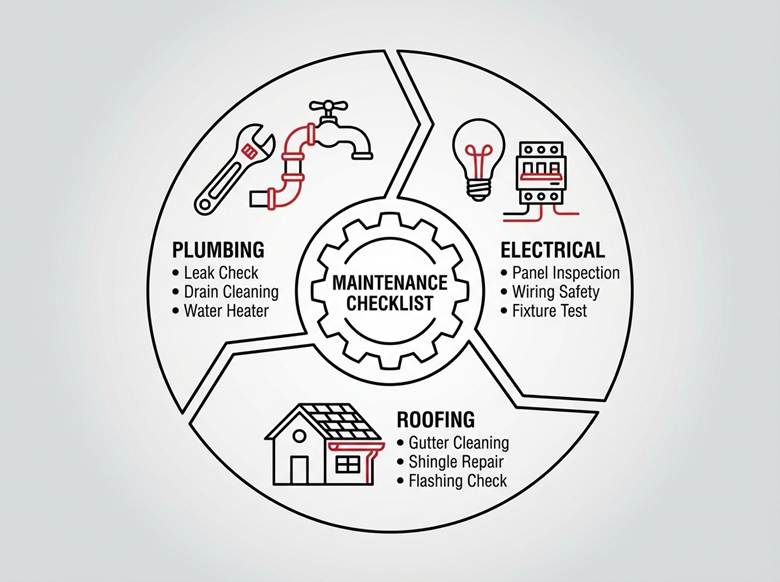
Roofing and Gutter Maintenance: Preventing Water Damage in Strata Buildings
Roof maintenance is the most frequently deferred maintenance item in Sydney strata buildings, yet it’s one of the most critical for preventing expensive water damage. The timing couldn’t be more important—as we transition from summer into Sydney’s autumn season, post-summer roof inspections should be a priority for every apartment building.
Summer Stress on Strata Roofs
Sydney’s 2025-2026 summer exposed roofs to intense UV radiation, thermal expansion/contraction cycles, and severe storm events. These conditions accelerate deterioration of roofing materials and sealants. Common post-summer roof issues include:
- Cracked or lifted tiles from thermal stress
- Deteriorated roof membrane sealants
- Storm-damaged flashing and penetrations
- Gutter damage from debris and overflow during heavy rain
- Blocked downpipes creating water ponding risks
Autumn presents the ideal window for roof inspections and repairs before winter rain arrives. Delaying until winter means working in wet conditions, higher contractor costs, and potential water damage while waiting for repairs.
Common Property Roofing Responsibilities
The owners corporation is responsible for the entire roof structure and associated water management systems:
- Roof covering (tiles, metal, membrane)
- Roof structure and framing
- All gutters and downpipes
- Roof drainage systems
- Skylights and roof penetrations
- Flashing at parapets, chimneys, and roof junctions
- Roof access hatches and equipment platforms
Even if individual units have “airspace” lots with portions of roof technically within their boundary, maintenance responsibility typically remains with the owners corporation under common property definitions.
Critical Roof Inspection Areas
Professional roof inspections should assess:
Roof Covering Condition:
- Tile roofs: Cracked, broken, or displaced tiles; deteriorated ridge capping; failing mortar
- Metal roofs: Corrosion, lifted sheets, damaged fasteners, deteriorated sealants
- Membrane roofs: Bubbling, cracking, shrinkage, seam separation
Water Management Systems:
- Gutters: Corrosion, sagging, poor fall, inadequate capacity
- Downpipes: Blockages, disconnections, inadequate sizing
- Box gutters: Ponding water, deteriorated lining, blocked outlets (high-risk area)
- Internal roof drainage: Blocked drains, failed waterproofing
Penetrations and Flashing:
- All roof penetrations (vents, pipes, equipment) must be properly flashed and sealed
- Parapet flashing condition
- Valley flashing integrity
The Box Gutter Risk
Buildings with box gutters (internal gutters built into the roof structure) face particular risks. Box gutter failures can cause catastrophic water damage to multiple units. These require:
- Six-monthly professional inspections
- Immediate clearing of any debris or blockages
- Preventative replacement of lining every 15-20 years
- Proper drainage fall maintained (minimum 1:200 gradient)
Insurance companies often investigate box gutter maintenance history after water damage claims. Failure to demonstrate regular maintenance can result in claim denial.
Gutter and Downpipe Maintenance Schedule
Sydney’s autumn brings falling leaves, creating a critical maintenance window:
- Pre-autumn cleaning (February-March): Clear summer debris before leaf fall
- Post-autumn cleaning (May-June): Clear accumulated leaves before winter rain
- Annual professional inspection: Assess structural condition, not just cleaning
For larger apartment buildings, consider installing gutter guard systems. While the upfront cost ($50-$120 per meter) is significant, long-term benefits include:\
- Reduced cleaning frequency and costs
- Prevention of overflow damage during storms
- Protection against ember attack (bushfire-prone areas)
- Longer gutter lifespan
Roof Replacement Planning
Different roofing materials have predictable lifespans, and strata committees must plan capital works funding accordingly:
- Concrete tiles: 40-50 years (but require ongoing maintenance)
- Metal roofing: 20-30 years (depending on coating quality)
- Membrane roofing: 15-25 years (varies significantly by quality)
A typical 50-unit apartment building can expect roof replacement costs of $80,000-$250,000+ depending on roof area, complexity, and access challenges. These costs should be accumulated in your capital works fund years in advance.
Pre-AGM Roof Inspection Report
Before your 2026 AGM, commission a professional roof inspection that provides:
- Comprehensive roof condition assessment
- Photographic evidence of issues identified
- Prioritized repair recommendations (urgent vs. non-urgent)
- Cost estimates for recommended works
- Projected replacement timeline if roof is approaching end-of-life
At WSG Group, our roof inspection reports provide strata committees with the documentation needed for informed AGM decisions and transparent budgeting discussions.
Creating an Effective Strata Maintenance Schedule for 2026
A documented maintenance schedule isn’t just good practice—it’s increasingly becoming a compliance requirement under NSW strata law. Section 115 of the Strata Schemes Management Act 2015 requires developers to provide an “initial maintenance schedule” for new buildings, but all buildings benefit from maintaining and updating comprehensive schedules.
Benefits of Documented Maintenance Schedules
- Demonstrates compliance with Section 106 maintenance obligations
- Reduces emergency repair costs through preventative maintenance
- Provides evidence for insurance claims
- Helps budget accurately for maintenance expenses
- Improves contractor coordination and scheduling
- Creates continuity when strata committee members change
Recommended Annual Maintenance Calendar for Sydney Strata Buildings
February-March (Post-Summer Inspection Period)
- Comprehensive roof inspection
- Gutter and downpipe cleaning (pre-autumn)
- Air conditioning system servicing (while still in use)
- Pool/spa equipment inspection and servicing
- Plumbing inspection for summer-stressed systems
- Electrical switchboard inspection (every 3-5 years)
April-May (Autumn Preparation)
- Second gutter cleaning (post-leaf fall)
- Drainage system inspection and clearing
- External lighting inspection (shorter daylight hours approaching)
- Building facade inspection for water ingress points
- Hot water system checks (before increased winter demand)
June-August (Winter Maintenance)
- Heating system testing and servicing
- Internal building inspections for water leaks
- Basement and car park drainage checks
- Emergency lighting testing (part of fire safety)
September-October (Spring Pre-Summer Prep)
- Cooling system inspection and servicing
- External painting and waterproofing (ideal weather conditions)
- Pool opening and equipment checks
- Garden irrigation system testing
- Roof inspection before storm season
November-January (Summer Monitoring)
- Pre-storm season roof checks
- Increased monitoring of cooling and electrical systems under load
- Garden and landscape maintenance (peak growth)
Monthly Ongoing Tasks
- Fire safety equipment inspections (mandatory post-February 2026)
- Common area lighting checks
- General building walkthrough for emerging issues
- Elevator servicing (typically monthly for larger buildings)
Annual Mandatory Compliance Items
- Backflow prevention device testing
- Fire safety equipment annual certification
- Hot water tempering valve testing
- Electrical safety switch (RCD) testing
- Pool water testing and compliance
- Lift annual safety inspections
Implementing Your Maintenance Schedule
The most effective approach is engaging a multi-trade contractor like WSG Group that can coordinate plumbing, electrical, and roofing services under a single maintenance contract. This provides:
- Single point of contact for scheduling
- Coordinated inspections (one site visit covers multiple systems)
- Consistent service quality across trades
- Integrated reporting for AGM presentation
- Often more cost-effective than managing multiple specialists
For strata managers handling multiple buildings, digital maintenance management systems can track schedules, store compliance documentation, and automate reminder notifications. However, even a simple spreadsheet calendar shared with the strata committee provides substantial benefits over reactive “fix it when it breaks” approaches.
Budgeting for Strata Maintenance: Capital Works Fund vs. Administrative Fund
Proper maintenance budgeting requires understanding the distinction between administrative fund and capital works fund under NSW strata law. Getting this right affects levy calculations, financial planning, and owner satisfaction.
Administrative Fund (also called maintenance fund) covers:
- Routine maintenance and minor repairs
- Regular servicing (plumbing inspections, electrical testing)
- Cleaning and gardening
- Insurance premiums
- Strata management fees
- Utility costs for common areas
- Emergency repairs under approximately $5,000-$10,000
Capital Works Fund (also called sinking fund) covers:
- Major repairs and replacements
- Roof replacement
- Switchboard upgrades
- Building repainting
- Major plumbing infrastructure replacement
- Lift replacement or major upgrades
- Driveway/car park resurfacing
Typical Annual Maintenance Budget Guidelines
For a 50-unit Sydney apartment building, typical annual maintenance allocations:
Plumbing: $8,000-$15,000
- Annual comprehensive inspection: $1,500-$2,500
- Backflow testing: $300-$600
- Routine maintenance and minor repairs: $3,000-$6,000
- Emergency repair allowance: $3,000-$6,000
Electrical: $6,000-$12,000
- Annual emergency lighting testing/servicing: $1,200-$2,000
- Common area lighting (replacement globes/repairs): $1,500-$3,000
- Switchboard inspection (every 3-5 years): $1,000-$2,000 annually
- General electrical maintenance and repairs: $2,000-$5,000
Roofing and Gutters: $5,000-$10,000
- Bi-annual gutter cleaning: $1,000-$2,000
- Annual roof inspection: $800-$1,500
- Minor roof repairs and maintenance: $2,000-$4,000
- Gutter repairs and maintenance: $1,200-$2,500
Fire Safety Compliance (post-February 2026): $3,000-$8,000
- Monthly inspections and quarterly testing: $2,000-$5,000
- Annual certification: $1,000-$3,000
Total Typical Annual Maintenance: $22,000-$45,000 (or $440-$900 per unit annually)
These are estimates for buildings in good condition. Older buildings or those with deferred maintenance will require significantly higher allocations.
Capital Works Fund Planning
A 10-year capital works plan should budget for major replacements:
- Roof replacement (years 8-10): $100,000-$250,000
- Building repainting (years 5-7): $60,000-$150,000
- Switchboard upgrade (years 4-6): $15,000-$35,000
- Hot water system replacement (years 6-8): $20,000-$60,000
- Lift major refurbishment (years 8-12): $80,000-$200,000
For a typical 50-unit building, capital works levies of $100-$300 per unit per quarter are common to build adequate reserves.
Presenting Maintenance Budgets at AGMs
Transparent maintenance budget presentations help avoid levy increase disputes:
- Show comparative data from previous years
- Explain any budget increases with specific compliance requirements
- Present maintenance schedules showing value delivered
- Provide quotes for major upcoming works
- Demonstrate fund balance and projected reserve levels
At WSG Group, we provide strata committees with detailed maintenance proposals that can be presented directly at AGMs, complete with cost breakdowns, work schedules, and compliance justifications.
Common Strata Maintenance Questions Answered
Who pays for plumbing repairs in strata buildings—owners corporation or individual owners?
The answer depends on where the plumbing issue occurs. The owners corporation is responsible for all common property plumbing, including main water supply lines, shared drainage, riser pipes servicing multiple units, and any plumbing in common areas like hallways or car parks. Individual owners are responsible for plumbing fixtures and pipes within their unit boundaries, such as taps, toilets, pipes under sinks, and internal waste pipes. The complexity arises with shared walls and concealed pipes. If a pipe services only one unit but runs through common property, responsibility is typically shared or determined by your strata bylaws. Always check your strata plan and bylaws for specific definitions, and when in doubt, contact your strata manager before arranging repairs. For emergency situations like burst pipes, the owners corporation should respond immediately to prevent damage, with cost allocation determined afterward.
How often should strata buildings conduct plumbing inspections?
Best practice for Sydney strata buildings is an annual comprehensive plumbing inspection covering all common property systems, conducted by a licensed plumber. This inspection should assess water supply infrastructure, drainage systems, visible pipe conditions, water pressure, and potential risks like aging flexi-hoses or corroded pipes. Additionally, specific compliance inspections are required annually, including backflow prevention device testing (mandatory under Sydney Water regulations) and hot water tempering valve testing. Buildings with pools or complex plumbing systems may benefit from six-monthly inspections. Pre-winter inspections (February-March period) are particularly valuable for identifying issues before temperature changes stress systems. The cost of an annual comprehensive inspection ($1,500-$2,500 for a typical apartment building) is minimal compared to emergency repair costs and insurance claim complications from deferred maintenance.
What electrical compliance requirements apply to Sydney strata buildings in 2026?
Sydney strata buildings must comply with multiple electrical safety standards. Common property electrical systems require regular inspection, with main switchboards needing professional assessment every 3-5 years. All circuits must have appropriate circuit protection, and common areas require RCD (safety switch) protection. Emergency lighting systems must be tested monthly and serviced annually—this becomes particularly critical with the new fire safety regulations effective February 13, 2026. Exit signs must comply with AS 2293 standards and be illuminated with battery backup. Older buildings often require switchboard upgrades to meet current safety standards, particularly if they still have ceramic fuses or lack RCD protection. All electrical work on common property must be performed by licensed electricians (Level 2 for distribution network work), and inspection records should be maintained in your strata maintenance register. During AGM preparation, ensure your electrical compliance documentation is current and accessible.
When is the best time to schedule roof maintenance for apartment buildings?
Sydney’s seasonal patterns make February through April the optimal window for roof maintenance and inspections. This post-summer period allows assessment of damage from UV exposure, thermal stress, and storm events before autumn leaves and winter rain arrive. Scheduling roof work during this window provides dry working conditions, moderate temperatures for sealant and membrane work, and opportunity to complete repairs before winter water ingress risks. Gutter cleaning should occur twice annually: late summer/early autumn (February-March) to clear summer debris before leaf fall, and late autumn (May) to clear accumulated leaves before winter rain. Major roof replacement projects are best scheduled for September through November when weather is stable, contractors are typically less busy than summer, and completion before storm season provides maximum protection. Avoid scheduling non-urgent roof work during winter (June-August) when wet conditions increase costs and delay completion, or during peak summer (December-January) when heat makes membrane and sealant work challenging.
What are the new fire safety compliance requirements starting February 2026?
From February 13, 2026, NSW strata buildings with essential fire safety measures must maintain these systems according to Australian Standard AS 1851-2012. This represents a significant change from previous practices and affects most apartment buildings in Sydney and the Central Coast. The key requirements include monthly inspections of fire extinguishers, fire hose reels, and emergency lighting systems. Quarterly testing of fire detection and alarm systems is mandatory, along with six-monthly servicing of fire doors and smoke control systems. Annual certification by qualified technicians is required for all fire safety equipment, with comprehensive records maintained in a Fire Safety Inspection Register. The register must be available for inspection by council officers and Fire and Rescue NSW at any time. Non-compliance can result in substantial penalties, council orders for immediate rectification, and potential liability issues if fire safety equipment fails during an emergency. Strata committees should budget for increased fire safety costs—typically $3,000-$8,000 annually for a 50-unit building—and engage qualified contractors immediately to establish compliant inspection schedules.
How can strata buildings prepare for AGM maintenance reporting?
Effective AGM maintenance reporting requires preparation starting at least 6-8 weeks before your scheduled meeting. Begin by compiling all maintenance records from the past 12 months, including invoices, inspection reports, emergency callout logs, and compliance certificates. Commission any required inspections (roof, plumbing, electrical) that are due or overdue so fresh reports are available for presentation. Prepare a comprehensive maintenance summary document covering work completed, current building condition, compliance status for all mandatory requirements, and recommended works for the upcoming year with cost estimates. Create a clear budget proposal distinguishing between administrative fund (routine maintenance) and capital works fund allocations. Include comparative data from previous years to provide context for any budget increases. Photographic evidence of building condition and specific issues helps owners understand maintenance needs and supports budget justifications. For major projects or budget increases, consider preparing a FAQ document anticipating owner questions. Many strata committees benefit from having their maintenance contractor attend the AGM to answer technical questions directly. At WSG Group, we provide AGM-ready maintenance reports and can attend meetings to present recommendations and answer owner questions, ensuring transparency and building confidence in your maintenance program.
Conclusion: Protecting Your Strata Investment Through Proactive Maintenance
Effective strata maintenance in 2026 requires more than reactive repairs—it demands comprehensive planning, documented compliance, and proactive system care. As Sydney and Central Coast apartment buildings navigate new fire safety regulations, enhanced NSW Fair Trading enforcement, and rising owner expectations, the role of body corporate maintenance has never been more critical.
The approaching AGM season presents an opportunity to reset your building’s maintenance approach. By implementing structured inspection schedules, budgeting appropriately for both routine and capital works, and partnering with experienced multi-trade contractors, your owners corporation can protect property values, prevent expensive emergencies, and maintain resident satisfaction.
WSG Group has served Sydney and Central Coast strata buildings since 1947, providing integrated plumbing, electrical, and roofing services that simplify compliance and reduce costs. Our comprehensive maintenance programs are designed specifically for strata buildings, with AGM-ready reporting, transparent pricing, and 24/7 emergency response when urgent issues arise.
Don’t wait until emergency repairs force reactive spending and special levies. Contact WSG Group today for a comprehensive strata maintenance assessment. Our experienced team will evaluate your building’s plumbing, electrical, and roofing systems, identify compliance gaps, and provide a detailed maintenance plan with transparent pricing—perfect for your upcoming 2026 AGM presentation.
Call 1800 186 597 to schedule your strata maintenance consultation. Servicing Sydney and Central Coast apartment buildings with reliable, professional expertise since 1947.