

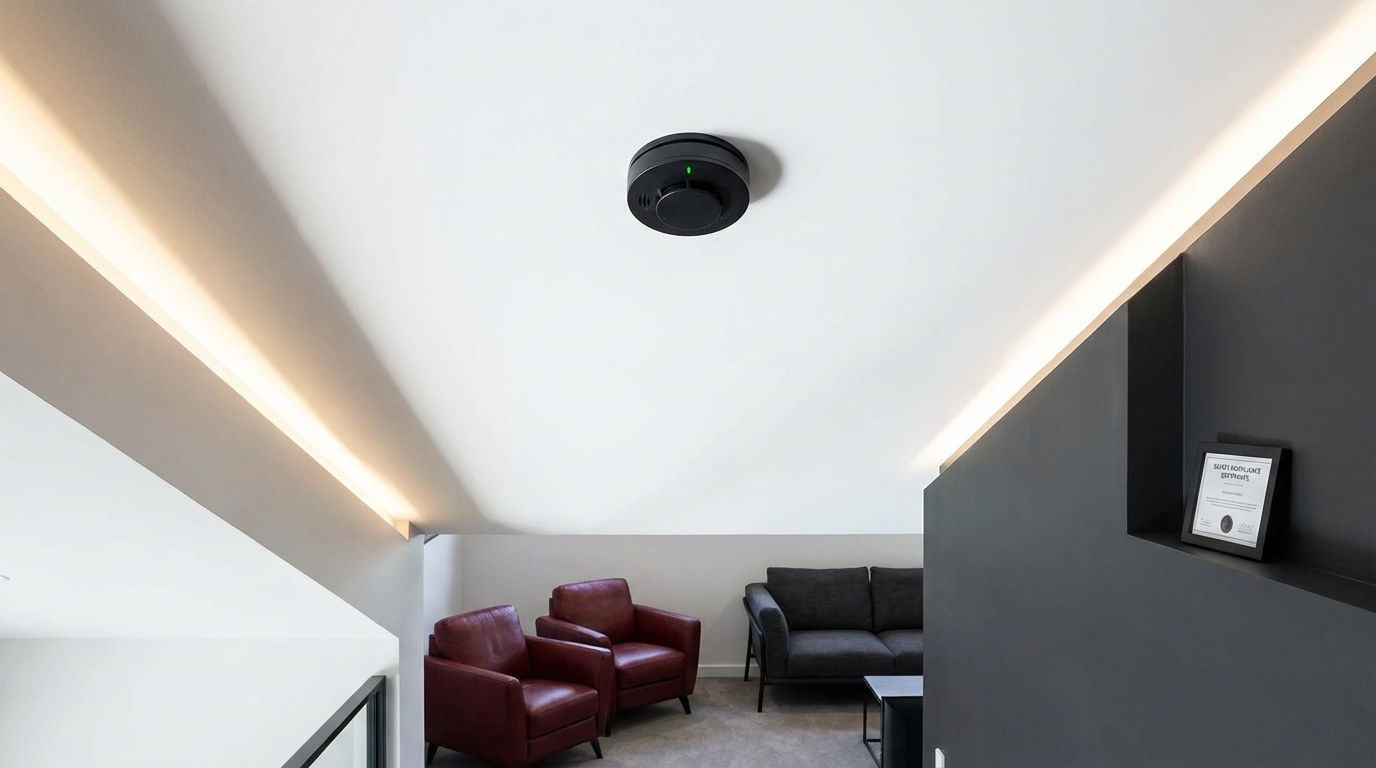
Working smoke alarms save lives. In NSW, they are also a legal requirement for every home, rental property, and residential building. Since March 2020, smoke alarm compliance NSW laws have become stricter, with tougher rules around testing, maintenance, and replacement. Whether you are a homeowner ensuring your family’s safety, a landlord meeting legal obligations, or a property manager overseeing multiple sites, understanding current smoke alarm requirements NSW can protect lives and prevent costly fines.
This complete guide covers everything you need to know about smoke alarm compliance in NSW for 2026. You will learn exactly what the law requires, where and how to install alarms correctly, the critical 10-year replacement rule, costs you can expect, and common mistakes that put properties at risk. Let us ensure your property is fully compliant and, most importantly, safe.
NSW Smoke Alarm Legislation: What The Law Says
Under the Environmental Planning and Assessment (Development Certification and Fire Safety) Regulation 2021, smoke alarms must be installed in all buildings across NSW where people sleep. This legislation applies to owner-occupied homes, rental properties, relocatable homes, caravans, and any residential building.
The regulation specifically requires smoke alarms to meet Australian Standard AS 3786. This standard covers the design, construction, and performance requirements for smoke alarms installed in residential buildings. Fire and Rescue NSW enforces these requirements and provides guidance to ensure homeowners, landlords, and tenants understand their responsibilities.
While NSW legislation sets the minimum level of protection—at least one working smoke alarm on every level of your home—Fire and Rescue NSW strongly recommends going beyond this minimum. Best practice includes installing smoke alarms inside every bedroom for maximum early warning protection, especially for vulnerable occupants like children, elderly family members, or anyone with reduced mobility.
Smoke Alarm Requirements For NSW Homeowners
How Many Smoke Alarms Do You Need?
NSW law requires at least one working smoke alarm on every level (storey) of your home. This applies even if a particular level has no bedrooms. On levels containing bedrooms, alarms must be installed in hallways near those bedrooms. If bedrooms are located in separate parts of the house, you need alarms in each location.
For maximum protection, Fire and Rescue NSW recommends installing alarms in every bedroom, not just hallways. This ensures occupants receive the earliest possible warning if a fire starts while they are sleeping.
Where Must Smoke Alarms Be Installed?
Correct placement is critical for smoke alarm effectiveness. NSW regulations specify:
- On every storey of the home
- In hallways outside bedrooms or, if there is no hallway, in an area between bedrooms and the rest of the house
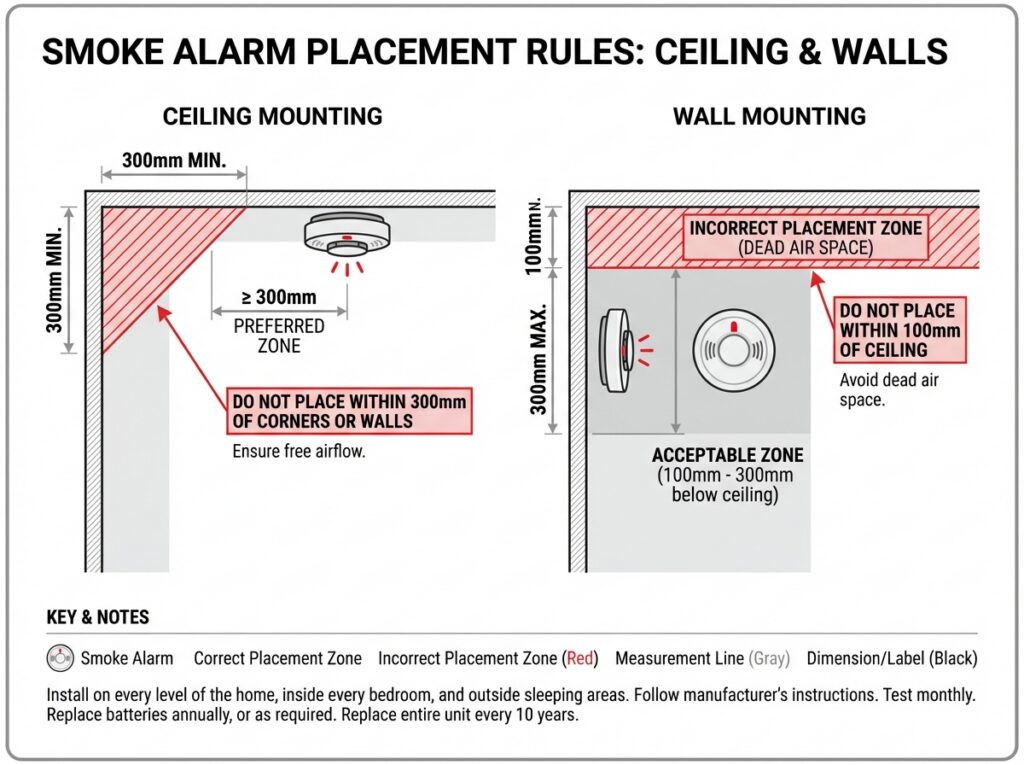
- On or near the ceiling (smoke rises, so ceiling placement ensures fastest detection)
- Away from dead air spaces where smoke may not reach the sensor
If your home has multiple levels, you must have at least one alarm per level, even basement or attic spaces used occasionally.
Types of Smoke Alarms: Photoelectric vs Ionisation
Smoke alarms meeting AS 3786 can be either photoelectric or ionisation type. However, Fire and Rescue NSW and most fire safety experts strongly recommend photoelectric smoke alarms over ionisation models.
Photoelectric alarms detect smoke particles using a light beam and are particularly effective at detecting slow, smouldering fires—the type most common in residential properties. Smouldering fires often occur in lounges, bedrooms, or electrical wiring and produce thick smoke before flames appear. Ionisation alarms, while faster at detecting flaming fires, can be slower to respond to smouldering fires and more prone to false alarms from cooking or steam.
For optimal protection, choose photoelectric smoke alarms complying with AS 3786:2014 or later revisions.
Hardwired vs Battery Operated Requirements
NSW legislation requires smoke alarms to be powered from the consumer mains (hardwired) where a mains power source is available to the building. Hardwired alarms are connected directly to your home’s electrical system and must be installed by a licensed electrician.
Battery-operated alarms are permitted in homes without mains power or in relocatable homes and caravans. However, even hardwired alarms should include a backup battery to ensure they continue working during power outages.
Landlords and property owners must ensure hardwired alarms are installed correctly and maintained by licensed electricians. DIY installation of hardwired alarms is illegal and dangerous.
Smoke Alarm Placement Rules & Installation Standards
Correct Ceiling and Wall Placement
The National Construction Code (NCC) and NSW regulations provide specific placement requirements to ensure smoke alarms function effectively:
- Ceiling installation (preferred): Minimum 300mm away from walls and corners
- Wall installation (if ceiling mounting not possible): Between 300mm and 500mm down from the ceiling
- Sloping ceilings: Between 500mm and 1500mm away from the apex or high point
- Keep alarms away from ceiling fans, air conditioning vents, and windows that might affect smoke flow
Avoiding Dead Air Spaces
Dead air spaces are areas where hot air becomes trapped, preventing smoke from reaching the alarm sensor. These commonly occur:
- At the apex of cathedral or vaulted ceilings
- In corners where walls meet ceilings
- Between exposed ceiling joists or beams
Always position alarms outside these zones to ensure smoke reaches the sensor quickly during a fire.
Interconnection Requirements
When your home has more than one smoke alarm, NSW regulations require them to be interconnected. This means when one alarm detects smoke, all alarms throughout the home sound simultaneously.
Interconnection dramatically increases safety, especially in larger homes or multi-storey properties. If a fire starts in a remote area like a basement or garage, interconnected alarms ensure occupants in bedrooms upstairs are alerted immediately.
Interconnection can be achieved through hardwiring (most reliable) or wireless technology in some modern alarm systems meeting AS 3786.
Special Considerations for Multi-Storey Homes
Multi-storey homes require extra attention to smoke alarm placement. Each level must have at least one alarm, and all alarms must be interconnected. Consider these additional recommendations:
- Install alarms at the top of stairwells where smoke naturally rises
- Ensure ground floor alarms cover escape routes and living areas
- Add alarms in basements or attics if used for storage or occasionally occupied
- Test interconnection regularly—ensure an alarm on the ground floor triggers alarms on upper levels
The 10-Year Replacement Rule: When To Replace Your Smoke Alarms
One of the most critical but often overlooked smoke alarm compliance requirements is the 10-year replacement rule. NSW legislation requires smoke alarms to be replaced within 10 years of their manufacture date, or earlier if specified by the manufacturer.
This is not about battery life—it is about the alarm unit itself. Smoke alarm sensors degrade over time due to dust accumulation, environmental factors, and natural component aging. After 10 years, even a working alarm may fail to detect smoke reliably.
How to check your alarm’s age:
- Look for the manufacture date printed on the back or inside the alarm unit
- If no date is visible, assume the alarm is over 10 years old and replace it
- Check manufacturer documentation if you have the original packaging
- Replace immediately if the alarm is discolored, damaged, or triggers false alarms frequently
Landlords must track alarm ages carefully. NSW landlord obligations include replacing alarms within 10 years of manufacture, and failing to do so can result in significant penalties and liability if a fire occurs.
Smoke Alarm Compliance For NSW Landlords & Rental Properties
Landlord Legal Obligations
Since March 23, 2020, NSW landlords and agents must ensure smoke alarms in rental properties are in working order at all times. Landlords cannot delegate this responsibility to tenants through tenancy agreements—it is a non-negotiable legal duty.
Landlord obligations include:
- Ensure at least one working smoke alarm is installed on every storey
- Alarms must meet AS 3786 and be appropriately located (hallways outside bedrooms)
- Alarms must be tested annually to confirm they are working
- Replace batteries annually (or as per manufacturer specifications for lithium batteries)
- Replace alarm units within 10 years of manufacture
- Repair or replace non-working alarms within 2 business days
Annual Testing Requirements
Landlords must check smoke alarms every year to ensure they are working correctly. This inspection must be documented and can be coordinated with routine property inspections. Landlords must give tenants at least 2 business days’ notice to inspect or assess the need for repairs.
If a repair or replacement is needed, landlords must give at least 1 hour’s notice before carrying out the work.
2-Business Day Repair Rule
One of the strictest compliance rules for landlords is the 2-business day repair requirement. If a smoke alarm is not working—whether due to a flat battery, malfunction, or damage—landlords must repair or replace it within 2 business days of becoming aware of the issue.
This applies even if the problem is simply a dead battery. Landlords must respond quickly to tenant notifications and cannot delay repairs. Failure to meet this deadline can result in fines and, more seriously, liability if a fire occurs while alarms are non-functional.
Tenant Rights and Responsibilities
Tenants must notify their landlord or agent immediately if they discover a smoke alarm is not working, including situations where the battery needs replacing. Tenants can choose to replace a removable battery themselves, but they must:
- Notify the landlord that the battery is not working
- Replace the battery within 2 business days of giving that notice
- Notify the landlord within 24 hours of replacing the battery
If a hardwired alarm needs repair or replacement and the landlord does not complete the work within 2 business days, tenants can arrange for a licensed electrician to do the work and seek reimbursement from the landlord.
Strata Scheme Exceptions
Properties in strata schemes may have different compliance arrangements. If all four of the following conditions are met, the owners corporation (not the landlord) may be responsible for smoke alarm maintenance:
- The smoke alarms are hardwired, OR they are battery operated and the owners corporation is responsible for repair and replacement
- The landlord has advised the tenant in writing that the owners corporation is responsible
- The landlord notifies the owners corporation within 24 hours of becoming aware a repair is needed
- The landlord takes reasonable steps to ensure the repair is completed
This exemption prevents duplication where strata fire safety maintenance already covers smoke alarms. However, landlords must still ensure the systems are in place and functioning correctly.
Smoke Alarm Installation Costs In Sydney & Nsw
Understanding smoke alarm installation costs helps homeowners and landlords budget for compliance. Costs vary depending on alarm type, installation complexity, and whether you are upgrading an entire property.
Typical costs in Sydney and NSW (2026):
- Single battery-operated alarm supply and installation: $140 – $170
- Single hardwired alarm supply and installation: $180 – $250
- Two interconnected alarms installed: $310 – $400
- Full home upgrade (4-5 interconnected hardwired alarms): $800 – $1,200
- Licensed electrician callout fee: $95 – $150 (may be waived if multiple alarms installed)
- Annual testing and battery replacement service: $80 – $120
Keep in mind that these are typical ranges. Complex installations, difficult access, or properties requiring electrical upgrades may cost more. Always obtain quotes from licensed electricians and confirm they will provide compliant installations meeting AS 3786 and NCC requirements.
For landlords managing multiple properties, many electrical contractors offer package pricing for annual compliance inspections and maintenance across portfolios.
Diy Vs Professional Installation: What You Need To Know
Some homeowners consider DIY smoke alarm installation to save money. While battery-operated alarms can sometimes be installed by homeowners, there are strict limitations and important safety considerations.
When DIY installation may be acceptable:
- Installing battery-operated alarms in homes without mains power (e.g., relocatable homes, caravans)
- Replacing an existing battery-operated alarm with an identical model
- Replacing batteries in existing alarms
When you MUST use a licensed electrician:
- Installing or replacing hardwired smoke alarms
- Interconnecting multiple alarms through electrical wiring
- Any work involving connection to the home’s electrical system
- Installing alarms in new construction or during renovations
- Upgrading from battery to hardwired systems
NSW law requires hardwired alarm work to be completed by licensed electricians. DIY electrical work is illegal, dangerous, and voids insurance. If a fire occurs and it is discovered alarms were incorrectly installed, homeowners or landlords may face significant liability.
Professional installation also ensures correct placement, proper interconnection, and compliance with all current regulations—giving you peace of mind that your property is genuinely protected and legally compliant.
Common Smoke Alarm Compliance Mistakes To Avoid
Even well-intentioned homeowners and landlords can make mistakes that compromise safety and compliance. Avoid these common errors:
- Installing ionisation alarms instead of photoelectric: While both meet AS 3786, photoelectric alarms are far more effective at detecting common residential fires
- Incorrect placement near corners or ceiling peaks: This positions alarms in dead air spaces where smoke may not reach
- Failing to interconnect multiple alarms: NSW requires interconnection when there is more than one alarm
- Ignoring the 10-year replacement rule: Sensors degrade over time, making old alarms unreliable even if they test fine
- Using the wrong battery types: Always use the battery type specified by the manufacturer; incorrect batteries can shorten alarm life or cause malfunctions
- Not testing alarms monthly: Regular testing ensures alarms work when needed—press the test button monthly
- Painting over alarms: Paint can block sensors; never paint smoke alarms
- Installing alarms too close to kitchens or bathrooms: Steam and cooking fumes cause false alarms; maintain proper clearances
Regular maintenance and annual professional inspections help catch these issues before they become safety hazards or compliance violations.
Protect Your Home And Ensure Full Smoke Alarm Compliance
Smoke alarm compliance in NSW is not just about meeting legal requirements—it is about protecting lives. Working smoke alarms provide critical early warning that gives your family, tenants, or building occupants time to escape safely. With NSW strengthened smoke alarm laws, compliance is clearer than ever: install photoelectric alarms meeting AS 3786 on every level, ensure they are hardwired where mains power is available, interconnect multiple alarms, test annually, and replace units every 10 years.
Whether you are a homeowner upgrading your property, a landlord ensuring rental compliance, or a property manager overseeing multiple buildings, professional electrical services ensure your smoke alarm systems meet all NSW requirements. Do not risk safety or legal penalties with incorrect installations or outdated alarms. Need help with smoke alarm compliance?
WSG Group provides professional smoke alarm installation, testing, and compliance services across Sydney and the Central Coast. Our licensed electricians ensure your property meets all NSW regulations with reliable, long-lasting smoke alarm systems. Call 1800 186 597 for a free quote contact WSG to book your smoke alarm compliance check today.