

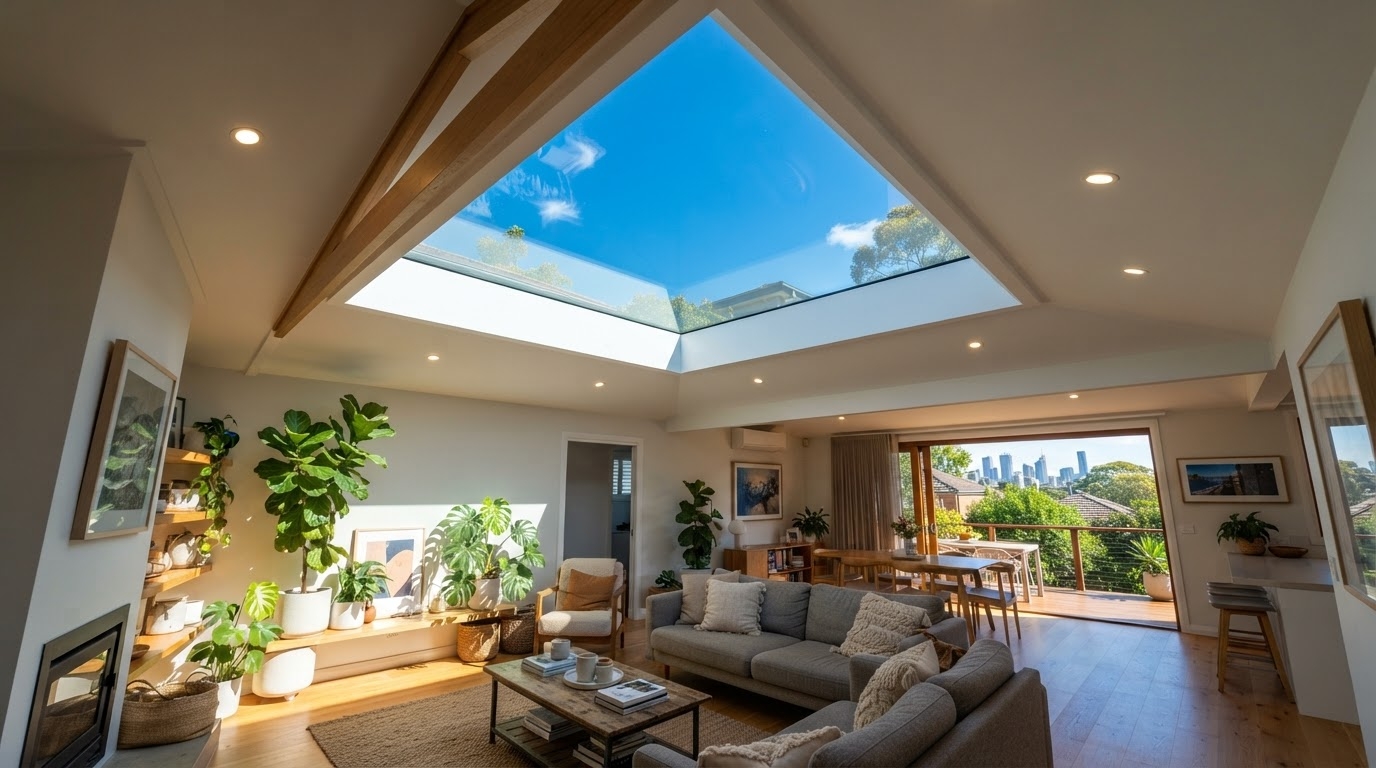
The skylight installation cost in Sydney ranges from $800 to $4,500 depending on the skylight type, roof material, and whether structural modifications to the ceiling are required. Tubular skylights at the lower end can be installed in two to three hours, while large fixed or operable skylights in tiled or Colorbond roofs take a full day and involve roofing, carpentry, and sometimes electrical work. This guide sets out what Sydney homeowners actually pay in 2026, including a cost table by skylight type, factors that move the price, and how to choose the right installer.
Table of Contents
- How Much Does Skylight Installation Cost in Sydney?
- What Factors Affect the Cost?
- What Types of Skylights Are Available?
- Do You Need Council Approval in NSW?
- How Long Does Installation Take?
- Benefits for Sydney Homes
- How to Choose the Right Installer
- Frequently Asked Questions
How Much Does Skylight Installation Cost in Sydney?
Skylight installation in Sydney costs between $800 and $4,500 for most residential jobs, with the final price driven by the skylight type, roof material, and access complexity. Tubular (solatube-style) skylights are at the lower end at $800 to $1,500 fully installed. Traditional fixed glass skylights in a tiled roof cost $1,500 to $3,000. Operable or vented skylights with a motorised opening mechanism installed in Colorbond or tiled roofs sit between $2,500 and $4,500.
| Skylight Type | Typical Installed Cost (Sydney) | Notes |
|---|---|---|
| Tubular / solatube (250–350 mm) | $800 – $1,500 | Minimal structural work, suits hallways and bathrooms |
| Fixed flat glass (600 x 900 mm) | $1,200 – $2,500 | Tiled or Colorbond roof, standard pitch |
| Fixed flat glass (900 x 1200 mm) | $1,800 – $3,200 | Larger opening, ceiling lining work included |
| Operable / vented skylight | $2,500 – $4,500 | Manual or motorised opening, includes flashing kit |
| Roof window / Velux-style | $2,000 – $4,000 | Vertical or near-vertical pitch, suited to attic conversions |
| Custom architectural skylight | $5,000 – $15,000+ | Bespoke sizing, structural engineer required |
These prices are typical market ranges for Sydney metropolitan and surrounding areas. Jobs in outer western Sydney suburbs like Penrith or Campbelltown can be slightly lower, while installations in premium inner-city suburbs or properties with complex roof access tend toward the higher end of each range.
What Factors Affect the Cost?
The single biggest cost variable is whether the roof requires significant cutting and flashing work. Colorbond steel roofs generally cost more to cut cleanly than concrete or terracotta tiles, which can be lifted and replaced around a new skylight frame. Roof pitch also matters: a low-pitch or flat roof requires a more complex upstand and waterproofing detail to prevent water ingress, whereas a 30-degree pitched tiled roof is a more straightforward installation.
- Roof material: Terracotta and concrete tiles are most forgiving. Colorbond requires specialist cutting. Slate roofs are the most expensive and time-consuming
- Roof pitch: Standard pitch (20–35 degrees) is easiest. Low-pitch or flat roofs need a raised curb and additional waterproofing
- Ceiling type: A plasterboard ceiling in a single-story home is simple. Raked or vaulted ceilings and multi-story homes add complexity
- Ceiling lining work: The light well or shaft between the roof opening and the ceiling below needs to be insulated and lined, adding $200 to $600
- Glazing specification: Standard clear glass is cheapest. Laminated, toughened, or thermally broken double-glazed units cost more but perform better in Sydney’s summer heat
- Flashing and waterproofing: Factory flashings for standard skylights are included in most quotes. Custom or site-fabricated flashing adds cost but is sometimes required for non-standard roof profiles
- Electrician for motorised units: Motorised operable skylights need a licensed electrician to wire the actuator and switch, adding $150 to $300
What Types of Skylights Are Available?
The Australian skylight market offers several distinct product categories suited to different home layouts and budgets. Tubular skylights (also called sun tunnels or solatubes) are the most affordable and easiest to install. They consist of a small dome on the roof, a highly reflective tube that runs through the ceiling cavity, and a diffuser lens in the ceiling. They are ideal for bathrooms, hallways, and walk-in wardrobes in Sydney homes where a full skylight is impractical due to roof structure or ceiling space.
Fixed flat skylights are the most popular choice for Sydney living areas, kitchens, and open-plan spaces. They provide consistent natural light without the complexity of an opening mechanism. The glazing is typically framed in aluminium with a factory flashing kit matched to your roof material. Double-glazed options are worth the premium in Sydney, as the city’s summer temperatures can cause single-glazed skylights to significantly increase ceiling heat gain.
Operable or vented skylights add passive ventilation, which is valuable in Sydney kitchens and bathrooms where moisture and heat accumulation are concerns. Manual chain-operated versions are more reliable than motorised units and do not require an electrician. Motorised versions with rain sensors are a premium option suited to homes where the skylight is difficult to reach by hand. Roof windows, which open on a pivot and are typically installed at or near vertical pitch, are common in attic conversions across Sydney’s older inner-suburb homes.
Do You Need Council Approval in NSW?
Most standard skylight installations in NSW do not require a Development Application (DA) and can proceed as Complying Development under the State Environmental Planning Policy (Housing) 2021. To qualify as complying development, the skylight must not increase the ridge height of the roof, must not be visible from a primary road frontage if in a heritage conservation area, and the home must meet the standard exempt development thresholds. Your installer should confirm complying development eligibility before work begins.
Heritage-listed properties and homes within heritage conservation areas in Sydney face additional restrictions. Councils such as Woollahra, Willoughby, and the City of Sydney have specific guidelines on skylight placement and glazing style for heritage homes. In these cases, a DA may be required, adding $500 to $2,000 in council fees and processing time of four to twelve weeks. Always check with your local council or a registered building certifier before proceeding if you are in a heritage zone.
The relevant NSW government guidance on exempt and complying development is available through the NSW Department of Planning, Housing and Infrastructure. A Building Information Certificate may be required after installation in some circumstances.
How Long Does Installation Take?
A tubular skylight installation in a tiled roof takes two to three hours for an experienced team. Standard fixed skylights up to 900 x 1200 mm typically take four to six hours on a single-story home with straightforward roof access and a flat plasterboard ceiling below. Allow six to eight hours for larger skylights, multi-story access, or complex ceiling linings that require plasterboard cutting and finishing.
Operable skylights with motorised drives take longer due to the additional wiring and mechanism testing. Installations involving custom flashings on non-standard roofs or light shaft framing in vaulted ceilings can require a full day or even a second visit for ceiling patch painting after the plasterboard work dries. Get a written scope of work and expected completion timeline from your installer before signing any agreement.
Benefits for Sydney Homes
Sydney’s 300-plus days of sunshine per year make skylights a genuinely practical upgrade rather than a luxury. A well-positioned skylight in a dark hallway or south-facing room can eliminate the need for artificial lighting for much of the day, reducing electricity costs. Many Sydney homeowners report that a skylight in the kitchen is the single most impactful renovation they have made for everyday liveability, particularly in terrace houses and 1970s brick homes with limited window placement.
Operable skylights also provide passive cooling through the stack effect: hot air rises and escapes through the open skylight while cooler air enters through lower windows. This natural ventilation is particularly effective in Sydney’s spring and autumn seasons when the city experiences warm but not extreme temperatures. Reducing reliance on air conditioning during these shoulder seasons can meaningfully lower electricity bills.
From a property value perspective, research by Australian real estate analysts consistently shows that natural light is among the top factors buyers consider when assessing a home. A skylight that transforms a dark interior can add more value than its installation cost in a competitive Sydney market. For investment property owners, improved natural light also supports rental appeal across Sydney’s competitive rental market.
WSG Group provides roofing services across Sydney, including skylight installation, roof repairs, and gutter replacement. Our licensed roofing team works with all roof types common to Sydney’s suburbs, from Colorbond on newer estates to terracotta tiles on Federation and Californian bungalow homes. Read our guide on roof inspection costs in Sydney to understand what a pre-skylight roof assessment involves.
How to Choose the Right Installer
Skylight installation sits at the intersection of roofing and carpentry, and in some cases electrical work. Choosing an installer who has specific skylight experience rather than a general roofer who occasionally installs them reduces the risk of leaks and incorrect flashing. Ask any prospective installer how many skylights they have installed in the past year, what brands they work with, and whether they guarantee the waterproofing against defects.
In NSW, roofing work on residential buildings is regulated under the Home Building Act 1989. Any contractor doing structural roofing work with a value over $5,000 must hold a contractor licence issued by NSW Fair Trading and must have home warranty insurance. For skylight installations costing less than $5,000, verify that the installer holds at minimum a Certificate III in Roofing (Roof Slating and Tiling) or equivalent trade qualification, and check their licence status on the NSW Fair Trading register.
Get at least two written quotes for any skylight job. A good quote will specify the skylight brand and model, the flashing kit type, the glazing specification, the ceiling lining scope, and the warranty period on both labour and materials. Avoid installers who quote verbally or refuse to specify what brand of skylight they are supplying, as these are common indicators of low-quality imported products with no Australian distributor support.
Get a Skylight Installation Quote in Sydney
Licensed roofing team. All Sydney roof types. Written quotes with brand and material specification.
Request a QuoteFrequently Asked Questions
How much does skylight installation cost in Sydney?
Skylight installation in Sydney costs between $800 and $4,500 depending on the type of skylight, roof material, and ceiling complexity. Tubular skylights cost $800 to $1,500 installed. Fixed flat skylights in tiled or Colorbond roofs range from $1,200 to $3,200. Operable skylights with motorised opening mechanisms cost $2,500 to $4,500.
Do I need council approval to install a skylight in NSW?
Most standard skylights qualify as exempt or complying development under NSW planning rules and do not need a DA. Heritage-listed properties and homes in conservation areas may require council approval. Always check with your local council or a registered building certifier before starting work.
How long does it take to install a skylight?
A tubular skylight takes two to three hours. Standard fixed skylights take four to six hours on a single-story home. Operable skylights or complex ceiling linings can take a full day. Your installer should provide a written timeline as part of their quote.
Which is better, a fixed or operable skylight for Sydney?
For living areas and bedrooms, a fixed double-glazed skylight provides consistent light and requires no maintenance. For kitchens and bathrooms, an operable skylight adds ventilation that can reduce moisture and heat buildup. Sydney’s climate means vented skylights deliver real comfort benefits in spring and autumn.
Will a skylight make my house hotter in summer?
A single-glazed skylight facing north or west will add heat in summer. Double-glazed or low-emissivity (low-e) glass significantly reduces heat gain. An operable skylight that can be closed during the hottest part of the day and opened at night for cooling is the most thermally comfortable option for Sydney’s warm summers.
How long does a skylight last?
Quality skylights from established Australian suppliers last 20 to 30 years or more. The glazing and frame are typically warranted for 10 years. The flashing and waterproofing warranty varies between five and fifteen years depending on the installer and product. Regular inspections every five years extend the lifespan of the waterproofing.
Can a skylight increase my property value in Sydney?
Yes. Natural light consistently ranks among the top buyer priorities in Sydney property research. A skylight that improves a dark kitchen, hallway, or living area can return more than its installation cost in added sale value, particularly in inner-city terraces and 1970s brick homes where window placement is limited.