

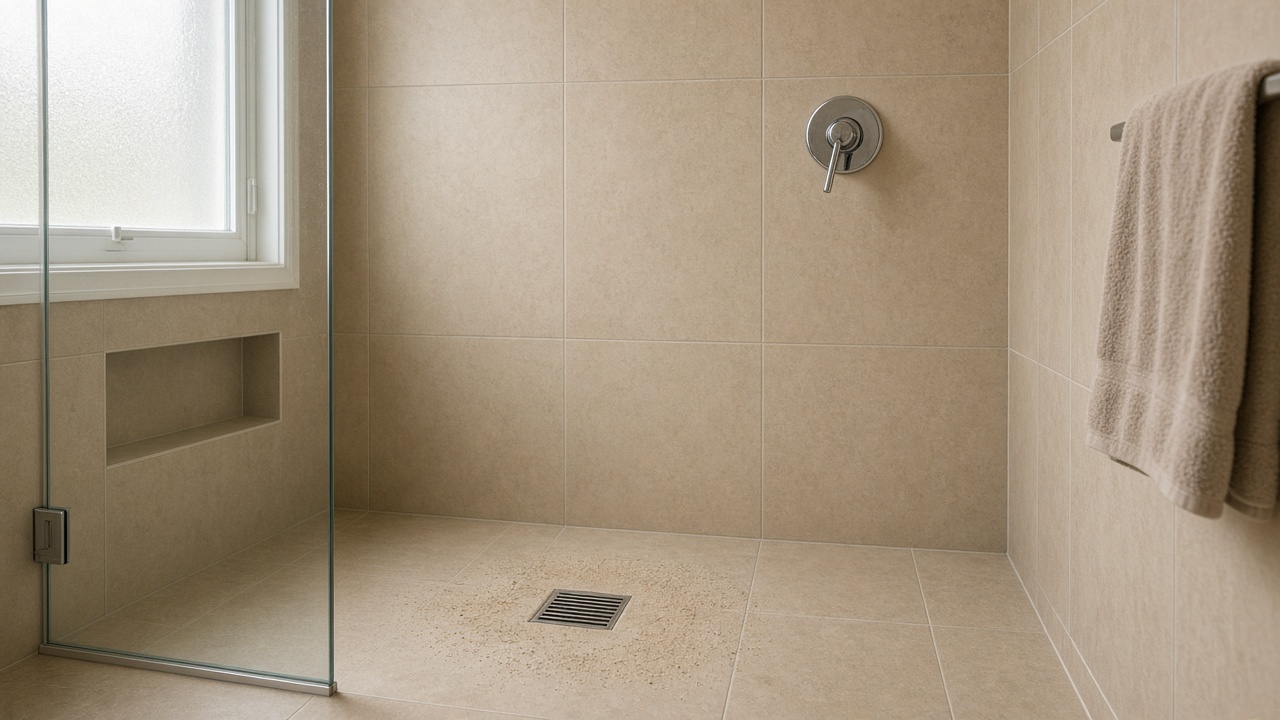
On a bright November morning in a bathroom at Avoca Beach, the first shower after a swim does not empty as it should. Water sits around the grate, and when you look down you can see pale grit in the slots. The rest of the house is fine. The problem is in the shower, and the usual suspect on this stretch of coast is sand: fine, heavy, and very good at sitting in a trap.
A shower drain blocked sand Central Coast households notice after a beach day is a local summer pattern, not a mysterious pipe failure. Families come in from Umina, Terrigal, The Entrance and Woy Woy with sand on their feet, in towels, and in swimmers, and a surprising amount of it rinses off in the first minute under the shower. Hair and soap then bind that grit into a paste that a trap cannot shift on its own. With Christmas guests a few weeks away, many bathrooms will do this more often, not less.
This guide explains why beach sand blocks Central Coast shower drains, what you can safely check yourself, when a licensed plumber should take over, and how to reduce the problem through the summer. Where a scene is used to show a typical situation, it is labelled as an illustrative example, not a record of a named job. Clearing or repairing a drain that is beyond a simple grate clean is plumbing work. In NSW you should use a licensed tradesperson, and Building Commission NSW is the state body that oversees much of that licensing and compliance framework.
Why beach sand is so good at blocking a shower
A shower floor waste leads into a trap, a bent section of pipe that holds a small amount of water so sewer smells cannot come back into the room. Sand is heavier than the hair and soap scum a trap is already dealing with. It settles in that bend, and each shower adds a little more. Once the passage is narrow, water ponds on the floor and the next rinse of grit has even more time to drop out.
Central Coast sand makes this worse in a practical way. Fine beach sand from Avoca, Copacabana or Umina gets everywhere: between toes, in the hem of a towel, in the lining of a beach bag left in the bathroom.
A house two streets back from the beach sees this all summer. A holiday rental near The Entrance can see it every changeover. The shower is doing exactly what you asked: washing the beach off. The drain is the part that has to cope.
Hair and soap are the usual partners. Sand on its own can sit in a trap. Sand mixed with hair forms a mat. Add body wash or shampoo residue, and the grate starts to look furred as well as gritty. If someone has used a thick hair product, or if the household has been at the beach several days in a row, the change from “a little slow” to “standing water” can happen quickly.
An illustrative example, not a record of a named job: a family returns to a Woy Woy house after a weekend at the beach. The downstairs shower, used by everyone to rinse off, is slow on Sunday night and almost still on Monday morning. Lifting the grate shows a ring of pale sand and hair.
The trap below is packed. A licensed plumber clears it, checks that the pipe beyond is running, and the shower is back to normal. The same house can avoid a repeat by rinsing feet outside and emptying the grate more often through summer.
Signs it is sand in the shower, and signs it is something else
A shower that is slow only after beach days, with visible grit around or under the grate, is usually a local blockage at the waste or the trap. You may also notice a gritty feel on the shower floor, a sour smell if water has been sitting, or a grate that no longer sits flush because debris is under the rim.
Other signs point past a simple sand plug. If more than one drain is slow at the same time, if the floor waste in the laundry or a nearby gully is rising, or if you hear gurgling in other fixtures when the shower runs, the blockage may be further along the line. Our article on what happens if you ignore a slow drain covers why waiting is a poor plan once that pattern appears. In some houses a blockage can also affect how other fixtures behave, which is a reason to look at the broader drain, not only the grate.
Water that leaks under the shower screen or into a wall, a ceiling stain in the room below, or a floor that feels soft at the edges is no longer only a drain issue. That needs a plumber, and possibly a wider look at waterproofing, rather than another attempt to flush the grate. Standing water left for days can also leave the room damp enough for mould to grow. NSW Health has a fact sheet on mould in the home, which is a reminder to dry the area properly once the drain is clear. If sewage smell is strong, or wastewater appears at a gully outside, stop using the fixture and call.
Stormwater is a different system. A shower drain is wastewater. If the yard gully or the street drain is the thing overflowing after rain, that is a stormwater drain problem, not beach sand in the shower. The two can be confused after a spring storm, so it is worth saying which fixture is slow when you book.
What you can safely do, and what you should leave
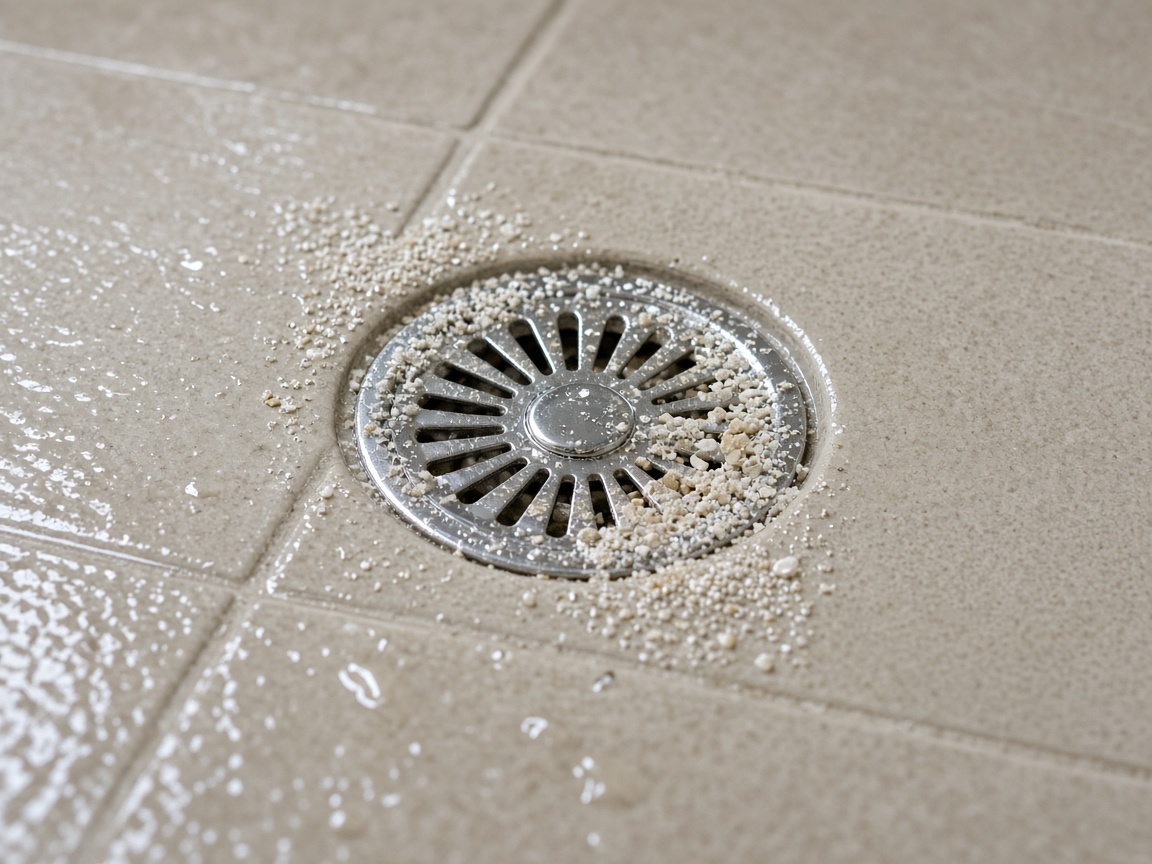
If the only symptom is a slow shower and visible sand at the grate, a careful first clean is reasonable. Wear gloves. Lift the grate if it is designed to come out, and empty sand and hair into the bin, not back down the drain. A small hook or a gloved hand can lift a mat of hair from just inside the opening. Flush with a bucket of warm water and see whether the shower empties more freely.
Do not pour caustic drain cleaners down a sand blockage. They are poor at moving mineral grit, they can damage some pipes and wastes, and they make the job more hazardous for anyone who then has to open the trap. If you already have leftover cleaner, NSW EPA guidance on household waste is a starting point for disposing of chemicals properly rather than tipping them down the drain. Do not dismantle a trap if you are not sure how it is put together, how to catch the water, or how to reseal it. A leak under a shower is a much larger repair than a grate clean.
If the grate clean does not restore a steady flow, if you cannot lift the grate safely, or if the blockage returns within a day or two, book a licensed plumber. In NSW, drain clearing and trap work beyond a simple clean is plumbing work. A plumber can open the trap properly, clear sand that has packed in the bend, and check that the pipe beyond is not holding a deeper blockage.
A plunger can sometimes help a simple trap blockage, but it can also push sand further into the pipe or splash dirty water. If you try one, do it gently, keep the area contained, and stop if nothing changes. A licensed plumber with the right tools, including a camera if the line needs to be seen, is the safer next step.
When the plumber should take over
Call sooner, rather than after a week of standing water, if:
- The shower is still slow after you have emptied the grate
- Other drains in the house are slow or gurgling
- Water is escaping under a screen, into a wall, or to a ceiling below
- There is a strong sewage smell, or wastewater at an outside gully
- The property is a rental and the drain is not usable (tell the landlord or agent; some drain failures are urgent repairs in NSW)
- You have already used a chemical cleaner and the drain is still blocked (say so when you book, so the plumber can take care)
A plumber’s visit for this kind of job usually starts at the grate and the trap, then moves along the line only if needed. That is the right order. It avoids treating a handful of beach sand as if it were a collapsed sewer, and it still catches a deeper problem if one is there.
The plumber may remove the trap, flush the waste, and, if the water still sits, use a machine or a camera further along. If the line is older or repeatedly blocking, they can talk through options. Regular plumbing maintenance is easier than a weekend overflow when guests are in the house. NSW housing and construction information is also useful if you are unsure which rules apply to a repair in a rental or a strata scheme.
WSG Group’s blocked drain team works across the Central Coast, including Avoca Beach, The Entrance, Woy Woy and Tuggerah. You can use the contact page or call 1800 186 597.
How to cut the sand load through a Central Coast summer
You will not keep a beach household completely sand-free, and you do not need to. A few habits reduce how much of it reaches the trap.
Rinse feet and swimmers outside, with a hose over grass or a designated outdoor waste, before anyone steps into the shower. Shake towels in the yard, not over the bathroom floor. If the house has an outdoor shower, use it for the first rinse. These are simple steps, and they make a clear difference in beach suburbs through November and January.
Inside, empty the shower grate more often in summer than you would in winter. A weekly lift and bin of grit through the swimming months is easier than a packed trap. A simple hair catcher that sits on the grate can hold sand as well as hair, as long as you empty it. It is not a substitute for a clear trap, and a catcher that sits proud and trips people should be chosen with care.
If you host guests over Christmas, show them the outdoor rinse and the grate, especially in a holiday house near the water. A short note in a rental bathroom can prevent a Monday morning call-out. If you are the guest, the same habits protect the house you are staying in. Kids coming back from Terrigal or Avoca several times a day are the usual source of a mid-holiday blockage, and a catcher that is emptied each evening is often enough to stay ahead of it.
If the shower is already slow, do those habits after the drain is clear, not instead of clearing it. Sand that is already in the trap will not rinse out because people start washing their feet outside.
A short summer checklist for Central Coast showers
Use this before the busiest beach weeks, and again if the shower starts to feel slow:
- Lift the grate and empty sand and hair into the bin
- Check whether only the shower is slow, or other drains as well
- Set up an outdoor first rinse for feet and swimmers if you can
- Put a hair catcher on the grate and empty it often
- Avoid caustic cleaners on a sand blockage
- Book a licensed plumber if a grate clean does not restore flow, or if other fixtures are involved
A shower that ponds after a beach day is one of the most local plumbing problems on the Central Coast, and it is also one of the more straightforward ones when it is caught early. WSG Group can clear the trap, check the line, and get the bathroom ready for a busy summer.
Frequently Asked Questions
Why does beach sand block a shower drain so easily?
Sand is heavy and settles in the trap under the floor waste, the bend that also holds water to stop smells. Hair and soap bind the grit into a paste. After a few beach days, the passage can narrow enough for water to pond on the shower floor.
Can I tip boiling water or chemical cleaner down a sandy shower drain?
A bucket of warm water after you have emptied the grate is reasonable. Boiling water can damage some wastes and pans, and caustic cleaners are poor at moving sand and can harm pipes. They also make the job more hazardous if a plumber then has to open the trap. Empty the grate first, and call a plumber if flow does not return.
Is a slow shower after the beach a job for a plumber?
If emptying the grate restores flow, you may not need a visit. If the shower stays slow, the blockage returns quickly, or other drains are affected, book a licensed plumber. They can clear the trap properly and check the pipe beyond.
Could it be a stormwater problem instead?
A shower is a wastewater drain, not a stormwater drain. If the yard gully or a street drain overflows after rain, that is a different system. Say which fixture is slow when you book, so the plumber comes prepared for the right line.
How do I stop this happening all summer?
Rinse feet and swimmers outside first, shake towels in the yard, empty the grate often, and use a hair catcher if it sits safely. These habits reduce the sand that reaches the trap. They do not clear sand that is already packed in the bend.
What if I am renting and the shower will not drain?
Tell the landlord or agent promptly, and describe what you have already tried. Some drain failures are urgent repairs under NSW rental rules. Do not dismantle the trap or use harsh chemicals unless the agent has told you to and you are comfortable doing so.
Will a camera inspection be needed for sand in the shower?
Often no. Many of these jobs are a packed trap at the shower waste. A camera is useful if the plumber suspects a deeper blockage, a damaged pipe, or repeated problems on the same line. That decision is made on site, not in advance.