


Out past the M1 at Matcham, Somersby, Kulnura and Mangrove Mountain, a lot of homes are not connected to town sewer. Everything from the toilets, showers, kitchen and laundry goes into a tank in the backyard and then into the ground or a pump-out well. For eleven months of the year that works quietly. Then Christmas arrives, the spare rooms fill with family from Sydney, the washing machine runs four times a day, and the system that coped with three people is suddenly handling ten. The septic tank maintenance Central Coast families do in late November is what keeps that week free of smells, slow toilets and soggy lawns.
A septic system is a living thing. Bacteria in the tank break down waste, and the soil finishes the job. Flood it with water or chemicals, or let the solids build up for too long, and it stops working properly. This guide explains how the main systems handle a full house, what Central Coast Council expects from owners, the warning signs, and what to check before guests arrive. Any scenario used to explain a point is labelled as an illustrative example, not a record of a named job.
Who has a septic system on the Central Coast
Central Coast Council’s page on on-site sewage management explains that these systems are installed on properties where a connection to Council’s sewerage system is not available, so wastewater has to be managed on site. That covers many rural and semi-rural properties in the hinterland and some older pockets closer to the coast.
Council lists several system types, including:
- Septic tanks with absorption trenches or evapotranspiration beds.
- Aerated wastewater treatment systems, often called AWTS.
- Septic tanks with a pump out.
- Wet composting, sand and fabric filters, and composting toilets.
Council also states that all on-site sewage management systems must be registered and need an approval to operate. If you have bought a rural property recently and are not sure whether the system is registered, Council’s application for approval to operate form shows what details are needed.
How a septic system copes with a full house
A conventional septic tank works by holding wastewater long enough for solids to settle to the bottom as sludge and for fats and oils to float to the top as scum. Bacteria break down some of the solids, and the clearer liquid in the middle flows out to the absorption trenches or the next stage of treatment.
The problem with extra guests is not the number of people as such. It is the extra water arriving in a short time. The NSW Government’s Easy Septic Guide explains that too much water makes effluent flow through the tank too quickly, before the bacteria have a chance to work. Solids can then be pushed through the system and clog the absorption trenches.
Illustrative example: a household of three in Jilliby normally runs one load of washing a day. Over Christmas, with seven guests, the laundry runs five loads on Boxing Day, the dishwasher runs twice and there are ten showers. The tank receives several days’ worth of water in a single day, and the trenches that normally dry out between uses stay saturated.
Trenches that are clogged with solids are expensive to fix. In many cases they have to be dug up and replaced, which is why preventing overload is far cheaper than repairing it.
Know which system you have
Before you can plan, you need to know what is in the ground. Each type has different needs.
Septic tank and absorption trench
The most common older setup. Solids stay in the tank and must be pumped out periodically. The liquid soaks into the soil through trenches. These systems are most sensitive to water overload and to solids escaping from an overfull tank.
Aerated wastewater treatment system (AWTS)
An AWTS uses pumps and air to treat wastewater to a higher standard, then usually irrigates it over a designated area of lawn or garden. The Office of Local Government’s Onsite Wastewater Management Guidelines list a quarterly service and inspection to the manufacturer’s specification as the minimum for an AWTS. The guidelines also say a service report should be provided to the council within 14 days of the service, and that it is the owner’s responsibility to make sure the council receives it.
If your quarterly service is due in December, book it early. An AWTS working at full capacity over Christmas needs its pumps, blowers and alarms in good order.
Pump-out system
A pump-out system holds wastewater in a tank that is emptied by truck rather than draining to the ground. The Easy Septic Guide notes that a pump-out system in full-time use is generally pumped out every one to two weeks, depending on the number of people, and that the tank needs pumping if it is more than two-thirds full. With guests staying, the tank fills faster, so you may need an extra pump-out booked over the holidays.
When does a septic tank need pumping out?
Pumping out the sludge from a septic tank is called desludging. The OLG guidelines say solids should be measured annually, and that a tank must be desludged no later than when the total sludge and scum level equals one-third of the depth of the tank, or when sludge or scum are within 150 millimetres of the base of the inlet or outlet. They note that every three to five years is common for existing systems with full occupancy where the tank is sized correctly.
The guidelines also state that sludge can only be removed by a liquid waste contractor, and that the tank should be refilled with water straight away to at least two-thirds full or the outlet level. If your tank has not been desludged in the last few years, or you do not know when it was last done, late November is a sensible time to book. Contractors get busy in December, and a tank that is close to full has little room for a week of extra guests.
The Easy Septic Guide describes a tank that has not been pumped out in the past three to five years as the most common cause of septic problems.
Before the guests arrive: a simple checklist
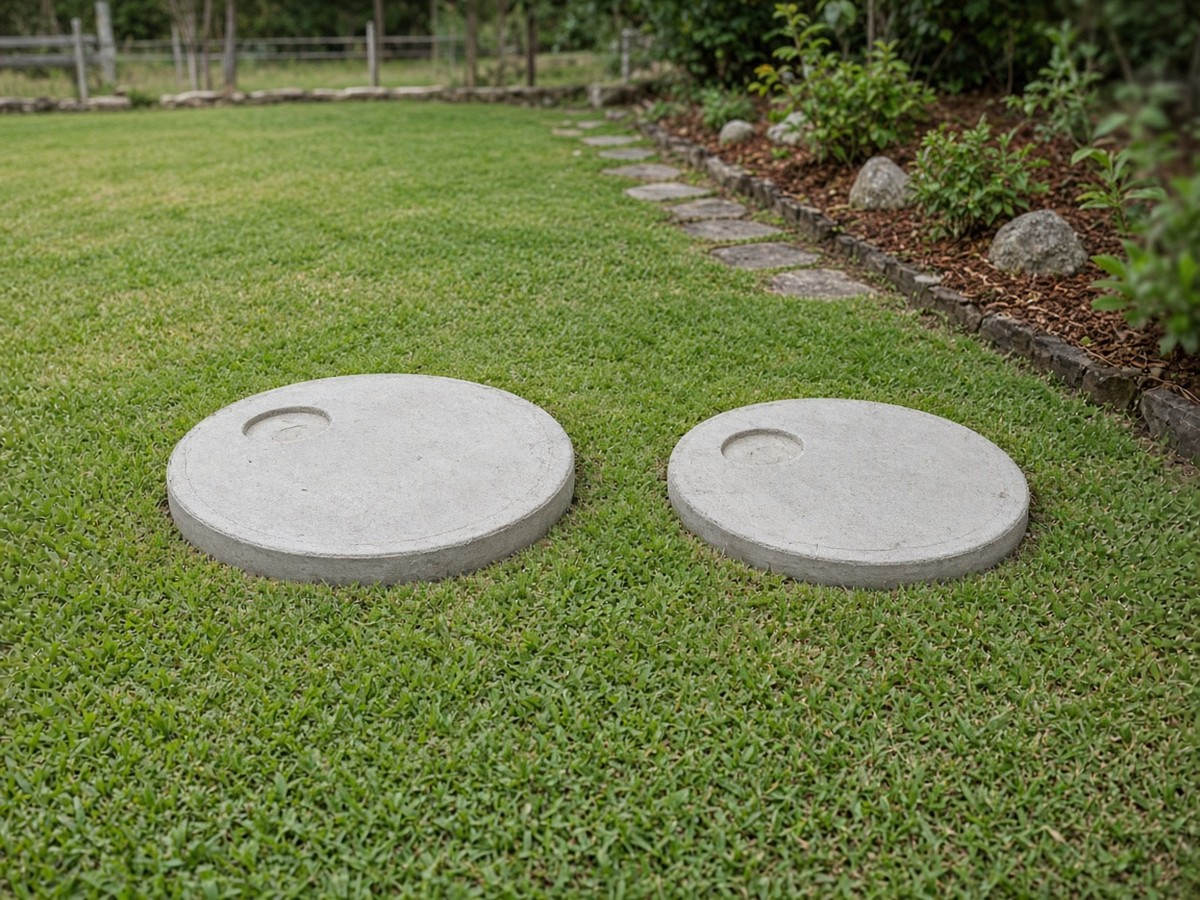
You can do most of this yourself, without opening the tank. Leave the lids to professionals, because septic tanks can contain flammable and toxic gases.
- Find out when the tank was last desludged, and book a pump-out if it is due or overdue.
- If you have an AWTS, make sure the quarterly service is done and the alarm works.
- Walk over the absorption or irrigation area. It should not be soggy, smelly or covered in unusually lush, dark green grass.
- Check every toilet and drain in the house empties quickly.
- Fix leaking taps and running toilets. A toilet that trickles all day can send a surprising amount of water into the tank.
- Make sure nothing heavy is parked over the tank or trenches, such as cars, trailers or marquees for the Christmas party.
- Keep roof water and stormwater away from the tank and trenches.
If anything on that list looks wrong, call a plumber before the house fills up. Our plumbing services team can check pipes, pits and drains, and arrange the next steps.
During the holidays: go easy on the system
A few house rules shared with guests make a real difference:
- Spread out the laundry. One or two loads a day is much kinder to a septic system than five on the same afternoon.
- Run the dishwasher and washing machine only when full.
- Keep showers short.
- Only toilet paper goes down the toilet. Wipes, sanitary products and paper towel do not break down in the tank.
- Scrape plates into the bin, not the sink. Fats and food scraps add to the scum and sludge.
- Go easy on bleach and strong disinfectants. The Easy Septic Guide warns that bleaches, disinfectants and harsh cleaning products can kill the helpful bacteria in the system.
The guide also recommends low-phosphorus or phosphorus-free detergents, which are better for the system and nearby waterways.
Warning signs that need a plumber
The Easy Septic Guide lists several signs that a septic system needs attention. Watch for:
- A rotten egg smell around the tank or trench area.
- Damp or soggy ground, or pools forming downhill from the trenches.
- Lots of dark green grass on or around the absorption area.
- Toilets or drains that are slow to clear or keep backing up.
- Gurgling sounds from drains when water runs elsewhere in the house.
- An alarm on an AWTS or pump-out system.
Slow drains are not always the tank. A blocked pipe between the house and the tank causes the same symptoms. A CCTV drain inspection shows exactly where the problem is, and high-pressure water jetting can clear roots and build-up from the line. If one toilet or shower is the problem, our toilet and bathroom drain cleaning service covers it.
Ignoring the early signs rarely ends well. Our article on what happens if you ignore a slow drain explains how small problems grow.
Summer storms and septic systems
Summer on the Central Coast brings heavy storms. When the ground is already saturated, absorption trenches have less room to take effluent, and a system that is close to its limit can struggle. Stormwater flowing over the trench area makes it worse.
After a big storm, ease off on water use for a day or two if you can. Check that downpipes and surface water are directed away from the tank and trenches. If you see effluent surfacing or smell sewage after heavy rain, keep children and pets away from the area and call a plumber.
Holiday homes and rentals on septic
Some septic properties on the Coast are holiday houses or short-stay rentals, from bush retreats around Mangrove Mountain to cottages near Kulnura. These homes have a particular challenge: they sit empty for weeks, then host a large group all at once.
A system that rests for a month and then takes a full house for a week is under real pressure, especially if guests do not know they are on septic. A short note in the house guide helps. Explain that only toilet paper goes in the toilet, ask guests to spread out laundry, and list a number to call if they notice smells or slow drains.
Owners should also keep a simple record of desludging dates, AWTS service reports and any repairs. It makes it easier to plan maintenance between bookings and to show Council the system is being looked after.
What a plumber checks on a septic property
When a plumber visits a home on septic, the job usually starts at the house and works outwards. A typical check looks at:
- How quickly each toilet, shower and sink drains, and whether drains gurgle when other fixtures run.
- The inspection openings and pits on the line between the house and the tank.
- Signs of tree roots, broken pipes or sagging sections, often confirmed with a drain camera.
- Whether roof water or stormwater is getting into the sewer line or flowing onto the trench area.
- Leaking taps, cisterns and hot water relief valves that add water to the system.
The plumber can then tell you whether the issue is in the pipes, which they can fix, or in the tank or trenches, which may need a pump-out contractor, an AWTS service agent or a Council application for repairs.
Plumber, pump-out contractor or service agent?
Different people look after different parts of a septic system:
- A liquid waste contractor pumps out sludge from tanks and empties pump-out systems.
- An AWTS service agent carries out quarterly services and sends the report to Council.
- A licensed plumber clears and repairs drain lines, fixes blockages between the house and tank, repairs pipes and pits, and carries out drainage work.
Council states that installing a new system or altering an existing one needs an application, and that internal plumbing and drainage work needs a plumbing and drainage inspection. Old tanks must be demolished following NSW Health requirements. Before any work starts, check the tradesperson’s licence on Verify NSW.
If you are planning a granny flat, pool or extension next year, talk to Council early. Its guide to wastewater for development sets out buffer distances between new work and the tank and effluent area, such as 6 metres for buildings and 15 metres for swimming pools and property boundaries.
Get your septic ready for a full house
A septic system that has been looked after will usually handle a busy Christmas without fuss. Check when it was last pumped, book any service that is due, fix leaks, spread out the laundry and keep an eye out for smells, soggy ground and slow drains. If something does go wrong, deal with it early, before a blocked line or overflowing tank turns into a much bigger job.
WSG Group helps rural and semi-rural households across the Central Coast with blocked lines, drainage repairs and plumbing, including our local plumbers in Matcham and the hinterland. Book online before the holiday rush and we will help you get ready.
Frequently Asked Questions
How often should a septic tank be pumped out?
NSW guidelines say a tank must be desludged no later than when sludge and scum reach one-third of the tank depth, or come within 150 mm of the inlet or outlet. Every three to five years is common for a correctly sized tank in full-time use.
Can a septic system cope with extra guests over Christmas?
Usually, if it has been maintained. The risk comes from a lot of extra water in a short time, which pushes solids through the tank. Spread out laundry, keep showers short and fix leaks before guests arrive.
What are the signs my septic system is failing?
Watch for rotten egg smells, soggy ground or pools near the trenches, very lush green grass over the absorption area, slow or backing-up toilets and drains, gurgling pipes or a system alarm.
Do I need council approval for my septic system on the Central Coast?
Yes. Central Coast Council requires all on-site sewage management systems to be registered with an approval to operate. Installing a new system or altering an existing one also needs an application to Council.
How often does an aerated wastewater treatment system need servicing?
NSW guidelines list a quarterly service and inspection as the minimum for an AWTS. The service report should go to Council within 14 days, and it is the owner’s responsibility to make sure Council receives it.
Can I use bleach if I have a septic tank?
Use it sparingly. Bleaches, disinfectants and harsh cleaning products can kill the bacteria that make a septic system work. Milder cleaners and low-phosphorus detergents are a better choice.
Who should I call for a blocked septic line?
Call a licensed plumber. They can find the blockage with a CCTV camera and clear it, and will tell you if the tank itself needs pumping out by a liquid waste contractor.