

Gas Plumbing Safety at Home: A Property Owner’s No-Nonsense Guide
Gas Plumbing Safety Sydney is one of the most important topics for homeowners and property managers. Published: March 25, 2026 | Reading Time: 10 min | Category: Home Maintenance & Safety
In This Guide
Every week, we get calls from homeowners who wish they’d known this sooner.
Gas Plumbing Safety Sydney is one of those topics that affects safety, legal compliance, property value and insurance — all at once. Yet it remains one of the most misunderstood areas for Australian homeowners and landlords. That’s what this guide is here to fix.
The numbers tell a clear story:
- Common Gas Plumbing Problems in Sydney Homes
- Warning Signs of a Gas Leak You Should Never Ignore
- What Happens During a Professional Gas Inspection
- Gas Plumbing Regulations in NSW: What You Must Comply With
- Gas vs Electric: Which Is Better for Sydney Homes in 2026?
Read to the end — the section on choosing a licensed professional alone could save you thousands.
Gas Plumbing Safety Sydney: Common Gas Plumbing Problems in Sydney Homes
According to Energy Safe NSW, gas leaks are responsible for over 400 reported incidents in NSW homes annually.
Here’s what that means in practice:
A 2024 survey by Master Plumbers Australia found 68% of gas-related call-outs involved fittings over 15 years old.
- Corroded or ageing gas pipework is the most common issue in Sydney homes built before 2000 — pipes over 25 years old should be professionally assessed
- Faulty gas regulators cause inconsistent appliance performance and are a leading cause of gas leaks at the meter
- Loose gas fittings from DIY or amateur work are a serious hazard — only licensed gas fitters should touch any gas connection
- Blocked or poorly maintained flues cause incomplete combustion, leading to carbon monoxide risk indoors
- Outdated gas hot water systems are a frequent failure point — systems older than 10–12 years are statistically more prone to leaks and failures
Key Takeaway: The most common gas plumbing problems in Sydney homes — corrosion, ageing fittings, regulator faults — are entirely preventable with scheduled professional maintenance. If your gas system is more than 10 years old, a licensed inspection is the single most effective step you can take to protect your household.
Warning Signs of a Gas Leak You Should Never Ignore
NSW Fire and Rescue data shows that undetected slow gas leaks are a contributing factor in over 60% of residential gas incidents each year.
When it comes to licensed gas plumber NSW, the details matter more than most people realise:
The average cost of emergency gas repairs in Sydney in 2026 ranges from $280 to $850 — far less than the cost of a major gas incident.
- A rotten egg or sulphur smell is the most recognisable sign of a natural gas leak — gas companies add this odorant specifically so you’ll notice it
- Hissing or whistling sounds near gas meters, pipes or appliances indicate pressure escaping and require immediate attention
- Soot marks or scorching around gas burners or appliance vents signal incomplete combustion — a direct carbon monoxide risk
- Dead or yellowing vegetation along the path of underground gas lines can indicate a slow subsurface leak
- Higher-than-normal gas bills without a change in usage pattern is a strong indicator of a leak somewhere in your system
Bottom line: If you notice any of these warning signs, don’t wait for a scheduled inspection — treat it as an emergency. Evacuate, ventilate, shut off your gas meter if safe to do so, and call a licensed gas plumber. WSG Group’s 24/7 emergency team responds across Sydney, Central Coast and Newcastle.
What Happens During a Professional Gas Inspection
A licensed gas inspection takes 1–2 hours on average and costs $150–$350 in Sydney — a fraction of the cost of emergency repairs or insurance complications.
The facts are clearer than most homeowners expect:
NSW Fair Trading data shows that properties with documented annual gas inspections have 74% fewer gas-related insurance claims.
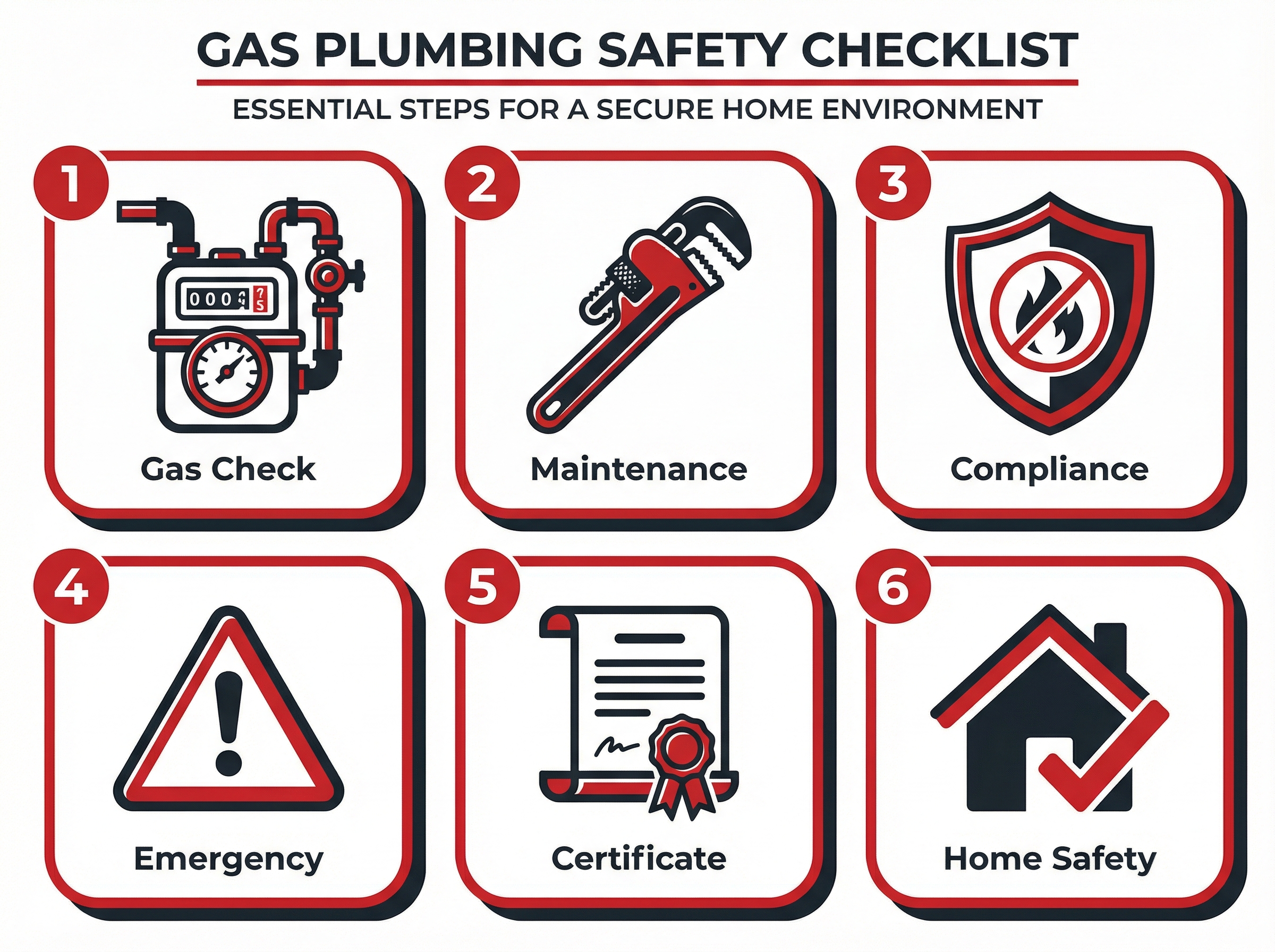
1. A licensed gas inspector will test all visible pipework for leaks, corrosion and improper installation — using calibrated gas detectors
2. Appliance flue systems are checked to confirm combustion gases are venting safely outside the building
3. Gas pressure testing is conducted to verify the entire system operates within safe parameters under AS/NZS 5601
4. Upon passing, you receive a Gas Compliance Certificate — required for property sales, rental compliance and insurance claims
5. Inspectors will flag any non-compliant work and provide a written report — this is your legal record of due diligence
Worth remembering: A professional gas inspection is not just peace of mind — it’s a legal document. The Gas Compliance Certificate issued at the end proves your system meets AS/NZS 5601 standards, protects your insurance, and fulfils NSW landlord obligations. Book one every two years minimum.
Gas Plumbing Regulations in NSW: What You Must Comply With
Under the Gas and Electricity (Consumer Safety) Act 2017, all gas work in NSW must be performed by a holder of a Gas Fitting Licence — penalties for unlicensed work reach $220,000 for individuals.
This is where licensed professionals make the difference:
NSW landlords who fail to maintain gas appliances and fittings in safe working order face fines of up to $5,500 per breach under the Residential Tenancies Act 2010.
- All gas work requires a licensed gas fitter — this is not optional; AS/NZS 5601 compliance is a legal requirement in NSW
- You are legally entitled to a Certificate of Compliance for any gas work completed — always request it in writing
- Landlords must maintain gas appliances and have them serviced every 2 years minimum to meet NSW tenancy law obligations
- Insurance may be voided if gas work was performed by an unlicensed contractor — insurers routinely check compliance documentation during claims
- Keep a maintenance log for all gas inspections and repairs — this is required for property sales, strata compliance and rental renewals
The expert view: NSW gas regulations are clear: unlicensed gas work is illegal, expensive to remedy, and can void your insurance. Whether you’re a homeowner, landlord or property manager, using a licensed gas fitter and keeping compliance records isn’t bureaucracy — it’s the only way to protect your asset and your tenants.
Gas vs Electric: Which Is Better for Sydney Homes in 2026?
A 2025 CSIRO report found natural gas heating costs Sydney households an average of $680/year, compared to $490/year for reverse-cycle heat pump alternatives.
Understanding gas fitting regulations NSW properly starts here:
Despite rising energy prices, over 62% of Sydney homes still use gas for hot water or cooking as of 2026 — but electrification is accelerating, driven by NSW Government rebates of up to $1,600.
- Gas remains cost-competitive for cooking — induction cooktops have lower running costs but require a $600–$1,500 switchboard/wiring upgrade in older Sydney homes
- Heat pump hot water now outperforms gas on both running costs and emissions — payback period is 3–5 years in Sydney’s climate
- Solar + battery + electric combinations offer the best long-term savings but require a $12,000–$25,000 upfront investment
- NSW electrification rebates of up to $1,600 are currently available for switching from gas hot water to a heat pump system
- Before committing to electrification, get a licensed assessment — older Sydney homes may need switchboard upgrades that add $1,500–$3,000 to the cost
What this means for you: The gas vs electric debate isn’t one-size-fits-all for Sydney homes. Gas still makes financial sense in some scenarios, but heat pump hot water is increasingly the smarter choice — especially with current NSW rebates. A licensed assessment from WSG Group will give you real numbers for your specific property before you commit.
How to Choose a Licensed Gas Plumber in Sydney
A 2024 CHOICE survey found 78% of Australians cite licensing and insurance as the most important factor when hiring a trades contractor — yet 1 in 5 admits they’ve never actually verified these before work began.
Here’s the breakdown:
Unlicensed gas work is the single largest contributor to gas-related insurance claim denials in Australia, according to the Insurance Council of Australia.
1. Verify the licence before booking — check the NSW Fair Trading online licence register at fairtrading.nsw.gov.au; it takes 60 seconds
2. Confirm the contractor holds public liability insurance of at least $5 million and current workers’ compensation — ask for certificates, not just verbal confirmation
3. Always get a written, itemised quote before any work begins — a legitimate licensed tradie will never refuse this
4. Look for Google Reviews with recent dates and check how the business responds to complaints — evasiveness is a red flag
5. Prefer locally established businesses with a physical address in Sydney — they have a reputation to protect and are accountable to the NSW licensing system
Don’t overlook this: Choosing a licensed gas plumber in Sydney isn’t difficult if you know what to check: verify the licence on NSW Fair Trading, confirm insurance, get a written quote. WSG Group ticks every box — licensed, insured, locally based, and available 24/7. Call 1800 186 597 for a free, no-obligation quote.
Frequently Asked Questions
What should I do if I smell gas at home in Sydney?
Leave the property immediately without using any electrical switches, open flames or mobile phones indoors. Once outside, call your gas supplier’s emergency line (Jemena: 131 909 for natural gas) and then call a licensed emergency gas plumber. WSG Group provides 24/7 emergency gas response across Sydney — call 1800 186 597.
How much does a gas plumber cost in Sydney?
A licensed gas plumber in Sydney in 2026 typically charges $120–$180 per hour for standard call-outs, with a minimum call-out fee of $80–$150. Emergency after-hours rates are usually 1.5–2× the standard rate. Always request an itemised written quote before approving any work — legitimate tradies always provide this.
Do I need a licensed gas fitter for gas work in NSW?
Yes — this is not optional. All gas work in NSW must be performed by a holder of a Gas Fitting Licence issued by NSW Fair Trading under the Gas and Electricity (Consumer Safety) Act 2017. You can verify any licence instantly at the NSW Fair Trading online licence check portal. Unlicensed gas work voids your insurance and carries penalties of up to $220,000.
How often should gas appliances be inspected?
Gas appliances should be professionally inspected every 2 years minimum, with your entire gas system assessed every 5 years. Systems older than 15 years should be inspected annually. NSW landlords have additional legal obligations under the Residential Tenancies Act 2010 — inspections must be documented and records kept.
What are the signs that gas pipes need replacing?
Warning signs include: visible corrosion or rust on exposed pipes, a persistent gas smell even after valves are closed, unexplained increases in your gas bill, appliances that won’t stay lit or have inconsistent performance, and pipes that are 25–30 years old or more. A licensed gas inspection will confirm whether replacement is needed and provide a compliance certificate.
How can I detect carbon monoxide from gas appliances?
Carbon monoxide (CO) is colourless and odourless — it cannot be detected by smell. Physical symptoms of CO exposure include headaches, dizziness, nausea and fatigue that improve when you leave the building. Install an AS 4947-compliant CO detector in rooms with gas appliances and have appliances professionally serviced every 2 years.
Gas Plumbing Safety Costs in Australia: What You Should Expect to Pay
One reason homeowners delay gas plumbing safety work is uncertainty about cost. Here’s a straightforward breakdown of what licensed gas work typically costs in 2026 so you can budget with confidence and spot overpriced quotes immediately.
- Gas safety inspection (full system): $180–$350 — includes Certificate of Compliance
- Gas leak detection and repair: $250–$600 depending on pipe access and repair complexity
- Gas appliance service (per unit): $120–$200 — heater, cooktop, hot water system
- Emergency gas call-out (after hours): $200–$400 call-out fee + labour
- Gas pipe replacement (partial): $400–$1,200 depending on length and access
- New gas appliance installation: $300–$800 including connection and compliance cert
These are indicative ranges. For an accurate quote on any gas plumbing safety job at your property, call WSG Group on 1800 186 597 — we provide free, itemised written quotes before any work begins, with no hidden fees.
Gas Plumbing Safety: What Landlords and Property Managers Must Know
If you manage a rental property in NSW, gas plumbing safety isn’t optional — it’s a legal obligation. The Residential Tenancies Act 2010 requires landlords to maintain all gas appliances in safe working order and provide documented evidence of compliance. Failure to do so exposes you to fines of up to $5,500 per breach and potentially voids your landlord insurance.
Here’s what every NSW landlord needs to have in place:
- A gas compliance inspection every 2 years minimum — documented and on file
- Written records of every service, repair, and inspection for all gas appliances
- An approved Carbon Monoxide (CO) detector in any room containing a gas appliance
- Immediate response protocol if a tenant reports a gas smell or appliance fault
- A licensed gas fitter on call — not a general handyman
The most common compliance failure WSG Group sees in rental properties is outdated gas hot water systems — units older than 12 years that haven’t been serviced in years. These are a leading source of both gas leaks and carbon monoxide incidents, and they’re entirely preventable with scheduled maintenance.
The Annual Gas Plumbing Safety Checklist for Landlords
Use this checklist every 12 months to stay compliant and protect your tenants:
- Book a licensed gas inspection — get the Certificate of Compliance
- Test all gas appliance pilot lights and burners for consistent ignition
- Inspect all visible gas pipework for corrosion, damage or loose fittings
- Test CO detector batteries and function
- Review your gas bill for unusual spikes (indicates a possible leak)
- Document everything in a maintenance log kept with the tenancy file
WSG Group’s Bottom Line: gas plumbing safety compliance isn’t just about avoiding fines — it’s about protecting the people in your property and the asset you’ve invested in. A $200 inspection every two years is far cheaper than a $50,000 insurance claim or a personal injury lawsuit. Book a licensed inspection with WSG Group today — call 1800 186 597.
Final ThoughtsGas Plumbing Safety Sydney is one of those areas where getting it right has compounding benefits — safety, compliance, lower insurance risk, and higher property value. Getting it wrong compounds the other way.
WSG Group has been serving Sydney, Central Coast with licensed, insured trade services. Our team is fully qualified across plumbing, gas, electrical and roofing — available 24/7 for emergencies and committed to doing the job once, and doing it right.
Ready for expert help? Call WSG Group on 1800 186 597 or request a free quote online — we’re available 24/7 across Sydney, Central Coast.
This guide was written by the WSG Group expert trades team. All information reflects current NSW regulations and industry standards as of March 2026.