

Choosing the best hot water system for your Sydney home is one of the most important decisions you’ll make as a homeowner. With energy costs continuing to rise and new government rebates making efficient systems more affordable than ever, now is the perfect time to upgrade your old hot water unit.
Whether you’re building a new home, replacing a failing system, or simply looking to reduce your energy bills, this comprehensive guide will walk you through everything you need to know. We’ll compare electric, gas, heat pump, and solar hot water systems, break down the costs, and help you understand which option delivers the best value for Sydney and Central Coast households.
At WSG Group, our licensed hot water plumbers have been helping Sydney families choose and install the right systems since 1947. We’ve seen firsthand how the right hot water system can transform a home’s comfort and dramatically reduce running costs. Let’s dive into what you need to know to make the best choice for your family.
Understanding Your Hot Water Options in Sydney
Before comparing specific systems, it’s essential to understand the four main types of hot water systems available to Sydney homeowners. Each has distinct advantages depending on your household size, budget, and environmental priorities.
The Australian hot water market has evolved significantly over the past decade. While traditional electric storage systems once dominated, heat pumps and continuous flow gas units now offer compelling alternatives. Understanding these options helps you make an informed decision that balances upfront costs with long-term savings.

Electric Storage Hot Water Systems
Electric storage systems remain the most common hot water solution in Australian homes. These units heat water using an electric element and store it in an insulated tank, typically ranging from 125 to 400 litres.
Pros:
• Lower upfront purchase cost ($800-$2,000)
• Simple installation process
• No gas connection required
• Off-peak electricity options available
• Reliable and well-understood technology
Cons:
• Higher running costs compared to other options
• Standby heat loss from stored water
• Larger units require significant floor space
• Electric element replacement needed every 8-12 years
Best suited for: Smaller households with access to off-peak electricity rates, or homes without natural gas connections.
Gas Hot Water Systems
Gas hot water systems come in two main varieties: storage tanks and continuous flow (instantaneous) units. Both use natural gas or LPG to heat water, offering faster recovery times than electric systems.
Continuous Flow Gas Systems:
These compact units heat water on demand, eliminating standby losses entirely. They’re ideal for homes with limited space and variable hot water needs.
• Cost: $1,500-$3,500 installed
• Lifespan: 15-20 years
• Running cost: Approximately 50% less than electric storage
Gas Storage Systems:
Similar to electric storage but with faster heating. Gas storage tanks are being phased out in favour of continuous flow technology.
• Cost: $1,200-$2,500 installed
• Lifespan: 10-15 years
Best suited for: Medium to large households with existing gas connections who want reliable hot water with moderate running costs.
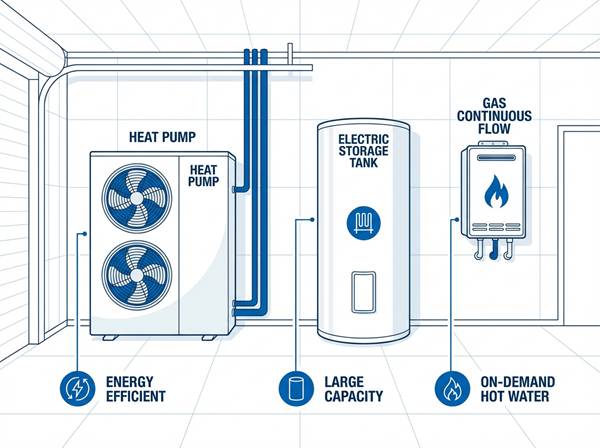
Comparison of different hot water system types
Heat Pump Hot Water Systems
Heat pump hot water systems are rapidly becoming the preferred choice for energy-conscious Sydney homeowners. These innovative units work like a reverse refrigerator, extracting heat from the surrounding air to warm your water.
How Heat Pumps Work:
A heat pump uses a refrigerant cycle to absorb warmth from ambient air—even on cooler days—and transfer that energy to heat water. This process is remarkably efficient, using up to 75% less electricity than traditional electric systems.
Pros:
• Up to 75% reduction in hot water energy costs
• Eligible for NSW government rebates up to $640
• Lower carbon footprint than gas or electric
• Works efficiently in Sydney’s mild climate
• Modern units operate quietly
Cons:
• Higher upfront cost ($3,000-$5,500 installed)
• Requires outdoor installation space
• Performance drops in extremely cold temperatures
• May produce some operational noise
Best suited for: Environmentally conscious households looking for long-term savings, especially those replacing old electric systems and eligible for government rebates.
Solar Hot Water Systems
Solar hot water systems harness Sydney’s abundant sunshine to heat water, offering the lowest running costs of any hot water option when conditions are favourable.
Types of Solar Systems:
• Flat plate collectors: Traditional panels that work well in Sydney’s climate
• Evacuated tube collectors: More efficient but higher cost
• Heat pump with solar PV: Combines solar electricity with heat pump technology
Pros:
• Lowest running costs when sun is available
• Significant reduction in carbon emissions
• Government incentives may apply
• 15-20 year system lifespan
Cons:
• Highest upfront cost ($4,000-$8,000 installed)
• Requires roof space and correct orientation
• Needs electric or gas booster for cloudy periods
• Maintenance of roof-mounted components
Best suited for: Homes with north-facing roof space, environmentally motivated households, and those with capital to invest in long-term savings.
Hot Water System Costs: What Sydney Homeowners Should Expect
Understanding the true cost of a hot water system means looking beyond the purchase price. Installation costs, running expenses, and system lifespan all factor into the total cost of ownership.
Purchase and Installation Costs (2025 Estimates):
Electric Storage (250L):
• Unit cost: $800-$1,500
• Installation: $400-$800
• Total: $1,200-$2,300
Continuous Flow Gas:
• Unit cost: $1,200-$2,500
• Installation: $500-$1,000
• Total: $1,700-$3,500
Heat Pump:
• Unit cost: $2,500-$4,000
• Installation: $500-$1,500
• Total: $3,000-$5,500
• Less rebates: Up to $640
Solar with Electric Boost:
• Unit cost: $3,500-$6,500
• Installation: $500-$1,500
• Total: $4,000-$8,000
Annual Running Costs (4-person household):
Electric Storage: $600-$900/year
Gas Continuous Flow: $350-$500/year
Heat Pump: $150-$300/year
Solar (with booster): $100-$200/year
When you factor in running costs over a 10-year period, heat pumps and solar systems often prove more economical despite higher upfront costs—especially when government rebates are applied.
NSW Government Hot Water Rebates: Save Up to $640 in 2025
The NSW Government offers significant incentives to encourage homeowners to switch to energy-efficient hot water systems. These rebates can substantially reduce the upfront cost of upgrading to a heat pump system.
Current NSW Heat Pump Rebate Structure:
Replacing Electric Storage with Heat Pump:
• Rebate: Up to $640
Replacing Gas Water Heater with Heat Pump:
• Rebate: Up to $330
Eligibility Requirements:
• Must be an existing residential property in NSW
• Replacing an existing electric or gas hot water system
• Heat pump must be on the Clean Energy Regulator register
• Installation by an Accredited Certificate Provider
• System capacity under 425 litres
How to Claim:
The rebate is typically applied as a point-of-sale discount through participating installers. At WSG Group, we’re registered to process these rebates, meaning you receive the discount immediately without complex paperwork.
Additional Federal Incentives:
Small-scale Technology Certificates (STCs) provide additional value when installing eligible heat pump or solar hot water systems. The number of STCs varies by system type and location, but can represent savings of $300-$1,000 or more.
Important: Rebate amounts and eligibility criteria may change. Contact WSG Group for current information on available incentives for your specific situation.
Choosing the Right Hot Water System Size for Your Household
Selecting the correct size hot water system is crucial for both comfort and efficiency. An undersized system leaves you with cold showers, while an oversized unit wastes energy heating water you’ll never use.
Storage Tank Size Guidelines:
1-2 people: 125-160 litres
2-3 people: 160-250 litres
3-4 people: 250-315 litres
4-5 people: 315-400 litres
5+ people: 400+ litres or multiple units
Continuous Flow Sizing:
Continuous flow systems are rated by litres per minute at a 25°C temperature rise. For Sydney homes:
• 1 bathroom: 20-24 L/min
• 2 bathrooms: 24-26 L/min
• 3+ bathrooms: 26+ L/min or multiple units
Heat Pump Sizing:
Heat pumps typically come in 250-315 litre capacities, suitable for most Sydney households. The key consideration is recovery time—how quickly the system can reheat after heavy use.
Factors Affecting Your Choice:
• Number of bathrooms and their simultaneous use
• Dishwasher and washing machine usage
• Spa bath or high-flow showerheads
• Peak usage times in your household
• Future household size changes
Our team at WSG Group can assess your specific needs during a free on-site consultation, ensuring you get the right size system from the start.
Top Hot Water System Brands We Recommend in 2025
After decades of installing hot water systems across Sydney and the Central Coast, our team has developed clear preferences for quality and reliability. Here are the brands we consistently recommend:
Heat Pump Hot Water:
• Rheem Ambiheat: Australian-designed, excellent efficiency, quiet operation
• Stiebel Eltron: German engineering, premium quality, long warranty
• Reclaim Energy: CO2 refrigerant technology, high efficiency
• iStore: Compact design, smart features, good value
Gas Continuous Flow:
• Rinnai: Industry-leading technology, wide range of sizes
• Bosch: German quality, compact design, energy efficient
• Rheem: Reliable performance, extensive service network
Electric Storage:
• Rheem: Australia’s most trusted brand, wide availability
• Dux: Quality construction, competitive pricing
• Vulcan: Budget-friendly, reliable performance
Solar Hot Water:
• Solahart: Pioneer in Australian solar hot water
• Apricus: Evacuated tube specialists, high efficiency
• Chromagen: Good balance of performance and price
At WSG Group, we supply and install all major brands, allowing us to recommend the best solution for your specific needs rather than pushing a single manufacturer.
Signs Your Hot Water System Needs Replacement
Knowing when to replace your hot water system can save you from unexpected cold showers and emergency costs. Watch for these warning signs:
Age of Your System:
• Electric storage: 10-15 years
• Gas storage: 10-12 years
• Gas continuous flow: 15-20 years
• Heat pump: 15-20 years
• Solar: 15-20 years
If your system is approaching or past these ages, proactive replacement often makes more financial sense than waiting for failure.
Warning Signs Requiring Attention:
Rusty or Discoloured Water:
Brown or rust-coloured hot water indicates internal corrosion. This is often a sign of tank deterioration that cannot be repaired.
Inconsistent Water Temperature:
Fluctuating temperatures suggest failing thermostats, heating elements, or gas components. While sometimes repairable, frequent issues indicate system-wide decline.
Unusual Noises:
Popping, banging, or rumbling sounds typically indicate sediment buildup. While flushing can help, severe cases suggest the tank liner is compromised.
Visible Leaks:
Any water pooling around your hot water unit requires immediate attention. Tank leaks are generally not repairable and necessitate replacement.
Rising Energy Bills:
A sudden increase in gas or electricity costs without other explanation may indicate declining system efficiency.
Frequent Repairs:
If you’re calling a plumber for hot water issues more than once a year, replacement is likely more economical than continued repairs.
What to Expect During Hot Water System Installation
Understanding the installation process helps you prepare and ensures everything goes smoothly. Here’s what happens when WSG Group installs your new hot water system:
Pre-Installation Assessment:
Our licensed plumber will assess your current setup, confirm the best location for your new system, check gas and electrical connections, and verify any plumbing modifications needed.
Installation Day Timeline:
1. Arrival and Setup (30 minutes)
Our team arrives at the scheduled time with your new system and all necessary equipment. We protect your floors and work areas before beginning.
2. Old System Removal (1-2 hours)
We safely disconnect and remove your existing hot water system, including proper disposal of the old unit and any hazardous materials.
3. New System Installation (2-4 hours)
Depending on the system type:
• Electric storage: Connection to water supply and electrical circuits
• Gas systems: Gas line connection and flue installation
• Heat pump: Outdoor unit positioning and water/electrical connections
• Solar: Roof panel installation and storage tank setup
4. Testing and Commissioning (30-60 minutes)
We thoroughly test all connections, check for leaks, verify correct operation, and adjust settings for optimal performance.
5. Walkthrough and Handover
We demonstrate how to use your new system, explain maintenance requirements, and provide all warranty documentation.
Most installations are completed within a single day. Heat pumps typically take 3-4 hours, while solar installations may require a full day due to roof work.
Hot Water System Maintenance Tips for Sydney Homeowners
Proper maintenance extends your hot water system’s life and maintains efficiency. Here’s what you can do and when to call a professional:
DIY Maintenance (Monthly/Quarterly):
Temperature Pressure Relief (TPR) Valve Test:
Lift the valve lever briefly and let it snap back. You should hear water flow into the drain. This simple test ensures this critical safety device functions correctly.
Visual Inspection:
Check around your unit for any signs of leaks, rust, or unusual corrosion. Early detection prevents major issues.
Clear the Area:
Keep the space around your hot water system clear of debris, especially for heat pumps that need good airflow.
Professional Maintenance (Annually):
Tank Flushing:
Sediment naturally accumulates in storage tanks, reducing efficiency and capacity. Annual flushing by a licensed plumber maintains performance.
Anode Rod Inspection:
Sacrificial anode rods protect your tank from corrosion. They should be inspected every 3-5 years and replaced when significantly depleted.
Full System Check:
A comprehensive inspection of all components, connections, and safety devices catches potential problems before they become emergencies.
Heat Pump Specific:
Clean evaporator coils and check refrigerant levels to maintain efficiency.
WSG Group offers scheduled maintenance programs to keep your system running optimally. Regular maintenance can extend system life by 3-5 years and maintain peak efficiency throughout its lifespan.
Frequently Asked Questions About Hot Water Systems
How long does a hot water system last?
System lifespan varies by type: Electric storage systems typically last 10-15 years, gas continuous flow 15-20 years, and heat pumps 15-20 years. Regular maintenance and water quality affect longevity significantly.
What is the most energy-efficient hot water system?
Heat pump systems are the most energy-efficient option for Sydney homes, using up to 75% less electricity than traditional electric storage. Solar systems offer the lowest running costs when conditions are favourable.
Can I install a hot water system myself?
No. Australian regulations require hot water systems to be installed by licensed plumbers. Gas systems additionally require a licensed gasfitter, and electrical connections must be completed by a licensed electrician.
How much does it cost to replace a hot water system in Sydney?
Replacement costs range from $1,500 for basic electric storage to $5,500+ for premium heat pump systems. This includes the unit, installation, and removal of your old system. Government rebates can reduce heat pump costs by $330-$640.
Is a heat pump worth it in Sydney?
Yes. Sydney’s mild climate is ideal for heat pump operation. With government rebates and 75% lower running costs, most heat pumps pay for themselves within 3-5 years compared to electric storage systems.
What size hot water system do I need?
For storage systems, allow approximately 50 litres per person. A family of four typically needs a 250L system. Continuous flow systems should be sized based on simultaneous usage—typically 24-26 L/min for homes with 2 bathrooms.
How quickly can you install a new hot water system?
Most installations are completed same-day. Emergency replacements can often be arranged within 24 hours, depending on system availability and scheduling.
Do you offer warranties on hot water installations?
Yes. All our installations come with manufacturer warranties (typically 5-10 years on tanks, 1-3 years on components) plus WSG Group’s workmanship guarantee.
Choose the Best Hot Water System for Your Sydney Home Today
Selecting the best hot water system for your Sydney home doesn’t have to be overwhelming. By understanding your options—electric, gas, heat pump, and solar—and considering factors like household size, running costs, and available rebates, you can make a confident decision that serves your family for years to come.
Heat pump systems have emerged as the standout choice for most Sydney households, offering the best balance of efficiency, running costs, and environmental responsibility. With NSW government rebates making these systems more affordable than ever, there’s never been a better time to upgrade.
At WSG Group, our licensed hot water plumbers have been helping Sydney and Central Coast families make the right choice since 1947. We supply and install all major brands, process government rebates on your behalf, and back every installation with our workmanship guarantee.
Ready to upgrade your hot water system? Contact WSG Group today for a free, no-obligation quote. Call 1800 186 597 or request your free quote online. Our team is available 24/7 for emergency hot water repairs and replacements.
Don’t wait until your old system fails—book your free consultation today and discover which hot water solution is right for your home.