

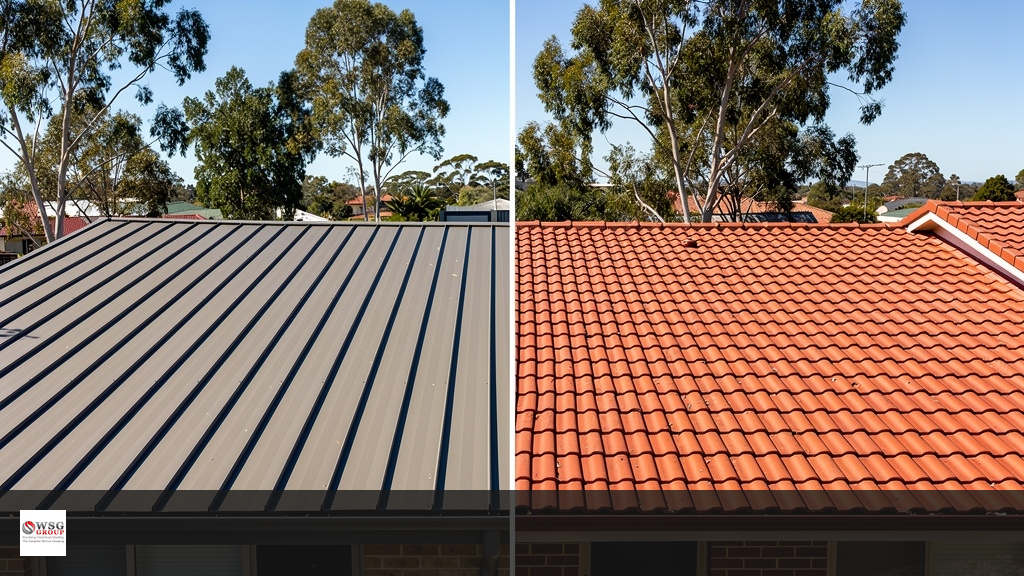
Deciding between Colorbond and tile roofing on the Central Coast? Colorbond is lighter, faster to install, and typically 15–25% cheaper. Tiles offer thermal mass and a traditional aesthetic. Both are excellent options for NSW coastal conditions — the right choice depends on your home’s structure, budget, and priorities.
Table of Contents
- Cost Comparison: Colorbond vs Tiles on the Central Coast
- Which Roof Lasts Longer?
- Heat Performance in a NSW Coastal Climate
- Ongoing Maintenance Differences
- Which Is Better for Coastal Central Coast Conditions?
- Structural Considerations
- Appearance and Resale Value
- Frequently Asked Questions
Cost Comparison: Colorbond vs Tiles on the Central Coast
For a full roof replacement on a typical 3–4 bedroom Central Coast home (150–200 m² of roof area), Colorbond generally costs $13,000–$20,000 while concrete tiles run $17,000–$26,000 and terracotta tiles $22,000–$34,000. The gap comes down to material cost, labour time, and structural requirements.
| Roof Type | Supply + Install (150–200 m²) | Weight (kg/m²) | Typical Lifespan |
|---|---|---|---|
| Colorbond steel | $13,000 – $20,000 | 3–6 kg/m² | 40–70 years |
| Concrete tiles | $17,000 – $26,000 | 40–55 kg/m² | 25–50 years |
| Terracotta tiles | $22,000 – $34,000 | 35–50 kg/m² | 50–100 years |
Prices are indicative ranges for licensed roofers operating on the Central Coast of NSW. Pitch, access, existing roof removal, and site complexity will affect individual quotes. Always obtain at least two itemised written quotes.
Which Roof Lasts Longer — Colorbond or Tiles?
A quality Colorbond roof in a standard suburban location will last 40–70 years before replacement is needed. In coastal zones (within 1 km of salt water), specify Colorbond ULTRA for a lifespan of 40–60 years with the appropriate warranty backing from BlueScope Steel. Concrete tiles last 25–50 years, though they are more prone to cracking from thermal cycling and physical impact. Terracotta tiles, at the top of the price range, can genuinely last 50–100 years if the ridge capping, sarking, and battens are maintained — but they require more frequent maintenance work than Colorbond.
In practice, what fails first on a tile roof is usually not the tiles themselves but the supporting components: the mortar on ridge capping needs repointing every 10–15 years, sarking (if present) degrades over time, and battens can rot in high-moisture environments. Colorbond’s failure modes are more straightforward: fastener corrosion, cut-edge corrosion in coastal zones, or physical damage from hail or debris.
Heat Performance: Which Is Cooler in a NSW Coastal Summer?
This is where most comparisons oversimplify. Tiles have higher thermal mass, which means they absorb heat during the day and release it more slowly — this can actually work against you in Central Coast summers if your home isn’t designed to ventilate effectively at night. Colorbond in a lighter colour (Surfmist, Shale Grey, or Paperbark) reflects significantly more solar radiation than a dark tile, reducing heat gain in the first place.
The bigger factor for Central Coast homes is sarking and ceiling insulation, not roof material. A Colorbond roof with quality foil sarking and R4+ ceiling insulation will outperform a tile roof with no sarking in summer comfort. If you’re comparing both options for a re-roof, insisting on sarking under either material is the most cost-effective way to improve summer heat performance.
Ongoing Maintenance: Colorbond vs Tile Roofs
Colorbond roofs require relatively low maintenance. The main tasks are clearing gutters and valleys of leaf debris (critical in bushfire-prone or tree-heavy areas of the Central Coast), checking and replacing failed screws or fasteners every 10–15 years, and inspecting flashings after major storms. There’s no mortar to repoint and no individual tiles to replace after hail events.
Tile roofs need periodic mortar repointing (typically $800–$2,500 per job on a standard home), individual tile replacement after cracking or hail damage ($50–$150 per tile including labour for small areas), and occasional re-bedding of the ridgeline. Over a 25-year period, the maintenance cost differential between the two systems is typically $3,000–$8,000 in favour of Colorbond for a standard Central Coast home.
Which Roof Type Is Better for the Central Coast’s Coastal Conditions?
Both Colorbond and tiles can perform well in coastal NSW conditions — the key is specification. For Colorbond in locations within 1 km of salt water (Terrigal, Avoca, Wamberal, Gosford waterfront, and coastal-adjacent Wyong areas), specify Colorbond ULTRA or the appropriate corrosion category product under AS 4312. For tiles in coastal zones, glazed terracotta typically outperforms unglazed concrete in salt air resistance — concrete tiles can absorb moisture and degrade more quickly near the coast.
Both roof types should be installed with quality valley iron and appropriate flashing to prevent water ingress during the heavy rainfall events the Central Coast receives — particularly in the La Nina patterns that have been frequent in recent years. Gutter capacity and overflow provision matter more in heavy rain than roof material type.
Structural Considerations: Can My Roof Frame Take Tiles?
This is one of the most important practical questions when replacing a roof. If your home currently has Colorbond (or originally had iron roofing), the roof frame may not be designed to carry the 40–55 kg/m² load of concrete tiles. Converting from Colorbond to tile requires a structural assessment and potentially significant frame reinforcement — adding $3,000–$12,000 to the project.
Going the other direction (from tiles to Colorbond) is structurally safe and generally straightforward — the lighter load is well within the capacity of any frame designed for tiles. This is one reason Colorbond is often the default recommendation for re-roofing projects where the homeowner isn’t committed to maintaining the tile aesthetic.
Appearance and Resale Value on the Central Coast
For many Central Coast homeowners, appearance is a major factor. Traditional tile roofs (particularly terracotta) are associated with a warm, Mediterranean aesthetic that suits older Gosford-era homes and is popular in established suburbs. Colorbond’s clean lines and wide colour range suit contemporary homes well and are increasingly accepted in established suburbs as the product has become ubiquitous in Australian residential construction.
From a resale perspective, both roof types are viewed positively by buyers if in good condition. A new Colorbond roof is a strong selling point due to its long warranty and low maintenance appeal. A well-maintained terracotta tile roof can add premium appeal in the right suburb and style of home. Neither material has a clear universal advantage for resale — condition and age matter more than material type.
For roofing services across the Central Coast — including assessments, replacement quotes, and repairs — WSG Group’s licensed roofers cover Gosford, Wyong, Erina, Woy Woy, and surrounding suburbs. View our roofing services page, and read our related articles on Colorbond roof installation costs and roof leak repair costs on the Central Coast. For NSW building compliance questions, refer to NSW Fair Trading’s building and renovating guide.
Not Sure Which Roof Is Right for Your Home?
Get an honest assessment from WSG Group’s licensed roofers. We cover the Central Coast and surrounding areas.
Request a QuoteFrequently Asked Questions
Is Colorbond or tile cheaper on the Central Coast?
Colorbond is generally 15–25% cheaper to install than concrete tiles on a comparable roof. For a 150–200 m² roof, Colorbond typically costs $13,000–$20,000 versus $17,000–$26,000 for concrete tiles and $22,000–$34,000 for terracotta. Ongoing maintenance costs also favour Colorbond over a 25-year period.
Which lasts longer — Colorbond or tiles?
Colorbond lasts 40–70 years in standard conditions. Concrete tiles last 25–50 years. Terracotta tiles can last 50–100 years with proper maintenance. In coastal Central Coast locations, Colorbond ULTRA is rated for 40–60 years with the appropriate warranty when correctly installed.
Can I switch from tiles to Colorbond without changing my roof frame?
Yes. Converting from tiles to Colorbond is structurally safe — Colorbond is much lighter (3–6 kg/m² vs 40–55 kg/m² for tiles), so your existing tile-rated frame will comfortably support it. Going the other way (Colorbond to tiles) requires a structural assessment and may need frame reinforcement.
Which roof is better for the coastal Central Coast climate?
Both perform well with the right specification. For salt air zones within 1 km of the ocean, Colorbond ULTRA is recommended. For tiles near the coast, glazed terracotta outperforms unglazed concrete in salt resistance. Both need quality valley iron and flashing to handle the Central Coast’s heavy rainfall events.
Does a Colorbond roof add resale value on the Central Coast?
A new Colorbond roof is viewed very positively by buyers due to its long lifespan, manufacturer warranty, and low maintenance. Condition matters more than material — a well-maintained tile roof and a new Colorbond roof are both strong selling points. Neither has a universal advantage for Central Coast resale values.
Does WSG Group replace roofs across the Central Coast?
Yes. WSG Group’s licensed roofers cover Gosford, Wyong, Erina, Avoca Beach, Woy Woy, and surrounding areas. We assess your existing roof, advise on the most cost-effective option for your home, and provide fully itemised written quotes.