

April marks the beginning of prime renovation season in Sydney. As we head toward the end of financial year, thousands of homeowners and property investors are finalising their bathroom renovation plans. Whether you’re updating a tired ensuite, modernising a dated family bathroom, or adding value to an investment property, one question dominates every conversation: what will bathroom renovation costs in Sydney actually be in 2026?
The answer isn’t straightforward. Bathroom renovation costs vary dramatically based on size, scope, fixtures, and the complexity of your plumbing and electrical work. A basic cosmetic refresh might cost $5,000, while a premium renovation can easily exceed $50,000.
This guide provides accurate, Sydney-specific pricing for bathroom renovations in 2026. You’ll discover detailed cost breakdowns for plumbing upgrades, electrical requirements, hidden expenses, tax deduction opportunities before EOFY, and return on investment data. By the end, you’ll have a clear budget roadmap and know exactly what to expect when you start your bathroom renovation project.
Why April 2026 Is the Perfect Time for Bathroom Renovations
Autumn in Sydney creates ideal conditions for bathroom renovation projects. The weather remains stable and mild, meaning fewer construction delays compared to the unpredictable storms of summer or the cold, wet conditions of winter.
From a financial perspective, April positions you perfectly for end-of-financial-year planning. If you own an investment property, completing your bathroom renovation before June 30 means you can immediately start claiming eligible tax deductions. Even for owner-occupiers, autumn is the strategic time to lock in quotes and schedules before the winter rush begins.
Tradies are typically more available during April compared to the peak summer building season. This means shorter wait times, more flexibility in scheduling, and often more competitive pricing. Many plumbers and electricians offer fixed-price contracts during quieter periods, giving you cost certainty and peace of mind.
The Sydney property market also rewards well-timed renovations. Bathrooms are one of the most scrutinised rooms during property inspections. A freshly renovated bathroom completed before the traditional spring selling season can position your property ahead of the competition, maximising your return on investment.
Complete Bathroom Renovation Cost Breakdown Sydney 2026
Understanding bathroom renovation costs requires breaking projects into distinct categories. Each tier reflects different levels of work, materials, and trade involvement. These figures are specific to the Sydney market in 2026 and include GST.
Budget Bathroom Makeover: $500 – $5,000
A budget bathroom makeover focuses on cosmetic updates without changing the layout or major fixtures. This level of renovation suits renters preparing a property for new tenants or homeowners wanting a fresh look without major construction.
Typical work includes:
- Repainting walls and ceilings
- Replacing tapware and shower heads
- Installing a new vanity without relocating plumbing
- Updating light fittings
- Re-grouting tiles
- Replacing accessories like towel rails and toilet roll holders
You can complete much of this work yourself or hire a handyman for installation. Plumbing and electrical work must still be performed by licensed tradies in NSW, but the scope remains minimal. Material costs dominate this budget category, and shopping strategically at trade suppliers or during sales can stretch your budget further.
Mid-Range Bathroom Remodel: $10,000 – $15,000
A mid-range bathroom remodel involves replacing major fixtures while maintaining the existing layout. This approach avoids the high costs of moving plumbing and drainage but still delivers a significantly updated bathroom.
Projects typically include:
- Installing a new vanity and basin
- Replacing the toilet
- Fitting a new shower screen or bath
- Complete re-tiling of floors and walls to splash zones
- Upgrading lighting to LED downlights
- Installing an extraction fan with timer
- Repainting or replacing bathroom accessories
Labour costs increase substantially at this level because you’re engaging specialist bathroom plumbers, tilers, and electricians. Waterproofing compliance adds $1,500 to $3,000 to the total cost but remains mandatory under NSW building codes. Material quality significantly impacts final pricing, with mid-range fixtures from brands like Caroma or Methven falling into this budget.
Full Bathroom Renovation: $15,000 – $35,000
A full bathroom renovation represents complete transformation. Everything gets stripped back to the frame, and the bathroom is rebuilt from scratch. This tier allows layout changes, relocated plumbing, and premium finishes.
Standard full renovations include:
- Complete demolition and disposal
- Relocating toilets, basins, or showers
- New floor-to-ceiling tiling throughout
- Custom or semi-custom vanity installation
- Premium tapware and fixtures
- Recessed shelving or niches
- Underfloor heating
- Multiple lighting zones with dimmers
- Upgraded extraction and ventilation
- New mirrors and accessories
The cost variance within this category depends heavily on fixture selection and complexity. A straightforward renovation using quality mid-range products sits around $20,000 to $25,000. Introducing designer tiles, stone benchtops, frameless shower screens, or structural changes pushes costs toward $35,000.
Labour represents approximately 60% of total costs at this level. Licensed plumbers charge $2,000 to $5,000 for complete bathroom plumbing depending on layout changes. Licensed electricians typically charge $1,500 to $3,500 for comprehensive bathroom electrical work including lighting, fans, and heated towel rails.
Premium Luxury Bathroom: $35,000 – $60,000+
Premium luxury bathrooms target high-end finishes, custom design, and spa-like features. These renovations suit prestige properties or homeowners seeking the ultimate bathroom experience.
Features commonly include:
- Freestanding designer baths
- Rainfall showers with multiple body jets
- Heated floors and towel rails
- Stone benchtops and wall features
- Custom joinery and storage solutions
- Premium European fixtures and tapware
- Smart mirrors with defogging and lighting
- Integrated sound systems
- Underfloor heating throughout
- Architectural design services
Material costs dominate this category, with individual tapware items costing $800 to $2,000 and designer tiles running $150 to $400 per square metre. Custom vanities from specialist joinery workshops start around $5,000 and can exceed $15,000 for complex designs.
Premium renovations require experienced bathroom specialists rather than general builders. Project management, design consultations, and extended timelines all contribute to higher costs. However, for investment properties in premium suburbs or owner-occupiers prioritising luxury, the enhanced lifestyle and property value justify the investment.
Plumbing Costs for Bathroom Renovations in Sydney
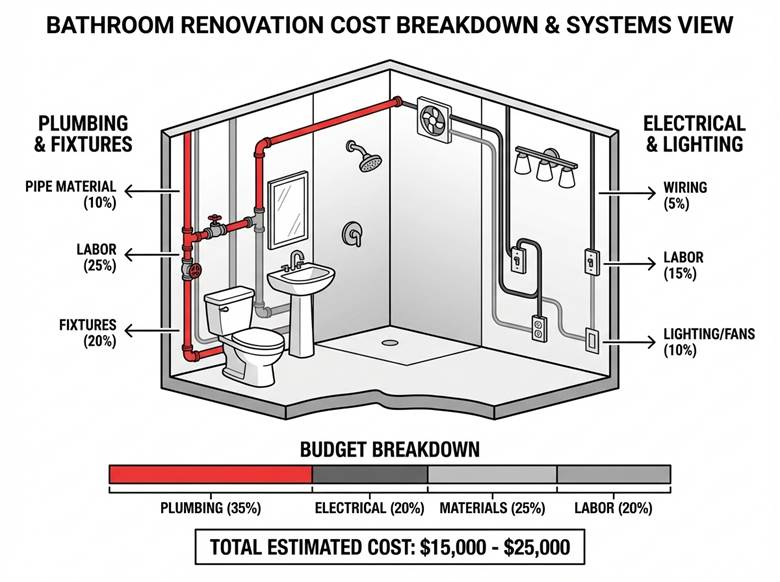
Plumbing represents one of the largest cost components in any bathroom renovation. Licensed plumbers in Sydney charge between $80 and $150 per hour depending on experience and complexity, with most bathroom projects requiring 15 to 40 hours of labour.
Basic Plumbing Upgrades: $1,000 – $3,000
Basic plumbing upgrades involve replacing fixtures without relocating pipes or drainage. This work suits renovations where the existing layout functions well but fixtures need updating.
Typical tasks include:
- Installing new basin tapware and waste
- Replacing shower mixer and head
- Fitting a new toilet suite to existing plumbing
- Connecting a new vanity to existing supply lines
- Replacing flexible hoses and shut-off valves
A licensed plumber completes this scope in one to two days. Costs remain relatively predictable because the work follows established procedures without structural complications. Always ensure your plumber is licensed in NSW and provides a compliance certificate upon completion.
Relocating Drainage and Pipes: $2,500 – $6,000
Moving toilets, basins, or showers requires relocating drainage and supply pipes. This work dramatically increases complexity and cost because it involves cutting concrete floors, routing new pipes, and ensuring proper drainage falls.
Toilet relocation proves most expensive because drainage pipes require specific gradients and typically run under concrete slabs. Moving a toilet across a bathroom can add $2,000 to $4,000 to plumbing costs alone. Relocating basins and showers costs less because supply lines are more flexible, but drainage considerations still apply.
Structural access also affects pricing. Bathrooms on upper floors or built on concrete slabs require more labour and potential structural work compared to ground-floor bathrooms with accessible subfloors. Always discuss layout changes with your plumber during the design phase to understand cost implications before committing.
Hot Water System Integration: $500 – $2,000
Bathroom renovations often coincide with hot water system upgrades. If your existing system is old or undersized, upgrading during bathroom renovations makes sense and can qualify for additional rebates or tax deductions.
Connection costs for a new hot water system to your renovated bathroom range from $500 for straightforward gas or electric connections to $2,000 for complex installations requiring new gas lines or electrical upgrades. Instantaneous systems require larger gas pipes or dedicated electrical circuits, adding to costs.
WSG Group specialises in integrated hot water and bathroom renovations, coordinating plumbing and hot water trades to minimise disruption and ensure optimal system sizing for your household needs.
Waterproofing Requirements: $1,500 – $3,000
Waterproofing is mandatory under the NSW Building Code for all wet areas in bathrooms. This non-negotiable requirement protects structural elements and prevents water damage to surrounding rooms and lower floors.
Licensed waterproofers apply membrane systems to floors and walls in shower zones, around baths, and under all tiled floors. The work must meet AS 3740 standards and requires certification for building approval and insurance purposes.
Costs depend on bathroom size and complexity. A standard ensuite waterproofing costs $1,500 to $2,000, while a larger family bathroom with separate shower and bath costs $2,500 to $3,000. Skipping or cutting corners on waterproofing creates enormous future liability and can void insurance coverage, making this cost essential rather than optional.
Electrical Costs and Requirements for NSW Bathrooms 2026
Bathroom electrical work in NSW must comply with AS/NZS 3000 Wiring Rules and specific bathroom zoning requirements. Licensed electricians charge $85 to $130 per hour in Sydney, with most bathroom projects requiring 8 to 20 hours depending on complexity.
Lighting Installation Costs: $800 – $2,500
Proper bathroom lighting requires multiple zones for functionality and ambience. Most modern bathrooms incorporate downlights, mirror lighting, and sometimes accent lighting for niches or features.
Standard bathroom lighting packages include:
- Four to six LED downlights with IP44 rating for wet area compliance
- Vanity mirror lighting either integrated or as separate wall lights
- Exhaust fan with light combination unit
- Dimmer switches where appropriate
A basic lighting installation with four downlights and an exhaust fan costs $800 to $1,200 including fixtures and labour. Adding mirror lighting, additional zones, or premium fixtures increases costs to $1,800 to $2,500.
LED downlights remain the standard choice because they provide excellent light output, run cool, last years longer than halogens, and dramatically reduce energy consumption. Always specify warm white colour temperature for bathrooms rather than harsh cool white.
Powerpoint Placement and Safety Zones: $300 – $800
Powerpoint installation in bathrooms requires careful compliance with electrical zones. The Australian standard prohibits powerpoints within 600mm horizontally of showers or baths and requires IP-rated switches in specific zones.
Most bathrooms require two to four powerpoints positioned near the vanity at least 300mm above benchtop height. These accommodate electric toothbrushes, shavers, hair dryers, and other grooming devices.
Installing standard bathroom powerpoints costs $150 to $200 per outlet including IP-rated covers. Specialist shaving outlets integrated into mirrors or cabinets cost $200 to $350 each. Some renovations require dedicated circuits for high-draw devices like heated towel rails or underfloor heating, adding $300 to $500 per circuit.
Never compromise on powerpoint safety in bathrooms. Water and electricity create lethal combinations, so always use licensed electricians and ensure compliance with current NSW standards.
Ventilation and Exhaust Fan Installation: $400 – $1,200
Effective ventilation prevents mould, protects fixtures, and maintains air quality. NSW building codes require mechanical ventilation in bathrooms without adequate natural ventilation through windows.
Standard exhaust fans must extract a minimum air volume based on bathroom size and require ducting to the outside rather than into ceiling cavities. Modern installations include humidity sensors or timer switches ensuring fans continue running for several minutes after bathroom use.
Basic exhaust fan installation costs $400 to $600 for straightforward ducting to external walls or eaves. Complex installations requiring long duct runs or roof penetrations cost $800 to $1,200. Combination light and fan units simplify wiring and control, typically costing $150 to $300 more than separate units.
Undersized or poorly installed exhaust fans fail to control moisture, leading to ongoing mould problems. Ensure your electrician specifies appropriate fan capacity for your bathroom size.
IP Ratings and Compliance Costs: Included in Labour
Bathroom electrical fittings must meet specific Ingress Protection ratings based on their location within defined bathroom zones. Zone 0 inside showers or baths prohibits all electrical equipment. Zone 1 above showers requires IPX4 minimum rating. Zone 2 extending 600mm beyond wet areas allows IPX4-rated equipment.
Compliance costs are embedded in fixture selection and proper installation. IP-rated downlights cost $15 to $40 more than standard versions. IP-rated powerpoint covers add $10 to $20 per outlet. These small incremental costs ensure safety and regulatory compliance.
Licensed electricians understand bathroom zoning requirements and specify appropriate fixtures. They also provide compliance certificates essential for building approval, insurance, and future property sales. Attempting DIY electrical work or hiring unlicensed contractors creates enormous legal and safety liability.
Hidden Costs That Blow Your Bathroom Renovation Budget
Even the most carefully planned bathroom renovations encounter unexpected costs. Setting aside a contingency of 10% to 15% of your total budget protects against these surprises and prevents project delays when issues arise.
Asbestos removal remains a common hidden cost in Sydney homes built before 1990. Bathroom ceilings, wall sheeting, and floor tiles often contain asbestos. Professional testing costs $400 to $600, and licensed removal ranges from $1,500 to $5,000 depending on the extent of asbestos and removal complexity.
Structural repairs emerge during demolition when old bathrooms hide timber rot, corroded pipes, or damaged framing. Water damage particularly affects bathrooms with long-term leaks or failed waterproofing. Structural repairs range from $500 for minor timber replacement to $5,000 for significant framing or subfloor work.
Water damage remediation extends beyond structural repairs to include mould treatment, moisture barrier installation, and ensuring proper drainage. Old tile floors often conceal water damage that only becomes apparent after removal. Budget $1,000 to $3,000 for unexpected water damage remediation.
Design changes mid-project create cascading cost impacts. Changing tile selection after waterproofing is complete can require rework. Relocating fixtures after plumbing rough-in doubles labour costs. Finalise all design decisions before demolition begins to avoid expensive changes.
Permit and inspection fees in Sydney typically cost $150 to $400 for bathroom renovations requiring structural or plumbing changes. Building certifier inspections add another $300 to $600. While not truly hidden, many homeowners forget to budget for these regulatory costs.
Access complications in apartments or multi-storey homes can increase labour costs by 15% to 25%. Lifting materials to upper floors, managing body corporate requirements, and working within restricted access times all add complexity. Discuss access considerations with your contractor during quoting.
Bathroom Renovation ROI: What Adds the Most Value in Sydney?
Bathroom renovations deliver some of the strongest returns on investment in the Sydney property market. Research from property valuation experts suggests well-planned bathroom renovations return between 100% and 130% of renovation costs in increased property value.
A $25,000 bathroom renovation can add $30,000 to $40,000 to your property value when executed properly. This makes bathrooms second only to kitchens for renovation ROI. The key lies in matching renovation quality to your property type and local market expectations.
High-value upgrades include:
- Complete waterproofing to current standards, which provides peace of mind for buyers and prevents future issues
- Quality fixtures from recognised brands like Caroma, Methven, or Milli signal quality without excessive cost
- Floor-to-ceiling tiling creates a premium appearance and improves waterproofing
- Frameless or semi-frameless shower screens deliver a modern aesthetic buyers expect
- Adequate storage through vanities or recessed shelving addresses practical buyer concerns
Medium-value upgrades include:
- Separate toilet zones in larger bathrooms
- Underfloor heating in cooler climates or southern-facing bathrooms
- Multiple lighting zones allowing functional and ambient options
Avoid overcapitalisation by matching your renovation to your property value and neighbourhood standards. A $60,000 luxury bathroom in a $800,000 property risks overcapitalisation, while the same renovation in a $2 million property represents appropriate investment. Research recent sales in your suburb and consult local real estate agents about renovation expectations before committing to premium fixtures.
Investment property owners should prioritise durability and low maintenance over luxury finishes. Tenants value functionality and cleanliness more than designer features. Focus your budget on quality plumbing, effective ventilation, easy-clean surfaces, and robust fixtures that withstand tenant turnover.
Tax Deductions for Bathroom Renovations Before EOFY 2026
Investment property owners can claim significant tax benefits for bathroom renovations completed before June 30, 2026. Understanding the distinction between repairs and improvements determines how you claim deductions and impacts your renovation timing strategy.
Repairs and maintenance performed on investment properties can be claimed immediately as tax deductions in the financial year the work is completed. Repairs restore functionality without improving beyond the original condition. Examples include fixing broken tiles, replacing a cracked basin, repairing a leaking tap, or repainting walls.
Capital improvements that increase the property value or functionality must be claimed through capital works deductions at 2.5% annually over 40 years. Complete bathroom renovations typically qualify as capital improvements rather than repairs. This means a $30,000 bathroom renovation provides a $750 annual tax deduction for the next 40 years.
Timing your renovation to complete before June 30 allows you to start claiming deductions immediately rather than waiting until the next financial year. This makes April and May strategic renovation months for investment property owners.
Separate plumbing and electrical repairs from renovation costs where possible. If your bathroom renovation addresses existing plumbing leaks, faulty wiring, or broken fixtures, these repair components may be immediately deductible while the broader renovation qualifies for capital works treatment.
Obtain detailed invoices from all contractors clearly describing work performed. Your accountant requires these to accurately categorise expenses and maximise legitimate deductions. Keep all receipts, contracts, and before-and-after photos documenting the renovation scope.
Engage a qualified tax accountant familiar with property investment deductions before finalising your renovation plans. They can structure your project to maximise legitimate tax benefits while ensuring ATO compliance. The Australian Taxation Office website provides detailed guidance on rental property renovations and deductions, but individual circumstances vary, so professional advice remains essential.
How to Budget and Plan Your Bathroom Renovation
Successful bathroom renovations start with realistic budgets and thorough planning. Following a structured approach protects you from cost overruns and disappointing results.
Begin by obtaining three detailed quotes from licensed contractors specialising in bathroom renovations. Quotes should itemise labour, materials, and any anticipated additional costs. Compare quotes carefully, but remember the cheapest option rarely delivers the best value. Check licenses, insurance, previous work examples, and customer reviews before selecting your contractor.
Set aside a contingency fund of 10% to 15% of your total budget for unexpected costs. This buffer prevents project delays and forced compromises when surprises emerge during demolition or construction.
Prioritise spending on structural elements and services that affect long-term functionality and safety. Waterproofing, plumbing, electrical compliance, and ventilation deserve premium attention. You can always upgrade tapware, mirrors, and accessories later, but fixing inadequate plumbing or ventilation requires extensive rework.
Research and select materials before demolition begins. Visit bathroom showrooms, compare online prices, and create a definitive materials list. Pre-purchasing materials where practical can reduce costs by 15% to 25% compared to contractor supply. However, coordinate delivery timing with your contractor to avoid materials sitting on site or in storage.
Understand the renovation process and realistic timelines. Complete bathroom renovations typically take three to six weeks depending on complexity. Discuss the schedule with your contractor, identify critical milestones, and maintain regular communication throughout the project.
Plan bathroom access during renovations, especially if you’re renovating your only bathroom. Arrange alternative accommodation, coordinate with other household members, or establish temporary facilities. This practical consideration often gets overlooked until renovation day one.
Questions to Ask Your Plumber and Electrician Before Hiring
Selecting qualified, experienced tradespeople determines renovation success. Ask these essential questions before engaging any plumber or electrician for your bathroom renovation.
- Are you fully licensed in NSW, and can I verify your license number with NSW Fair Trading?
- Do you carry current public liability insurance and workers compensation coverage?
- How many bathroom renovations have you completed in the past 12 months?
- Can you provide references from recent bathroom renovation clients?
- Will you provide a detailed written quote itemising labour, materials, and potential additional costs?
- What warranty do you offer on your workmanship and materials?
- How long will the project take, and what is your realistic start date?
- Who will be performing the work — you directly or subcontractors?
- Will you provide compliance certificates for plumbing and electrical work?
- How do you handle unexpected issues discovered during demolition, and how are additional costs communicated and approved?
Licensed tradespeople welcome these questions and provide clear, confident answers. Hesitation or evasiveness signals potential problems. Always verify licenses through NSW Fair Trading and confirm insurance coverage before allowing any work to begin.
Get Your Bathroom Renovation Quote from WSG Group Today
Bathroom renovations represent significant investments, but armed with accurate cost information and strategic planning, Sydney homeowners and investors can confidently move forward with projects that deliver lasting value.
As we’ve explored throughout this guide, bathroom renovation costs in Sydney in 2026 range from $5,000 for basic makeovers to $60,000 or more for luxury renovations. The key lies in matching your budget to your goals, prioritising quality plumbing and electrical work, and planning strategically to maximise return on investment.
With EOFY approaching on June 30, now is the ideal time to finalise your bathroom renovation plans. Investment property owners can begin claiming tax deductions immediately, while all homeowners benefit from autumn’s ideal renovation conditions and tradie availability.
WSG Group has served Sydney and the Central Coast since 1947, delivering expert bathroom renovations backed by our team of licensed plumbers, electricians, and roofing specialists. We understand the complexity of bathroom projects and coordinate all trades seamlessly, ensuring your renovation stays on budget, on schedule, and compliant with all NSW regulations.
Whether you’re planning a simple bathroom makeover or a complete luxury renovation, our team provides free on-site inspections, detailed transparent quotes, and quality workmanship guaranteed. We’re available 24/7 for emergencies and pride ourselves on responsive communication throughout your project.
Don’t let another season pass with a bathroom that doesn’t meet your needs. Contact WSG Group today on 1800 186 597 to book your free bathroom renovation consultation. Let’s transform your bathroom before EOFY and add genuine value to your Sydney property.
Frequently Asked Questions About Bathroom Renovation Costs Sydney
Q: How much does a typical bathroom renovation cost in Sydney in 2026?
A: A typical full bathroom renovation in Sydney costs between $15,000 and $35,000 in 2026. This includes demolition, plumbing and electrical work, waterproofing, tiling, new fixtures, lighting, and labour. Budget makeovers cost $500 to $5,000, mid-range remodels cost $10,000 to $15,000, while premium luxury bathrooms exceed $35,000 and can reach $60,000 or more depending on finishes and complexity.
Q: Can I claim tax deductions for bathroom renovations on my investment property?
A: Yes, investment property owners can claim bathroom renovations through capital works deductions at 2.5% annually over 40 years. A $30,000 bathroom renovation provides $750 in annual tax deductions for 40 years. Some repair components may be immediately deductible. Complete renovations before June 30, 2026, to begin claiming deductions immediately. Consult your accountant for advice specific to your situation.
Q: How long does a complete bathroom renovation take in Sydney?
A: Complete bathroom renovations typically take three to six weeks from demolition to completion. Simple renovations without layout changes can be completed in two to three weeks. Complex renovations involving structural changes, custom joinery, or extensive plumbing relocation may require six to eight weeks. Timelines depend on tradie availability, material delivery, and inspection schedules. Always discuss realistic timelines with your contractor during the quoting process.
Q: Do bathroom renovations add value to my Sydney property?
A: Yes, bathroom renovations deliver strong returns on investment in Sydney, typically returning 100% to 130% of renovation costs in increased property value. A well-executed $25,000 bathroom renovation can add $30,000 to $40,000 to your property value. The key is matching renovation quality to your property type and local market expectations. Bathrooms rank second only to kitchens for renovation ROI in Sydney’s property market.
Q: What are the most important things to spend money on in a bathroom renovation?
A: Prioritise spending on waterproofing to AS 3740 standards, quality plumbing work by licensed plumbers, compliant electrical installation including proper ventilation, and adequate lighting. These structural elements affect long-term functionality and safety. You can always upgrade tapware, mirrors, and accessories later, but fixing inadequate plumbing, waterproofing, or electrical work requires expensive demolition and rework.
Q: How much does it cost to move a toilet in a bathroom renovation?
A: Relocating a toilet during a bathroom renovation costs $2,000 to $4,000 in addition to standard plumbing costs. This work involves cutting concrete floors, routing new drainage pipes, ensuring proper drainage gradients, and potentially structural modifications. Toilets are the most expensive fixtures to relocate because drainage pipes require specific falls and typically run under concrete slabs. Discuss layout options with your plumber during the design phase to understand cost implications.
Q: Does a bathroom renovation need council approval in Sydney?
A: Most bathroom renovations don’t require council approval if you’re not changing the bathroom’s location, altering structural elements, or affecting external building appearance. However, plumbing and electrical work must be performed by licensed tradies who provide compliance certificates. Significant structural changes, adding new bathrooms, or work in heritage areas may require council approval. Consult with your contractor or a building certifier to confirm requirements for your specific project.