

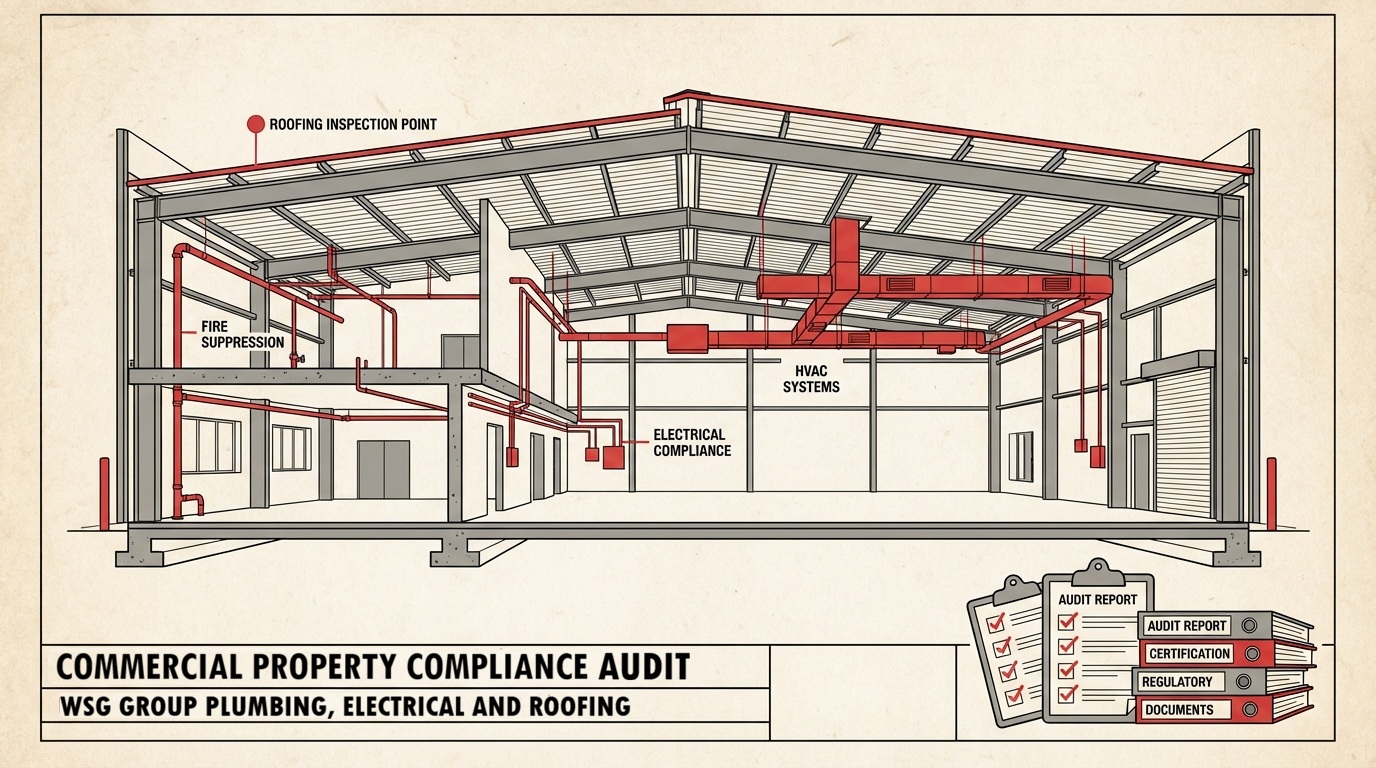
As we enter 2026, commercial property owners, facility managers, and business operators across New South Wales face increasingly stringent compliance requirements for building systems. A comprehensive facility compliance audit is no longer optional—it’s a critical component of risk management, legal compliance, and operational efficiency. With the recent launch of the BCNSW eCert portal in December 2025 and evolving Australian Standards for electrical, plumbing, and roofing systems, understanding how to conduct thorough facility compliance audits has never been more important.
This complete guide provides facility managers, commercial property owners, and operations directors with a strategic framework for conducting facility compliance audits across plumbing, electrical, and roofing systems. Whether you manage office buildings, retail spaces, industrial facilities, or multi-tenant commercial properties in Sydney, Central Coast, or anywhere across NSW, this guide delivers actionable insights to ensure your facility meets 2026 compliance standards.
Frequently Asked Questions
How much does a facility compliance audit cost for a commercial property in NSW?
A1: Comprehensive facility compliance audits for commercial properties in NSW typically range from $2,500-$8,000 depending on building size, complexity, and scope. A 1,000 square meter office building averages $3,500-$4,500, while larger industrial facilities may exceed $10,000. Multi-trade contractors offering integrated plumbing, electrical, and roofing assessments typically provide better value than coordinating separate contractors. The audit investment is generally recovered within 12 months through identified energy savings, insurance premium reductions, and avoided emergency repairs.
How often should commercial properties conduct facility compliance audits?
A2: Most commercial properties should conduct comprehensive facility compliance audits annually, with more frequent targeted inspections for specific systems. Electrical systems warrant quarterly RCD testing and annual condition assessments. Plumbing systems require annual backflow device testing and general inspection. Roofing benefits from quarterly visual inspections and annual detailed assessments. High-risk environments, older buildings, and properties with complex systems may require semi-annual comprehensive audits. Establishing a systematic inspection schedule based on regulatory requirements and risk assessment ensures consistent compliance while optimizing maintenance investments.
What are the penalties for non-compliance with NSW building regulations?
A3: NSW regulatory penalties for building compliance violations vary significantly based on offense severity and circumstances. Electrical work performed without proper certification can result in fines starting at $5,500 per offense for individuals and substantially higher for companies. Serious electrical safety violations can trigger prosecution with penalties exceeding $50,000 plus legal costs. Beyond direct fines, non-compliance can void insurance coverage, expose property owners to personal injury liability claims averaging $250,000-$500,000, and result in occupation certificates being revoked requiring building evacuation until compliance achieved. The financial and operational impacts of non-compliance far exceed systematic compliance program costs.
Can I conduct facility compliance audits internally or must I hire external contractors?
A4: While facility staff can perform routine visual inspections and basic maintenance checks, comprehensive compliance audits require licensed contractors for specific regulated activities. Electrical testing and certification must be performed by licensed electricians who can issue Certificates of Compliance for Electrical Work (CCEW). Backflow device testing requires licensed plumbers with specialized credentials. Some inspection activities like thermal imaging and test-and-tag can be performed by trained facility staff using proper equipment, but certification and compliance documentation require appropriate licenses. The most effective approach combines regular internal inspections with annual professional comprehensive audits by multi-trade contractors providing both assessment and remediation capabilities.
What documentation should result from a facility compliance audit?
A5: Comprehensive facility compliance audits should produce detailed written reports including: executive summary of compliance status and critical issues; system-by-system inspection findings with photographic documentation; compliance matrix showing conformance with applicable regulations and standards; risk assessment prioritizing identified issues by safety risk, compliance urgency, and financial impact; remediation plan with specific recommendations, estimated costs, and timeframes; all applicable compliance certificates (CCEW for electrical work, plumbing certificates, backflow testing certificates); updated as-built documentation reflecting current conditions; and ongoing maintenance recommendations with suggested inspection schedules. All documentation should be provided in both physical and digital formats for easy accessibility and backup.
How does the BCNSW eCert portal affect facility compliance audits?
A6: The BCNSW eCert portal launched in December 2025 streamlines how specialist trades complete and submit compliance certificates for electrical, plumbing, and other regulated work in NSW. For facility managers, this means all electrical work certificates (CCEWs) and plumbing compliance documentation must be registered through the portal. During facility compliance audits, auditors can verify certificate authenticity through the portal rather than relying solely on paper documentation. Property owners should ensure all contractors use the portal for certificate submission and maintain portal access credentials to retrieve documentation for due diligence audits and regulatory inspections. The digital system reduces documentation gaps that historically caused compliance audit failures.
What role does facility compliance play in commercial property insurance?
A7: Commercial property insurance increasingly requires documented compliance programs as a condition of coverage. Insurers recognize that properties with systematic inspection and maintenance programs present substantially lower risk. Many insurers now offer premium discounts of 10-15% for properties providing evidence of regular compliance audits and preventive maintenance programs. Conversely, insurance claims for incidents involving non-compliant systems face increased scrutiny and potential denial. Properties experiencing electrical fires in systems without current compliance certificates or water damage from uninspected plumbing systems often find coverage limited or excluded. Documented compliance programs not only reduce insurance costs but ensure full coverage when incidents occur, protecting property owners from catastrophic financial exposure.